


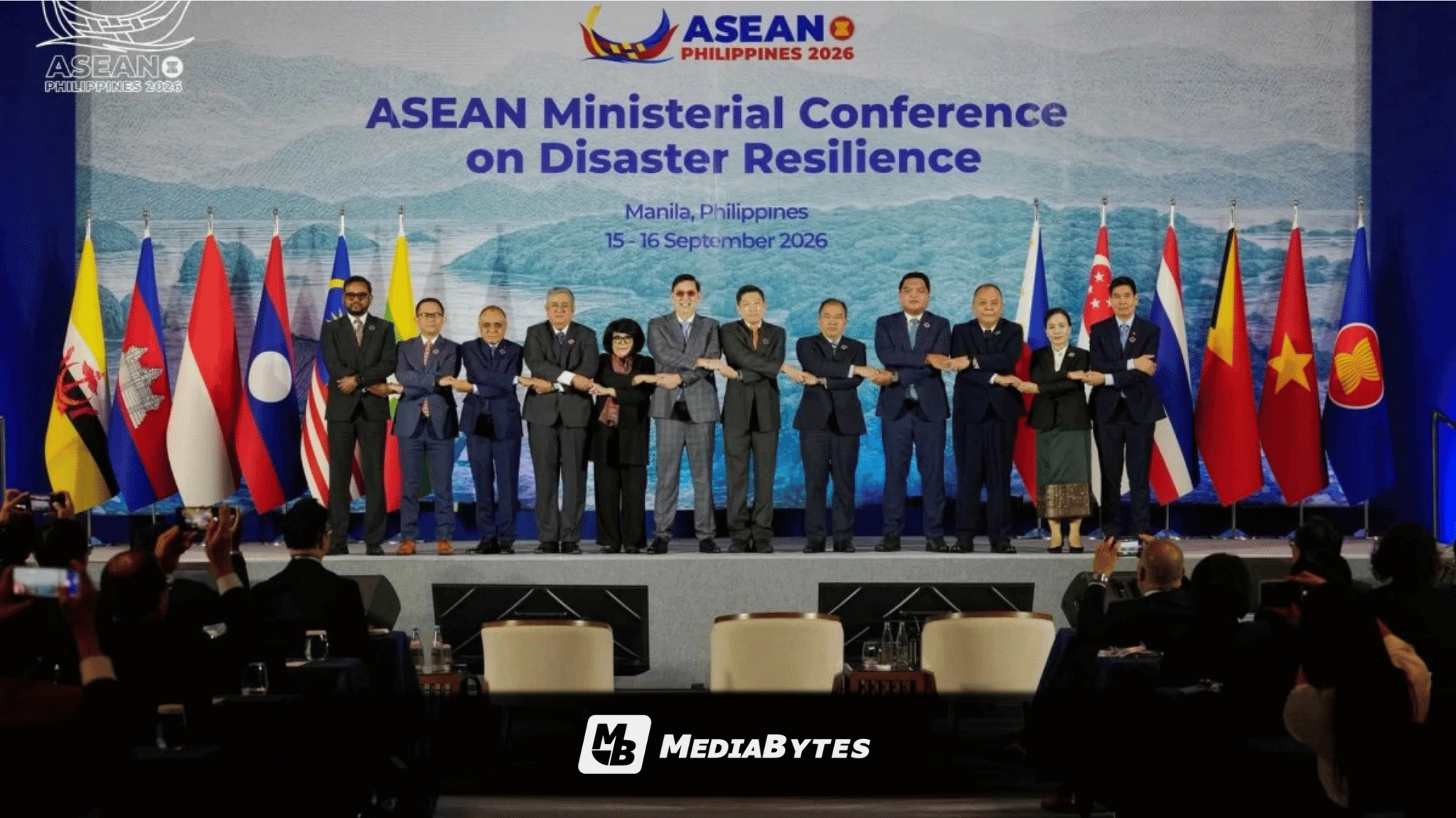
The Philippines has urged fellow Southeast Asian nations to further strengthen disaster preparedness as climate change, rapid development and emerging risks make disasters increasingly frequent, complex and difficult to anticipate.
President Ferdinand Marcos Jr. made the call during the opening of the ASEAN Ministerial Conference on Disaster Resilience (AMCDR) in Pasay City on Tuesday, September 15, emphasizing the importance of improving the region’s ability to identify hazards and prepare for threats that may not yet be fully understood.
Marcos delivered his message through Executive Secretary Ralph Recto at the two-day conference hosted by the Office of Civil Defense (OCD).
“We must be prepared for risks we have yet to see. We must make responsible use of emerging technologies to improve how we understand risk, anticipate impacts, and make decisions,” Marcos said.
The President’s remarks come as the Philippines continues to deal with increasingly severe weather events associated with a changing climate. The country may experience four to five strong typhoons within a month, with some storms also aggravating the southwest monsoon, or habagat, causing deaths and extensive damage to communities, infrastructure, agriculture and property.
Beyond weather-related hazards, the Philippines remains exposed to earthquakes and volcanic eruptions due to its location along the Pacific Ring of Fire, where tectonic activity frequently occurs.
The AMCDR also marked the 20th anniversary of the ASEAN Agreement on Disaster Management and Emergency Response (AADMER), the region’s legally binding framework for disaster risk reduction and emergency response.
Maria Antonia Yulo Loyzaga, the President’s Special Envoy on Disaster Risk Reduction and Management, said climate change and rapid development are adding to the region’s vulnerability to natural hazards.
The Philippines ranked first in the World Risk Index last year, reflecting its high exposure to multiple disaster threats.
Loyzaga said ASEAN’s future security and prosperity would increasingly depend on how member states manage interconnected risks that can trigger cascading effects across countries and sectors.
She cited the 2024 ASEAN Report on Strengthening ASEAN Multi-Hazard End-to-End Early Warning System for Natural Disasters, which identified persistent gaps in areas such as risk assessment, communication, hazard detection and monitoring among ASEAN members.
“As you well know, the Asia Pacific is the most disaster-prone region in the world. And the disasters that we face have grown in frequency, intensity and complexity due in large part to a rapidly changing climate and the pace and trajectory of our development as a region,” Loyzaga said.
“Against this backdrop, the security and prosperity of our ASEAN region increasingly depends on two factors. First, on how we adapt as individual nations and as a collective whole to complex and cascading risks. And second, on how we uphold our commitment to regional and cross-sectoral cooperation within the rules-based international order,” she added.
The AMCDR will continue until Wednesday, September 16, as part of the Philippines’ 2026 ASEAN Chairmanship.
The meeting gathers disaster management officials, international organizations, development partners, technical specialists, private-sector representatives and civil society groups to discuss emerging threats and strengthen measures aimed at protecting communities, economies and regional supply chains.