


Vice President Sara Duterte’s spokesperson, Atty. Salvador Paolo Panelo Jr., on Wednesday, September 16, questioned efforts to revisit the 16-vote requirement for conviction in the impeachment trial, warning that changing the number of senators included in the computation could affect the outcome.
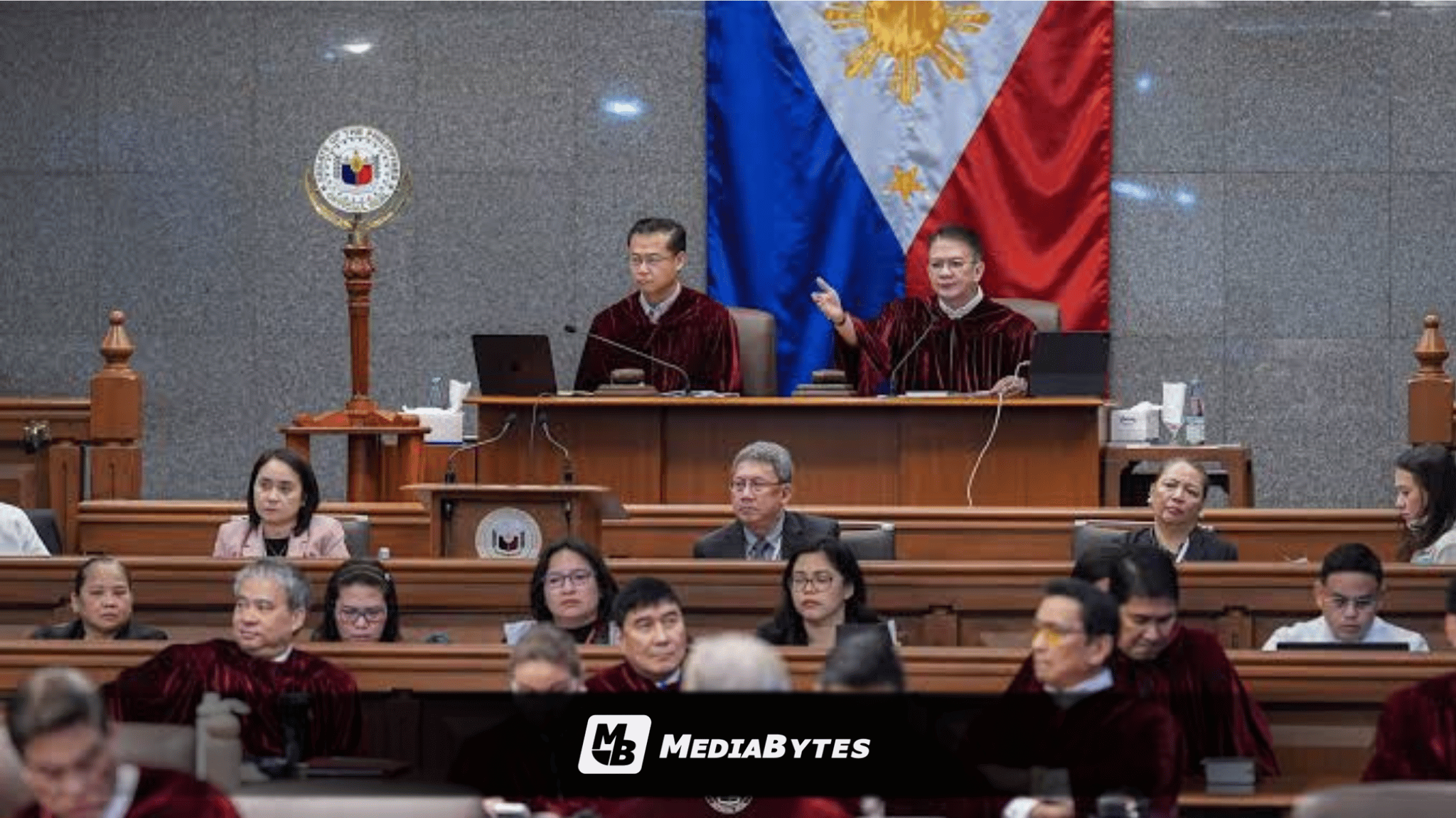
Panelo issued the statement after the Senate impeachment court heard arguments from four retired Supreme Court justices serving as amici curiae, or “friends of the court,” on the constitutional requirement for convicting an impeached official.
Retired Chief Justices Hilario Davide Jr., Artemio Panganiban and Reynato Puno said the two-thirds requirement should not necessarily be treated as a fixed 16 votes based on the full 24-member Senate.
Retired Associate Justice Adolfo Azcuna took a different position, maintaining that all 24 senators should remain in the denominator.
Panelo said the question of the voting threshold should be considered in the context of the circumstances surrounding the participation of some senator-judges.
“Dapat hindi pinag-uusapan ’to nang walang konteksto,” Panelo said.
He questioned why some senators were unable to participate in the proceedings and warned that reducing the number used to calculate the two-thirds requirement could potentially create opportunities for political pressure to affect which senators take part in the final vote.
“Maaaring kapag ang denominator, itong 16, ay pwedeng babaan, iniimbitahan mo yung nasa poder, yung gobyerno natin, na targetin itong mga senador na aasahan nilang hindi boboto ng pabor sa gusto nila,” he added.
Panelo further raised the question of whether the legal positions presented by the retired justices would remain the same if senator-judges were prevented from participating because of criminal cases, legal restrictions or possible threats of legal action.
“Pagka ganun, ibig sabihin, pwedeng kontrolin ng nakaupo sa pwesto yung outcome ng boto,” he added.
The comments came as the impeachment court examined whether the current 16-vote requirement, established earlier by Presiding Officer Senator Francis “Chiz” Escudero, should remain in place.
The court invited the retired magistrates to provide legal guidance on how the constitutional phrase requiring a two-thirds vote of “all the Members of the Senate” should be interpreted.
Davide, Panganiban and Puno generally argued that the required number could change depending on which senators are legally qualified to participate, while Azcuna maintained that the full membership of the Senate should remain the basis for determining the two-thirds threshold.
Panelo was also asked about the possibility that the impeachment court could overturn Escudero’s earlier ruling. He said the defense team would have to determine the appropriate legal steps.
He pointed to an earlier position by defense spokesperson and lawyer Michael Poa that the defense had participated in discussions about the threshold ad cautela, or as a precaution, without conceding that the impeachment court had the authority to change the existing requirement.
“Pre-preserve nila yung legal remedies nila,” Panelo said.
He added that the defense would decide what legal action to pursue once the Senate determines how it will proceed on the disputed threshold.
The impeachment court is expected to hear oral arguments from the prosecution and defense on September 23 before senator-judges consider the issue.
The question remains whether the two-thirds requirement should be calculated from all 24 senators or from the number of senators legally qualified to participate and vote.