


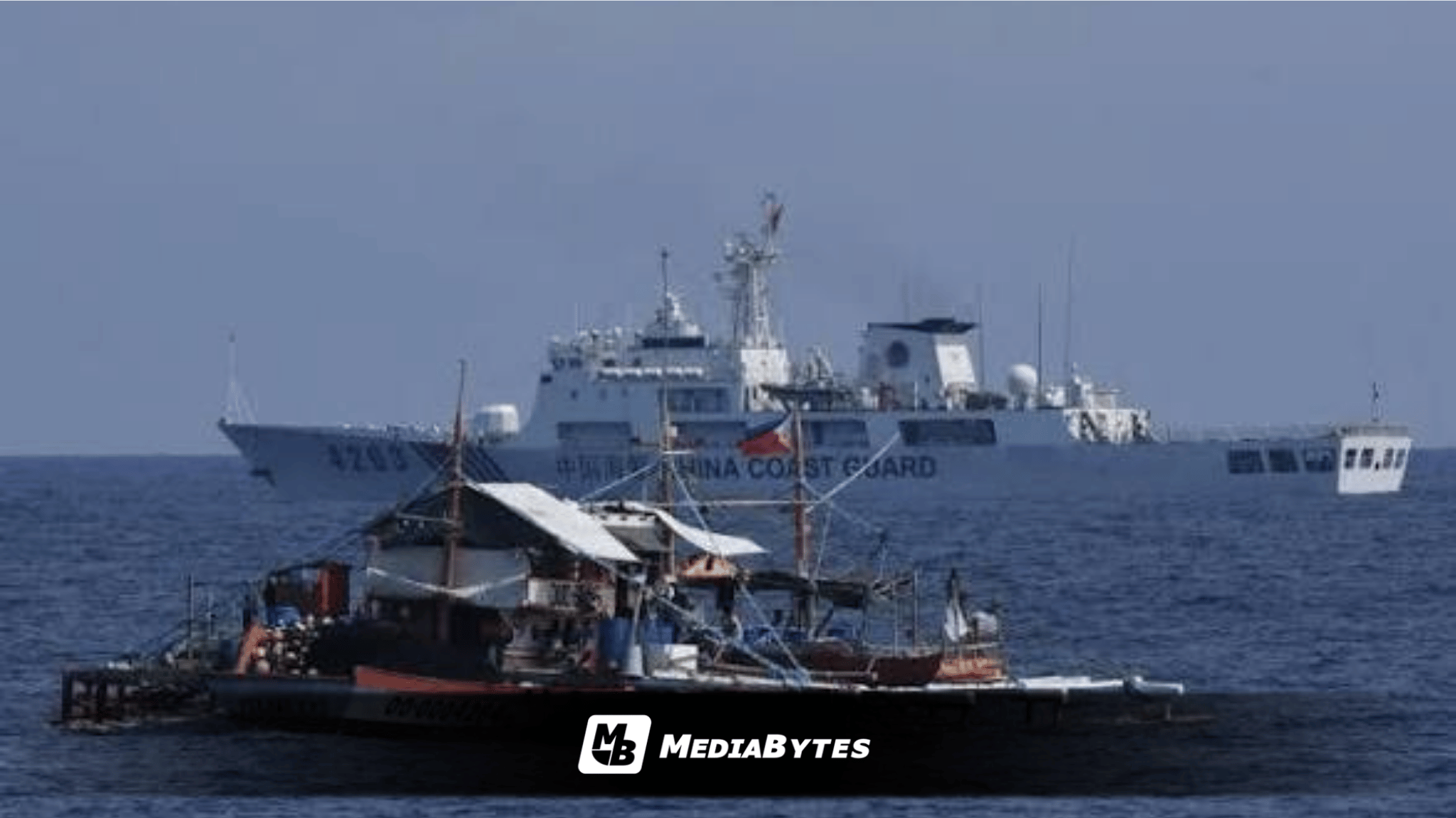
China on Tuesday, September 15, rejected the Philippines’ latest assertion of maritime rights over Panganiban Reef (Mischief Reef) and Zamora Reef (Subi Reef), while urging Manila to stop what Beijing described as “provocations and publicity stunts” in the South China Sea.
Chinese Foreign Ministry spokesperson Guo Jiakun made the remarks during a regular press briefing, days after the Philippine Department of Foreign Affairs (DFA) reaffirmed the country’s sovereign rights and jurisdiction over the two features.
The DFA said on September 11 that Panganiban Reef is a low-tide elevation within the Philippines’ exclusive economic zone (EEZ) and continental shelf, while Zamora Reef is a low-tide elevation within 12 nautical miles of Pag-asa Island and therefore falls within its territorial sea.
Guo said Beijing would continue defending what it regards as its territorial sovereignty and maritime interests and accused the Philippines of infringing on China’s rights.
“Let me stress once again: China will continue to take resolute measures to safeguard its territorial sovereignty and maritime rights and interests, and firmly oppose any infringement,” he said.
“The Philippines should immediately stop infringing upon China’s rights, and stop the provocations and publicity stunts,” he added.
Guo maintained that Panganiban Reef, Zamora Reef and Pag-asa Island are part of the Spratly Islands, which China calls the Nansha Qundao, and described the features as China’s “inherent territory.”
“It is totally legitimate and lawful for China to conduct construction and other activities on its own territory, a matter within China’s sovereignty,” Guo said.
He also disputed Manila’s position on Zamora Reef, arguing that the feature is a low-tide elevation within the territorial sea of Pag-asa Island rather than an area under Philippine maritime jurisdiction.
Guo characterized the Philippine position as “absurd and random” and reiterated Beijing’s rejection of the 2016 South China Sea arbitral ruling. China has consistently disputed the tribunal’s decision and maintained that it is “illegal, null and void” and not legally binding on Beijing.
The 2016 ruling, issued by an arbitral tribunal constituted under the United Nations Convention on the Law of the Sea (UNCLOS), found that Panganiban Reef is a low-tide elevation and forms part of the Philippines’ EEZ and continental shelf. The Philippine government continues to regard the award as final and binding.
Guo also criticized the Philippines’ Maritime Zones Act, particularly its inclusion of Huangyan Dao, or Bajo de Masinloc, as well as several features and waters in the Spratly Islands within Philippine maritime zones.
“This is a grave violation of China’s territorial sovereignty and maritime rights and interests in the South China Sea, and is illegal and null and void,” Guo said.
“China firmly opposes it and will never accept it,” he added.
The latest exchange followed a September 7 incident in which the Philippine Coast Guard said Chinese forces fired multiple flares toward an unarmed Philippine aircraft conducting a routine maritime domain awareness flight over the Kalayaan Island Group.
The DFA subsequently called on China to cease its activities at Panganiban and Zamora reefs and to comply with the 2016 arbitral award.
The competing positions underscore the continuing dispute between Manila and Beijing over maritime rights, jurisdiction and activities in the South China Sea.