


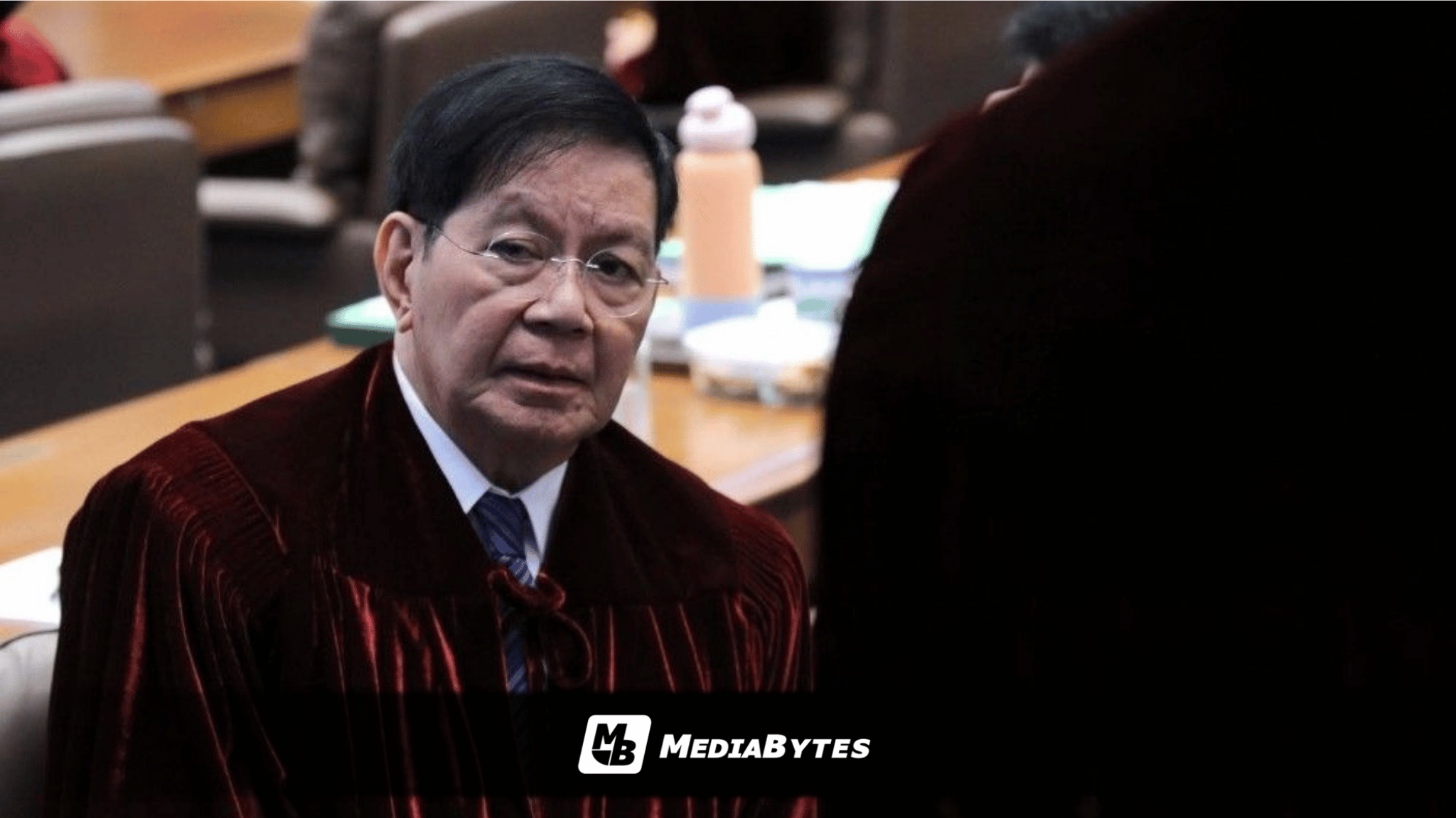
Senator Panfilo “Ping” Lacson stated on Thursday, September 17, that arguments raised by three retired Supreme Court justices will significantly weigh on his upcoming vote regarding the required number of votes to convict an impeached official.
His statements followed an impeachment court session where retired Chief Justices Reynato Puno and Artemio Panganiban, alongside retired Associate Justice Adolfo Azcuna, presented varying constitutional perspectives on the voting requirement.
Lacson highlighted key principles raised by the jurists, including Puno’s discussion on textual versus contextual reading, Panganiban’s focus on truth and fairness, and Azcuna’s insistence that “all means all.”
“Engaging in open court with three of the Court’s most esteemed former justices (including two former Chief Justices) was an unforgettable experience. Concepts like ‘textual vs. contextual,’ ‘truth and fairness,’ and ‘all means all’ certainly left an indelible mark on my mind and conscience. These insights will directly guide my decision next week,” Lacson said in a social media post.
During the arguments, Puno argued for a contextual reading of the Constitution, contending that the two-thirds rule should not strictly default to 16 votes if certain senator-judges are legally barred from taking part.
Panganiban similarly suggested that senators consider their public duty alongside truth and fairness, questioning whether non-participating senators should still be included in the total denominator. Additionally, a memorandum from retired Chief Justice Hilario Davide Jr. pointed out that calculations ought to depend on the number of senators “qualified to vote.”
Conversely, Azcuna advocated for a strict, literal interpretation of the text.
“As long as they are members of the Senate, they constitute the denominator in computing the threshold of two-thirds because all means all,” Azcuna stressed.
During the session, Lacson pressed Panganiban on how fairness applies if nine senators cannot participate, leaving only 15 to vote—a scenario where a rigid 24-member baseline would still demand 16 votes for conviction.
Senator-judges are scheduled to vote next week on whether to uphold or reverse the ruling of Senator Francis “Chiz” Escudero. Serving as presiding officer, Escudero ruled that 16 votes are necessary based on the constitutional mandate requiring “the concurrence of two-thirds of all the Members of the Senate.”