


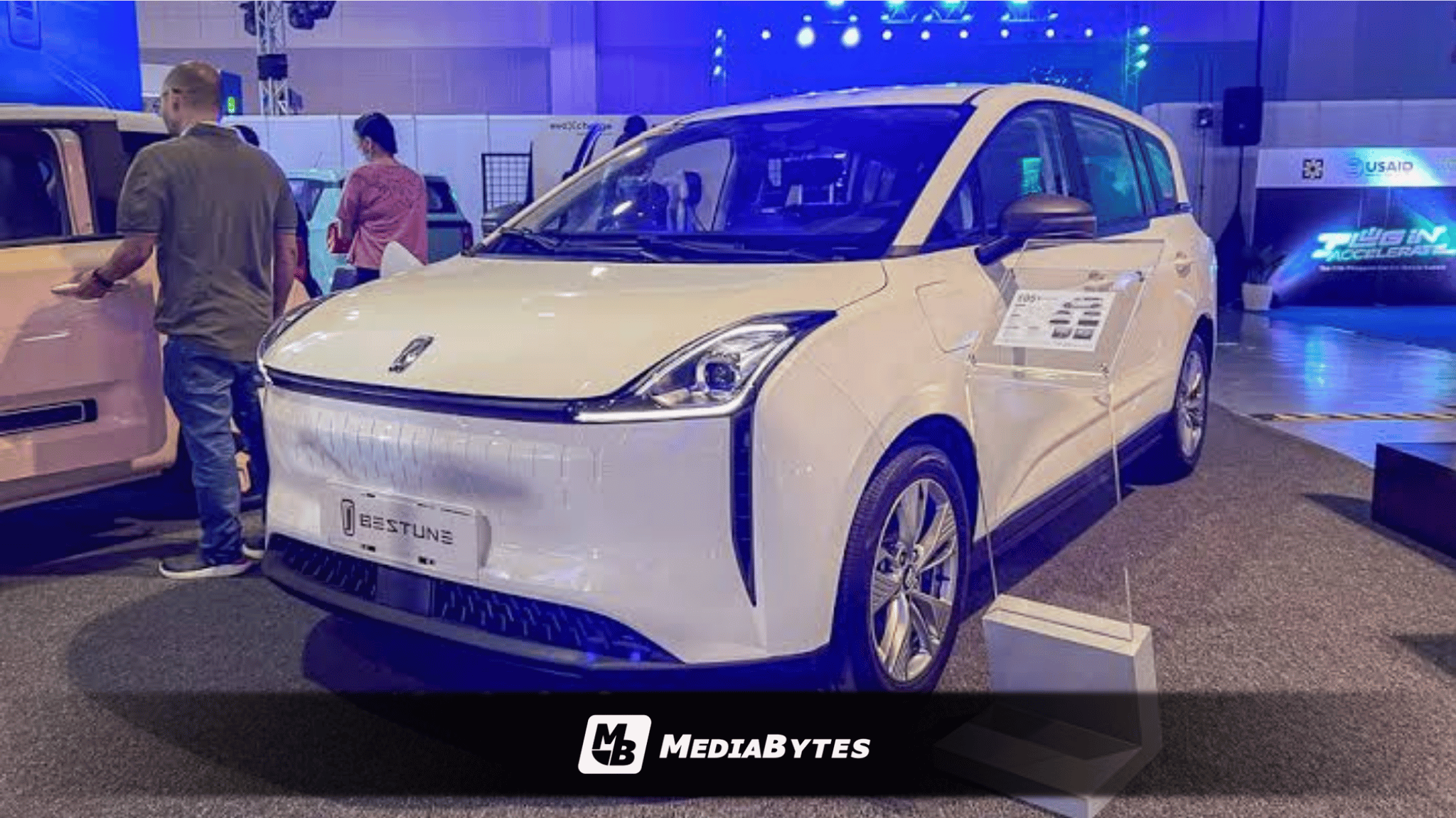
Electric vehicles (EVs) are on track to capture more than 20 percent of overall auto sales in the Philippines this year, driven by consumers seeking long-term relief from volatile pump prices, according to the Electric Vehicle Association of the Philippines (EVAP).
EVAP Vice President Carla Buencamino noted that EVs accounted for approximately 22 percent of total vehicle sales from January to June, putting the sector on course to outperform its 2025 results, when electric models registered a 12 percent market share.
“It’s already exceeding the previous year’s performance. So we’re very positive that that’s going to have an upward trajectory for this year,” Buencamino said in an interview on the sidelines of a Livable Cities Lab forum.
She pointed out that EVAP remains confident the market share for EVs will stay at or above 20 percent through the end of 2026. The shift comes as global oil supplies experience volatility following Middle East conflicts that began in February, pushing local fuel prices higher.
“This is not a short-term solution; it’s something that should be seen in the long term. So it’s a good opportunity to make that shift,” she said.
Joint data from the Chamber of Automotive Manufacturers of the Philippines Inc. (CAMPI) and the Truck Manufacturers Association (TMA) showed EV sales surged 136 percent to 38,286 units from January to July, up from 16,195 units sold in the same period last year.
In contrast, overall auto sales shrank by over 10 percent to 241,725 units from 269,207 units.
To maintain momentum, Buencamino emphasized the need to resolve bureaucratic delays in obtaining permits for charging infrastructure.
ACMobility, where Buencamino serves as Head of Mobility Infrastructure, aims to deploy 1,000 charging points by the end of the year, having completed roughly 600 as of August, with expansion planned for the Visayas and Mindanao regions.
“At the end of the day, there’s always a challenge around permitting…but we’re doing our best to be able to deliver all of these sites,” Buencamino said.
Looking ahead, EVAP is advocating for the government to extend zero-tariff privileges on EVs until 2040, past the current expiration date in 2028.
Trade Undersecretary Ceferino Rodolfo stated that authorities will assess the request nearer to 2028 to evaluate if the duty-free policy has effectively stimulated local manufacturing.