


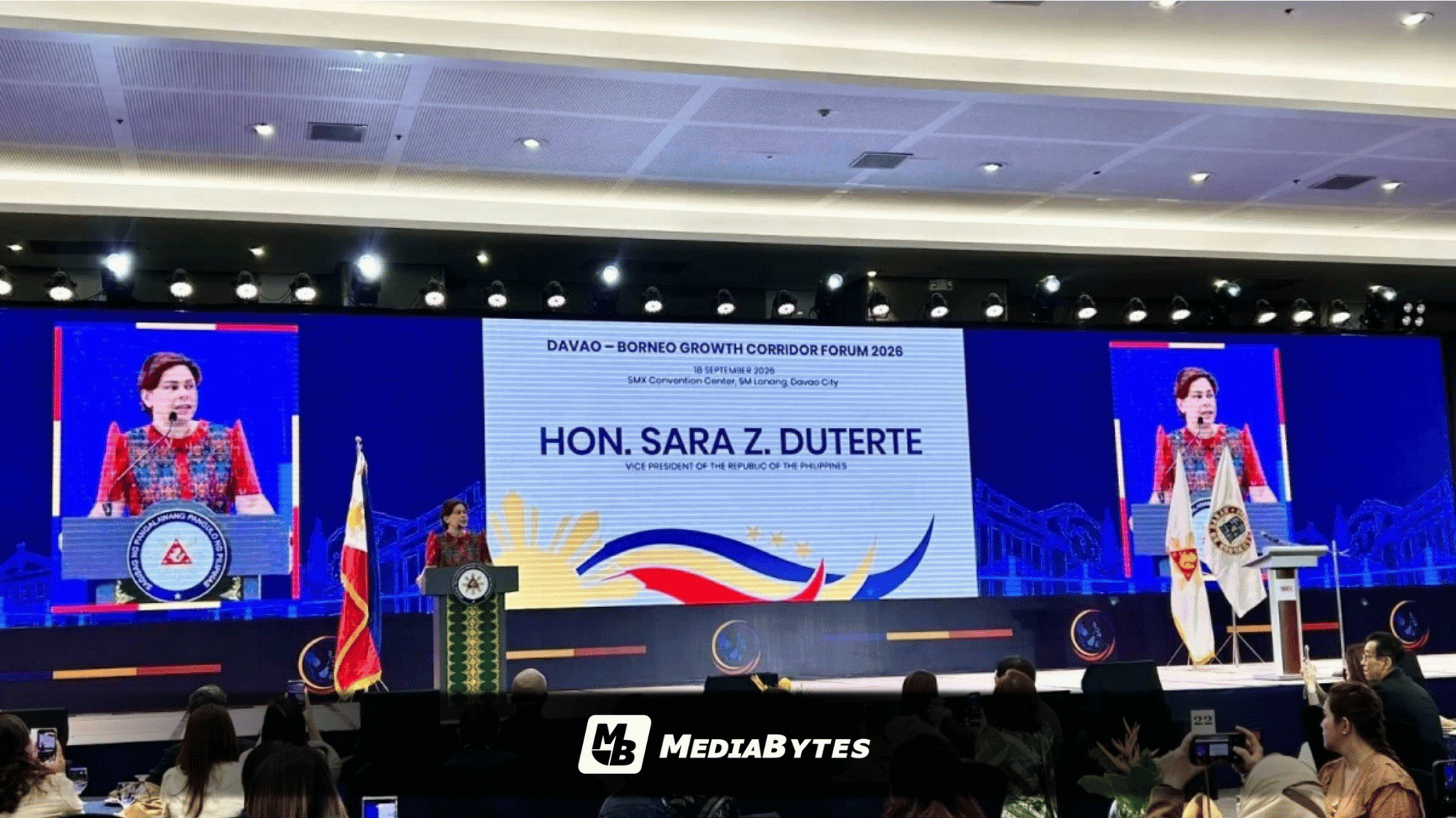
Vice President Sara Duterte has called for the revival of formal maritime trade between Mindanao and Borneo, urging governments and businesses to improve shipping safety, simplify customs procedures, and modernize systems to strengthen cross-border commerce.
Speaking at the Davao-Borneo Growth Corridor Forum ’26 in Davao City on Friday, September 18, Duterte said regional cooperation should move beyond discussions and translate into concrete trade, investment, and infrastructure initiatives.
“Start with a dedicated Mindanao and Borneo team. Start with new trade arrangements. Start with the practical revival of legitimate maritime trade, supported by safer sea routes, clear customs procedures, and modern systems that bring informal activity into the formal economy,” Duterte said.
She said governments should work toward aligning policies, improving border controls, and maintaining secure maritime routes, while the private sector should play a leading role in expanding economic ties.
“Business leaders, investors, this is yours to drive. Form cross- border consortia, co-invest in infrastructure and services and see beyond individual projects to the architecture of a regional economy,” she said.
Duterte also challenged stakeholders to turn discussions into agreements and commitments that could produce measurable results before 2030.
“Let us leave with agreements we can sign and commitments that before 2030 we can point to and say that started here,” she said.
The Vice President described the relationship between Mindanao and Borneo as one built on longstanding historical, cultural, and economic connections rather than geography alone.
“Mindanao and Borneo share more than a coastline. We share history, culture, food, languages. For generations, we have looked across the water and seen not a foreign land, but a friendly neighbor,” she said.
“Let us make cross-border cooperation not an occasional project, but an everyday reality,” she added.
Duterte said Mindanao’s agricultural and tourism potential, together with its growing consumer market, could complement Borneo’s strengths in capital, industry, and logistics.
“These are not competing pieces. They are pieces of the same puzzle,” she said.
She noted that merchandise trade worth $165.96 billion already moves through the region, saying greater connectivity could help expand existing economic activity and create additional opportunities.
“Our challenge is to connect what already exists and create new value from it,” Duterte said.
Davao, she added, could serve as a major center for regional trade and investment.
“Davao is more than ready to be a destination, to be a gateway between producers and markets, between ideas and investments,” she said.
Duterte stressed that infrastructure projects should translate into tangible benefits for farmers, traders, businesses, and workers rather than simply add physical structures.
She cited 265 priority infrastructure projects worth $174.6 billion that are currently being implemented.
“But a port only matters when a farmer can reach a market. A shipping route matters when a trader can cross the sea safely. Infrastructure without use is just concrete,” Duterte said.
“Let us make the journey from a farm in Davao del Norte to a buyer in Kota Kinabalu shorter, from a manufacturer in Sarawak to a market in Mindanao faster, from talent to opportunity closer,” she added.