


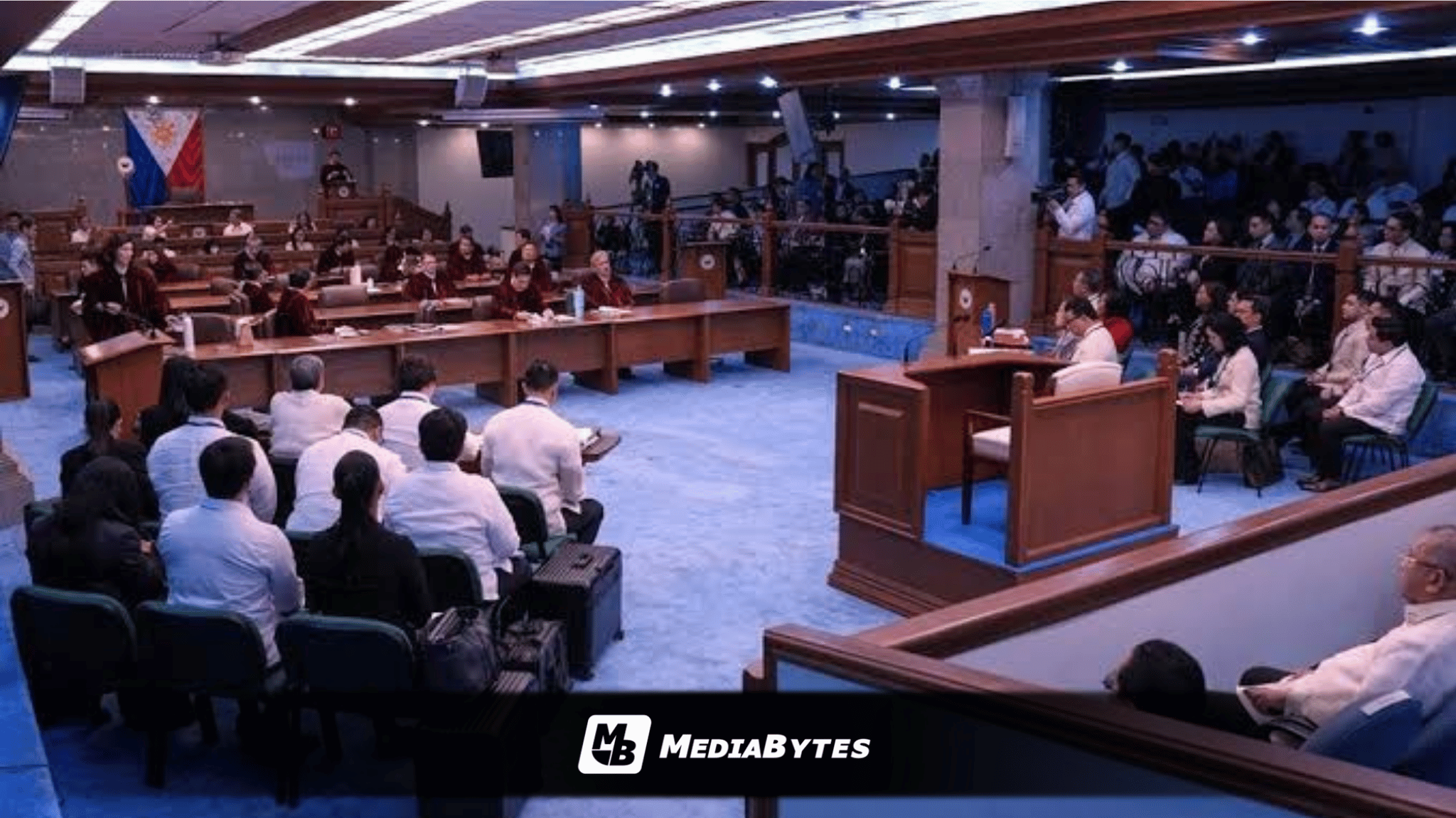
MANILA, Philippines — Former Executive Secretary Vic Rodriguez has asked the Supreme Court (SC) to declare null and void the September 23 decision of the Senate, sitting as an Impeachment Tribunal, which adjusted the required vote threshold to convict an impeached public official.
In his petition, Rodriguez requested a temporary restraining order (TRO) to halt senator-judges “from conducting, completing, implementing, or giving effect to any impeachment conviction vote pursuant to the Sept. 23, 2026 ruling.”
The petitioner specifically urged the High Court to invalidate the ruling “insofar as it reduces or permits the reduction of the constitutional denominator by excluding incumbent Senators merely because they are absent, nonparticipating, unable to participate, beyond the coercive processes of the Senate, or otherwise deemed similarly situated.”
Rodriguez likewise petitioned for the reinstatement of the July 6 ruling, which recognized that two-thirds of a legally constituted 24-member Senate requires 16 votes for conviction.
In support of his prayer, Rodriguez cited Article XI, Section 3(6) of the 1987 Constitution, which states:
“The Senate shall have the sole power to try and decide all cases of impeachment. When sitting for that purpose, the Senators shall be on oath or affirmation. When the President of the Philippines is on trial, the Chief Justice of the Supreme Court shall preside, but shall not vote. No person shall be convicted without the concurrence of two-thirds of all the Members of the Senate.”
Rodriguez argued that this provision sets both the Senate’s total composition and the mandatory vote threshold. He contended that the September 23 decision unlawfully created a dynamic constitutional base.
“Under the assailed ruling, members of the Senate may be excluded from the denominator because they are detained, suspended, otherwise legally restrained, unavailable, physically or medically incapacitated, beyond the coercive processes of the Senate, or otherwise ‘similarly situated,’” Rodriguez stated.
“The number of votes constitutionally necessary to convict an impeached officer is no longer determined by the legally constituted membership of the Senate. It becomes dependent upon the Tribunal’s case-by-case determination of which Senators are capable of participating in the particular impeachment proceeding,” he added.
He noted that the Senate effectively altered the operative meaning of the constitutional provision without adhering to formal amendment procedures under Article XVII.
Highlighting the transcendental importance of the constitutional matter, Rodriguez warned of long-term legal ramifications.
“The challenged ruling potentially establishes a principle under which the constitutional voting requirement in impeachment may be altered depending upon the number of Senators whom the Tribunal determines to be capable of participating. The consequence would extend beyond the present impeachment proceeding. It would establish a mechanism whereby an express constitutional voting requirement could be modified by a ruling of the very body whose powers are being regulated by that constitutional provision,” Rodriguez explained.
The Supreme Court is currently in its decision-writing period through September 30 and is set to resume both en banc and division sessions during the first week of October.