


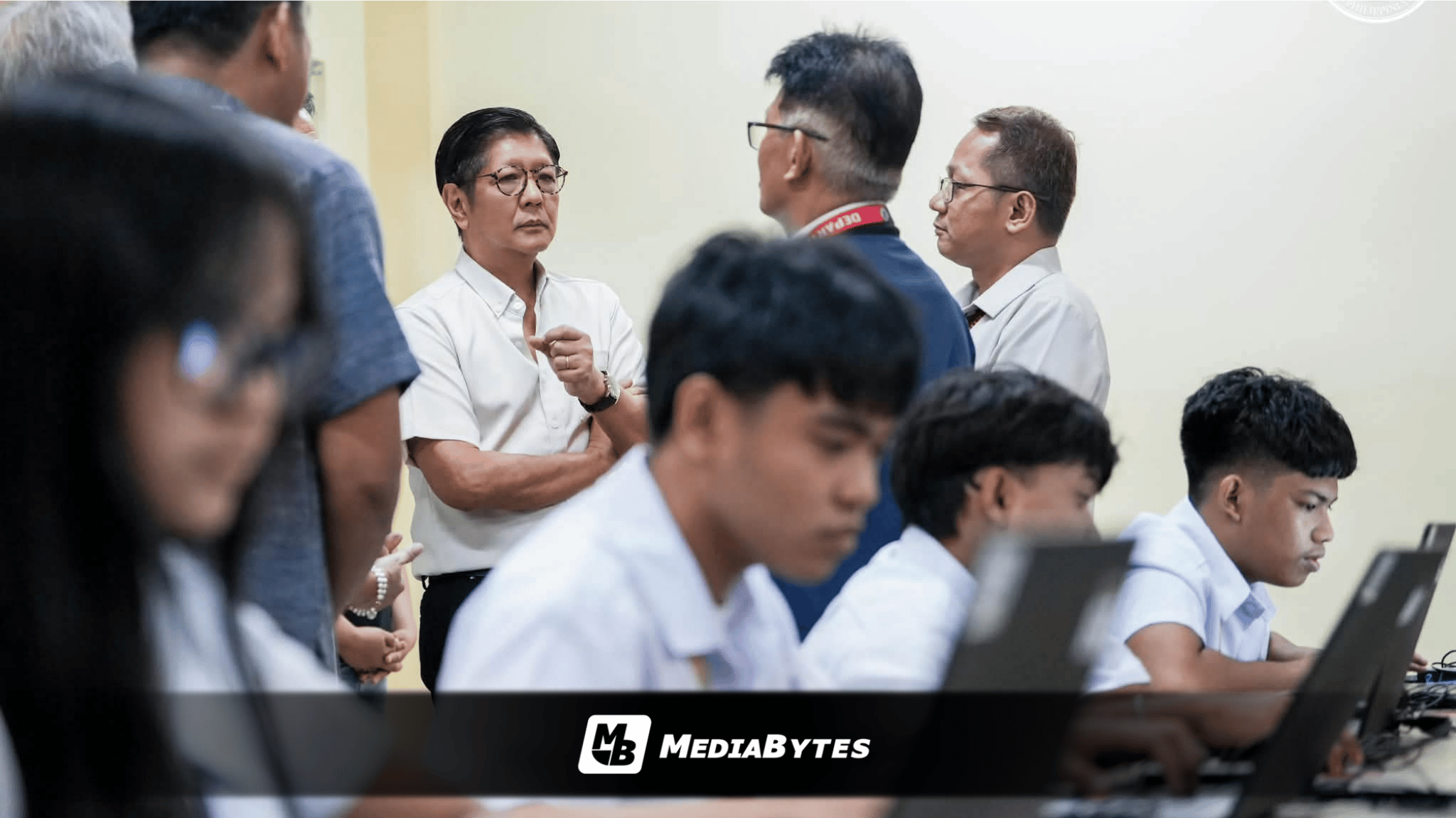
PASAY CITY, Philippines — President Ferdinand Marcos Jr. highlighted the country’s progress in the 2025 Programme for International Student Assessment (PISA), attributing the improved scores to key educational reforms and enhanced backing for students and educators.
Addressing school leaders and education stakeholders during a thanksgiving event at President Corazon C. Aquino National High School, Marcos pointed out that the national average rose across all tested subjects compared to the 2022 results.


The Philippines logged a 20-point gain in Reading, a 17-point rise in Science, and a 16-point increase in Mathematics—marking the nation’s best performance since first entering the assessment in 2018.
“Magagaling ang mga estudyante natin basta tama ang pagkaturo,” Marcos stated.
The President noted that the latest evaluation underscores the benefit of teaching strategies that prioritize deep conceptual understanding over simple rote memorization.
Administered by the Organisation for Economic Cooperation and Development (OECD), the PISA measures the real-world application of Reading, Science, and Mathematics skills among 15-year-old students. The recent evaluation surveyed 8,702 Filipino students across 208 public and private schools nationwide.


The data revealed that the proportion of students attaining at least Level 2—the benchmark proficiency level—grew to 31% in Reading, 31% in Science, and 21% in Mathematics.
Marcos attributed these improvements to the combined efforts of educators, parents, local authorities, and institutional partners.
He pointed to foundational programs including the revised K to 10 curriculum, the Academic Recovery and Accessible Learning (ARAL) initiative, student nutrition programs, and broader support networks for academic personnel. He also noted the recent recruitment of 10,000 school counselor associates aimed at fostering safer school settings.


Despite the positive trend, the President stressed that significant challenges remain for the country’s education sector.
“We have improved from 2022, but we have a long way to go to catch up with our neighbors in the region, with the rest of Asia, and with the rest of the world,” he said.
He emphasized that long-term progress demands a comprehensive strategy addressing every aspect of the learning environment, from classroom instruction to basic student welfare.
“So it is a whole system that has to come together,” Marcos added, encouraging parents and teachers to continuously support critical thinking and open-mindedness among young learners.
“Let us teach our children to question. Let us teach our children to understand,” he concluded.
PASAY CITY, Philippines — President Ferdinand Marcos Jr. highlighted the country’s progress in the 2025 Programme for International Student Assessment (PISA), attributing the improved scores to key educational reforms and enhanced backing for students and educators.
Addressing school leaders and education stakeholders during a thanksgiving event at President Corazon C. Aquino National High School, Marcos pointed out that the national average rose across all tested subjects compared to the 2022 results. The Philippines logged a 20-point gain in Reading, a 17-point rise in Science, and a 16-point increase in Mathematics—marking the nation’s best performance since first entering the assessment in 2018.
“Magagaling ang mga estudyante natin basta tama ang pagkaturo,” Marcos stated.
The President noted that the latest evaluation underscores the benefit of teaching strategies that prioritize deep conceptual understanding over simple rote memorization.
Administered by the Organisation for Economic Cooperation and Development (OECD), the PISA measures the real-world application of Reading, Science, and Mathematics skills among 15-year-old students. The recent evaluation surveyed 8,702 Filipino students across 208 public and private schools nationwide.
The data revealed that the proportion of students attaining at least Level 2—the benchmark proficiency level—grew to 31% in Reading, 31% in Science, and 21% in Mathematics.
Marcos attributed these improvements to the combined efforts of educators, parents, local authorities, and institutional partners. He pointed to foundational programs including the revised K to 10 curriculum, the Academic Recovery and Accessible Learning (ARAL) initiative, student nutrition programs, and broader support networks for academic personnel. He also noted the recent recruitment of 10,000 school counselor associates aimed at fostering safer school settings.
Despite the positive trend, the President stressed that significant challenges remain for the country’s education sector.
“We have improved from 2022, but we have a long way to go to catch up with our neighbors in the region, with the rest of Asia, and with the rest of the world,” he said.
He emphasized that long-term progress demands a comprehensive strategy addressing every aspect of the learning environment, from classroom instruction to basic student welfare.
“So it is a whole system that has to come together,” Marcos added, encouraging parents and teachers to continuously support critical thinking and open-mindedness among young learners.
“Let us teach our children to question. Let us teach our children to understand,” he concluded.
PASAY CITY, Philippines — President Ferdinand Marcos Jr. highlighted the country’s progress in the 2025 Programme for International Student Assessment (PISA), attributing the improved scores to key educational reforms and enhanced backing for students and educators.
Addressing school leaders and education stakeholders during a thanksgiving event at President Corazon C. Aquino National High School, Marcos pointed out that the national average rose across all tested subjects compared to the 2022 results. The Philippines logged a 20-point gain in Reading, a 17-point rise in Science, and a 16-point increase in Mathematics—marking the nation’s best performance since first entering the assessment in 2018.
“Magagaling ang mga estudyante natin basta tama ang pagkaturo,” Marcos stated.
The President noted that the latest evaluation underscores the benefit of teaching strategies that prioritize deep conceptual understanding over simple rote memorization.
Administered by the Organisation for Economic Cooperation and Development (OECD), the PISA measures the real-world application of Reading, Science, and Mathematics skills among 15-year-old students. The recent evaluation surveyed 8,702 Filipino students across 208 public and private schools nationwide.
The data revealed that the proportion of students attaining at least Level 2—the benchmark proficiency level—grew to 31% in Reading, 31% in Science, and 21% in Mathematics.
Marcos attributed these improvements to the combined efforts of educators, parents, local authorities, and institutional partners. He pointed to foundational programs including the revised K to 10 curriculum, the Academic Recovery and Accessible Learning (ARAL) initiative, student nutrition programs, and broader support networks for academic personnel. He also noted the recent recruitment of 10,000 school counselor associates aimed at fostering safer school settings.
Despite the positive trend, the President stressed that significant challenges remain for the country’s education sector.
“We have improved from 2022, but we have a long way to go to catch up with our neighbors in the region, with the rest of Asia, and with the rest of the world,” he said.
He emphasized that long-term progress demands a comprehensive strategy addressing every aspect of the learning environment, from classroom instruction to basic student welfare.
“So it is a whole system that has to come together,” Marcos added, encouraging parents and teachers to continuously support critical thinking and open-mindedness among young learners.
“Let us teach our children to question. Let us teach our children to understand,” he concluded.
PASAY CITY, Philippines — President Ferdinand Marcos Jr. highlighted the country’s progress in the 2025 Programme for International Student Assessment (PISA), attributing the improved scores to key educational reforms and enhanced backing for students and educators.
Addressing school leaders and education stakeholders during a thanksgiving event at President Corazon C. Aquino National High School, Marcos pointed out that the national average rose across all tested subjects compared to the 2022 results.
The Philippines logged a 20-point gain in Reading, a 17-point rise in Science, and a 16-point increase in Mathematics—marking the nation’s best performance since first entering the assessment in 2018.
“Magagaling ang mga estudyante natin basta tama ang pagkaturo,” Marcos stated.
The President noted that the latest evaluation underscores the benefit of teaching strategies that prioritize deep conceptual understanding over simple rote memorization.
Administered by the Organisation for Economic Cooperation and Development (OECD), the PISA measures the real-world application of Reading, Science, and Mathematics skills among 15-year-old students. The recent evaluation surveyed 8,702 Filipino students across 208 public and private schools nationwide.
The data revealed that the proportion of students attaining at least Level 2—the benchmark proficiency level—grew to 31% in Reading, 31% in Science, and 21% in Mathematics.
Marcos attributed these improvements to the combined efforts of educators, parents, local authorities, and institutional partners.
He pointed to foundational programs including the revised K to 10 curriculum, the Academic Recovery and Accessible Learning (ARAL) initiative, student nutrition programs, and broader support networks for academic personnel. He also noted the recent recruitment of 10,000 school counselor associates aimed at fostering safer school settings.
Despite the positive trend, the President stressed that significant challenges remain for the country’s education sector.
“We have improved from 2022, but we have a long way to go to catch up with our neighbors in the region, with the rest of Asia, and with the rest of the world,” he said.
He emphasized that long-term progress demands a comprehensive strategy addressing every aspect of the learning environment, from classroom instruction to basic student welfare.
“So it is a whole system that has to come together,” Marcos added, encouraging parents and teachers to continuously support critical thinking and open-mindedness among young learners.
“Let us teach our children to question. Let us teach our children to understand,” he concluded.