


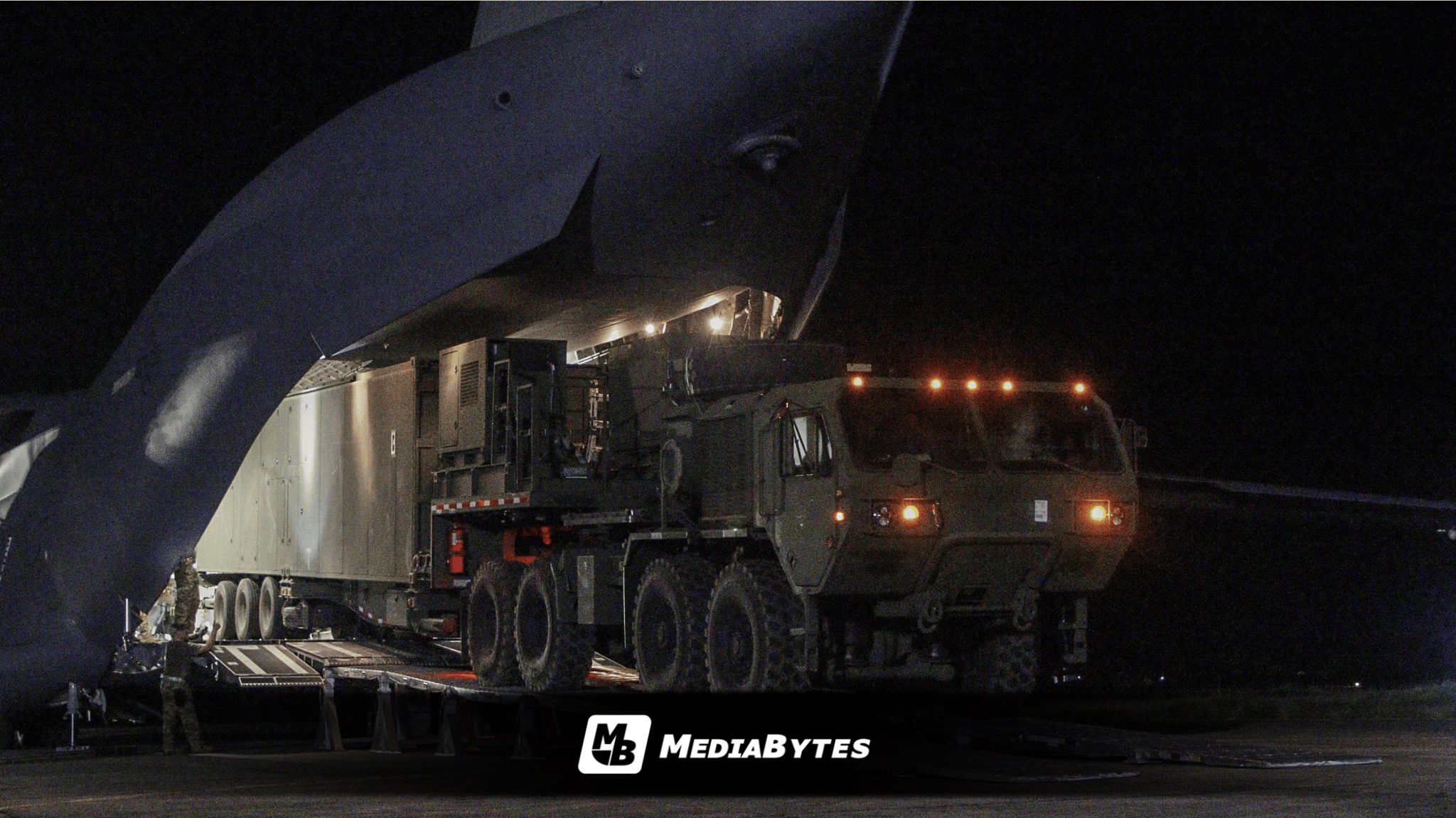
OKINAWA, Japan — The United States military is set to relocate a Typhon intermediate-range mobile missile launcher to Kadena Air Base in Japan’s southernmost prefecture of Okinawa for storage, expected to take place as early as mid-October.
While Japan’s Ministry of Defense has requested public support for the plan, arguing that it will bolster the joint deterrence capabilities of the U.S.-Japan alliance, local officials and residents are strongly urging for the plan to be canceled over fears of permanent stationing.
Japanese Defense Minister Shinjiro Koizumi defended the move during a press conference on Tuesday, asserting that housing the launcher at Kadena could “effectively demonstrate the mobile deployment capability of the U.S. military” and that fortifying the alliance is “essential to protecting peaceful lives.”
Capable of firing Tomahawk cruise missiles with an operational range of roughly 1,600 kilometers, the land-based Typhon system puts the Chinese mainland within reach from Japanese territory.
The launcher was previously deployed temporarily to the Kanoya air base in Kagoshima Prefecture for joint military drills involving the U.S., Japan, and Australia before its planned move to Kadena.
A Defense Ministry official noted that Washington has clarified the storage arrangement does not constitute a permanent operational deployment, emphasizing that no Typhon unit will be permanently based at Kadena and no significant influx of U.S. troops is expected.
Despite these assurances, anxiety continues to mount among local communities already burdened by a heavy military presence, frequent aircraft noise, and past incidents involving U.S. service members. Many fear the installation could turn the region into a prime target during a military conflict.
On Monday, Kadena Mayor Hiroshi Toyama submitted a formal protest letter to the Okinawa Defense Bureau, condemning the storage plan as “outrageous and cannot be tolerated.”
The protest highlighted the lack of a clear timeline for the system’s presence, fueling concerns that the move could eventually transition into a permanent long-term deployment.