


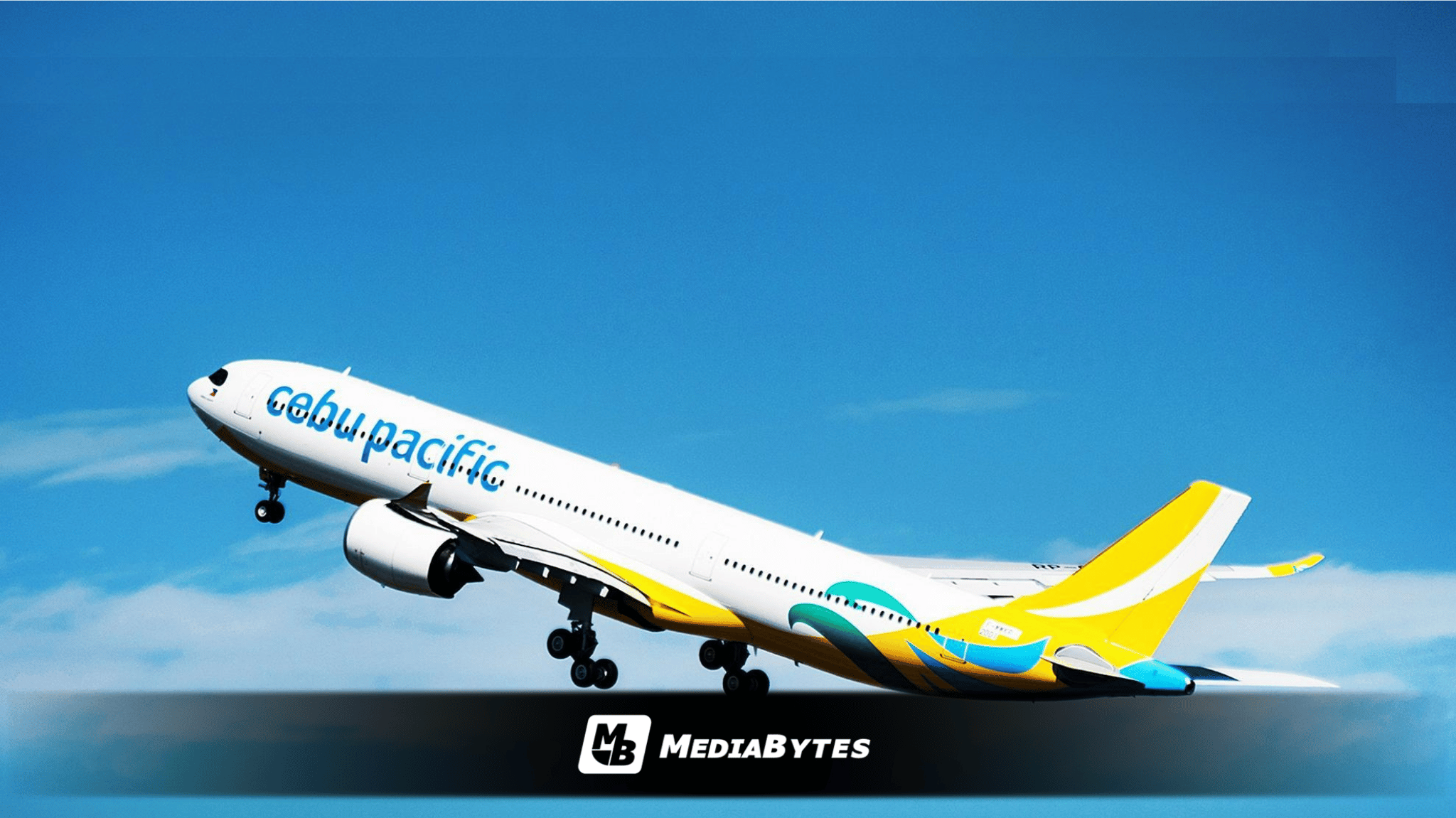
MANILA, Philippines — Cebu Air Inc., operating as Cebu Pacific, announced a 4.4% year-on-year increase in passenger volume for September, transporting over 1.9 million travelers despite September traditionally being a sluggish month for the local aviation industry.
In a regulatory filing submitted to the Philippine Stock Exchange (PSE), the Gokongwei-led budget airline reported that the latest figures bring its year-to-date passenger count to nearly 20.8 million, marking a 4.1% rise from the 20 million recorded during the same nine-month timeframe last year.
Strong domestic demand served as the primary catalyst for the growth, effectively balancing out a contraction in international routes where the carrier intentionally reduced capacity to cope with high fuel prices.
Domestic passenger traffic saw a 7.4% year-on-year jump in September, reaching 1.48 million travelers. This performance was backed by a 6.2% expansion in seat capacity, lifting the domestic seat load factor—which measures the percentage of filled seats—by 1% to 84.7%. Over the first nine months of the year, domestic travelers accumulated to 15.7 million, up 5.5%.
Revenue passenger kilometers for domestic flights grew 8.3% during the month, alongside an 8.2% increase in available seat kilometers.
Conversely, international operations experienced a slowdown as the airline managed its capacity adjustments. International passenger volume fell 5.1% year-on-year to 424,000, following an 11.5% cut in available international seat capacity.
Nonetheless, the tighter capacity strategy drove the international load factor up by 5.4% to 79.3%, keeping year-to-date international traffic stable at 5.07 million passengers.
Across all networks, the total seat load factor improved to 83.5% in September from 81.1% a year ago, driven by an overall seat capacity increase of 2.4% to 2.28 million seats. For the January-to-September period, total capacity hit 25.3 million seats—a 7.6% rise—while the cumulative average load factor dipped 2.7% to 82.1%.
”Despite September traditionally being a lean travel month in the Philippines, we saw encouraging demand across our domestic network, particularly on key trunk routes,” said Xander Lao, Cebu Pacific president and chief commercial officer.
”Internationally, we continued to manage capacity selectively in response to elevated fuel prices,” he added.
Looking ahead, Lao noted that the airline will sustain a disciplined strategy to align capacity with market demand as the peak holiday season approaches, while maintaining the flexibility to recalibrate its network based on shifting fuel costs.
Cebu Pacific currently manages a fleet of 102 aircraft, servicing 36 domestic and 25 international destinations.