


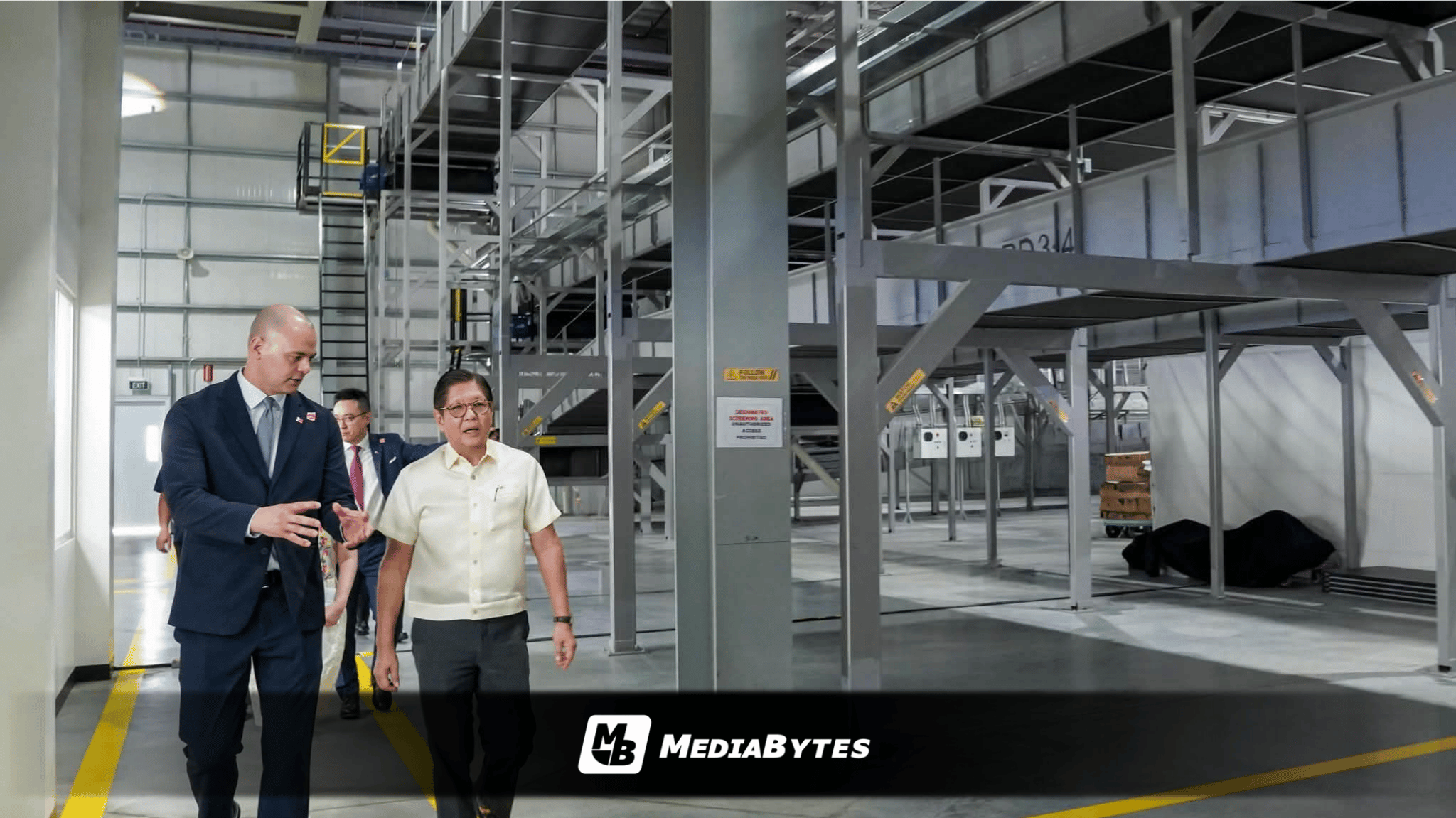
CLARK FREEPORT ZONE, Pampanga — President Ferdinand Marcos Jr. has ordered the Department of Public Works and Highways (DPWH) and the Department of Transportation (DOTr) to aggressively upgrade the country’s road networks, bridges, and transport systems to tackle high logistics costs and foster economic growth.
Speaking at the grand opening of the United Parcel Service, Inc. (UPS) International Air Hub at Clark International Airport on Thursday, October 15, Marcos emphasized that an efficient logistics network is crucial for an archipelagic nation like the Philippines.


He pointed out that logistics expenses in the country account for up to 27% of total sales—one of the highest rates across Southeast Asia.
Aside from insufficient road networks, the Chief Executive highlighted structural bottlenecks such as congested ports and a lack of adequate cold chain facilities that hamper the seamless movement of goods.
”We have to deal with congested ports, inadequate road networks, and insufficient cold chain facilities contributing to delays,increase in cost, and ultimately this affects the prices paid by our consumers,” Marcos said.
”To address these challenges and better connect agricultural production areas to ports and businesses, the DPWH ( Department of Public Works and Highways) and DOTr (Department of Transportation) are working to improve our roads, bridges, and transport systems,” Marcos added, specifically urging Transportation Secretary Giovanni Lopez to take immediate note.
Ensuring Resilience and Food Security
Marcos stressed that efficient supply chains directly impact the public’s access to vital goods, particularly during crises and natural calamities.
”This is the role of logistics. It connects our communities, sustains our businesses, and brings opportunities closer to the people. And, especially, during calamities, the timely delivery of essential supplies becomes even more critical,” Marcos stated.
”For an archipelagic country such as the Philippines, efficient logistics is vital to economic development and the well-being of our people,” he continued.
Furthermore, the President noted that strengthening transport efficiency plays a critical role in mitigating the anticipated impacts of a super El Niño by maintaining steady food flows, preventing supply disruptions, and stabilizing basic commodity prices.


Boosting Private Investment and Regional Trade
While government agencies tackle infrastructure backlogs, Marcos underscored the necessity of private-sector investments to expand capacity and integrate the domestic economy more tightly with global markets.
He cited the newly launched UPS International Air Hub as a major milestone, noting that it is projected to manage roughly 46,000 packages and cargo shipments daily—nearly ten times the handling capacity of the previous facility.
The sustainable hub features electric ground support vehicles, dedicated customs and immigration clearance lanes, and advanced automated sorting technology.
With 170 weekly flight segments expected to operate out of the hub, the facility will dramatically cut transit times—offering next-day delivery options to key international markets across the Asia-Pacific, India, Europe, and the United States.
“Its 17 electric ground service vehicles and equipment units, along with nine additional units scheduled for delivery next year, will support more efficient operations while advancing our advocacy for environmental sustainability,” Marcos said.
”The hub’s dedicated immigration and customs lanes will also help streamline cargo clearance,” he concluded.