


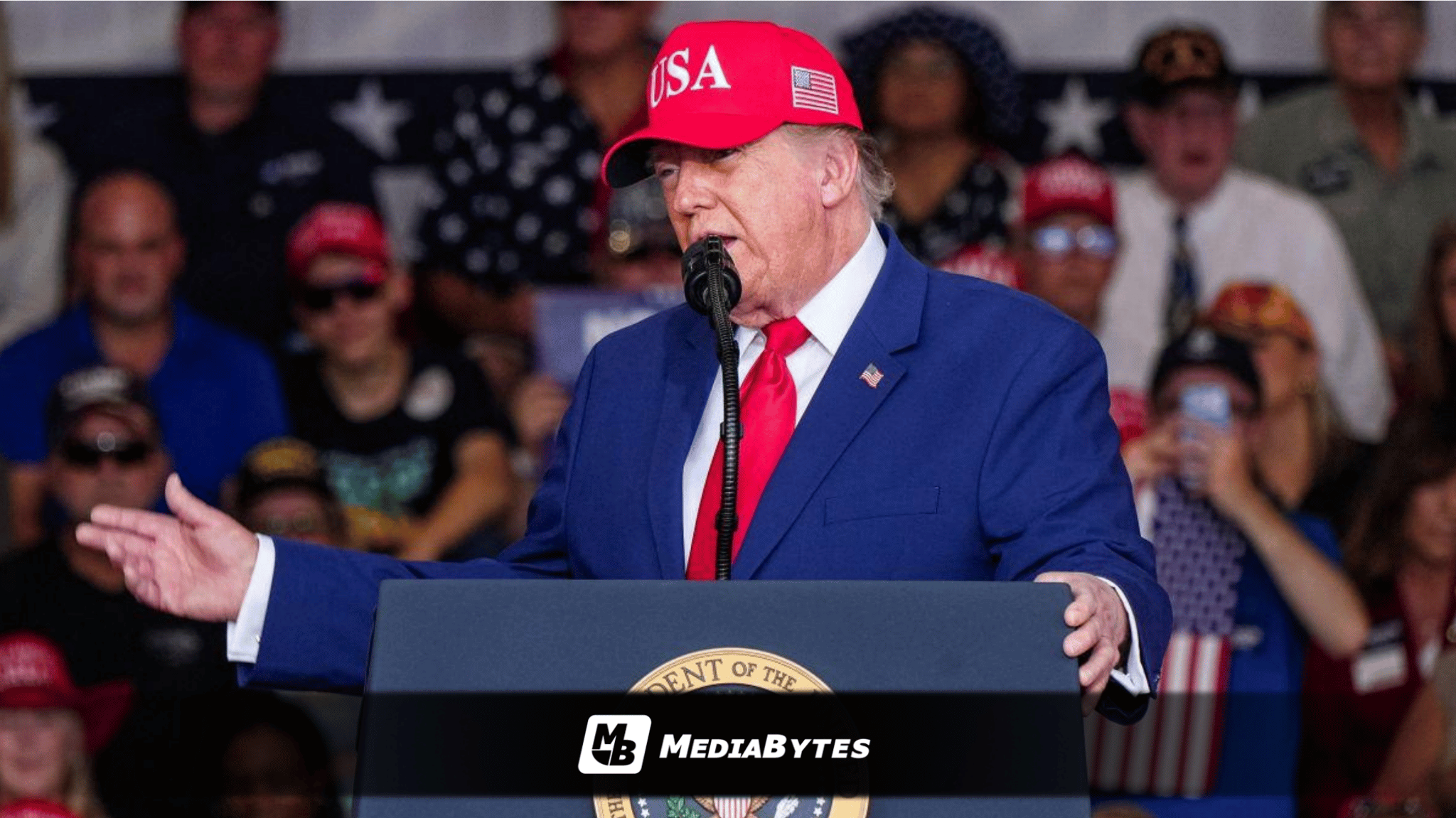
DALTON, Georgia — During a campaign stop on Friday, U.S. President Donald Trump drew criticism after joking about common Middle Eastern names while ridiculing Iran’s presidential office during a political rally.
Speaking to a crowd gathered inside an aircraft hangar at Dalton Municipal Airport to support Republican candidates ahead of the upcoming midterm elections, Trump poked fun at the prevalence of the name Mohammad across the Muslim world.
“You know, if you’re in doubt about somebody’s name from the Middle East, just say ‘Mohammad,’” Trump told attendees. “You have about a 65% chance. ‘Hello, Mohammad.’ I’ve done it for years now. I’ve never been wrong.”
The remark was made as Trump shifted his focus to Iran, a country he targeted while discussing regional politics. Mohammad is widely recognized as one of the most popular male names globally among Muslims, who frequently bestow it upon their sons in honor of the Prophet Mohammad, Islam’s foundational figure.
“Iran is the only country where nobody wants to be president,” Trump remarked, before playfully pretending to offer the role to individuals named Mohammad.
Despite Masoud Pezeshkian holding the Iranian presidency since 2024, Trump’s joke received a subdued, muted reaction from the Georgia audience.
Civil rights organizations and Muslim advocacy groups have consistently denounced Trump over political rhetoric that critics argue targets and disparages Muslims, immigrants, and ethnic minority communities. These concerns have intensified during the midterm campaign season, with particular friction directed toward Somali and Muslim American figures, including U.S. Senate candidate Abdul El-Sayed and Minnesota Representative Ilhan Omar.
During the same address, Trump reiterated his administration’s hardline stance, vowing that Tehran would never acquire a nuclear weapon. The statement follows military actions initiated roughly seven months prior, when the United States and Israel launched a joint campaign targeting Iran’s infrastructure to cripple its nuclear capabilities.
Meanwhile, a recent annual report published by the Council on American-Islamic Relations highlighted a surge in domestic Islamophobia, linking the trend partly to executive immigration crackdowns and official responses to pro-Palestinian demonstrations during Trump’s second presidential term.