


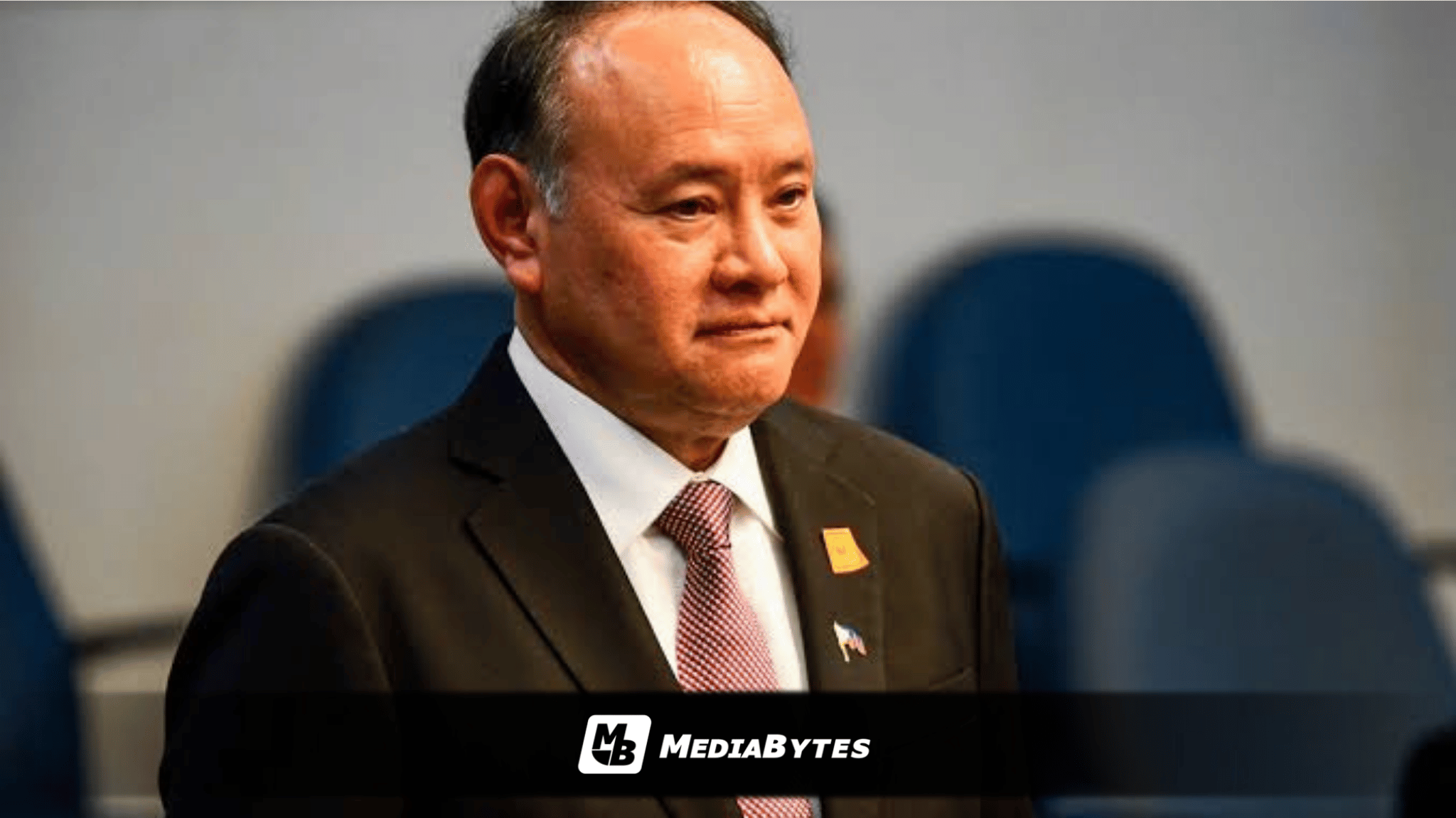
MANILA, Philippines — Defense Secretary Gilberto “Gibo” Teodoro Jr. on Friday, October 23, called on local enterprises and the general public to lessen their economic dependence on China, warning that Beijing could exploit trade ties as leverage amid ongoing territorial disputes in the West Philippine Sea (WPS).
Speaking to defense reporters, Teodoro pointed out that recent reports indicating potential economic sanctions from Beijing highlight how supposed diplomatic goodwill can easily be transformed into coercive tools, emphasizing the urgency of boosting local manufacturing and diversifying global trade networks.
“It just goes to show you that whatever goodwill they are supposedly extending is a weapon, and they are weaponizing it,” Teodoro stated.
The defense chief’s remarks came in the wake of reports detailing ten potential countermeasures being evaluated by Beijing, which allegedly include restrictions on vital commodities such as petroleum products and fertilizers.
Additional measures reportedly involve discouraging Chinese tourism to the Philippines and tightening labor regulations for Filipino nationals employed in mainland China, Hong Kong, and Macao.
Although these proposals surfaced via a Manila-based Chinese-language publication without official confirmation from Beijing—leaving it uncertain whether they have reached formal policy stages—Teodoro stressed that the reports expose the inherent vulnerabilities of depending heavily on an adversarial claimant state, particularly concerning critical supplies and national infrastructure.
“We cannot place our complete trust in a country that claims our territory. At the end of the day, these things can be weaponized, as they are now threatening to do,” he remarked.
Instead of viewing the looming restrictions merely as supply chain inconveniences, Teodoro challenged citizens to see them as a test of national grit and economic independence.
“The question is how the Filipino people will respond. Will we accept this as a challenge to our Filipino identity, or will we simply forget about our territory? At the end of the day, it is a fundamental choice,” he noted.
‘Buy Filipino-made products’
To mitigate these risks, Teodoro encouraged consumers to patronize local commodities and urged commercial entities to seek out alternative trade partners in friendly nations like India and Bangladesh.
Pointing to items like garments—sectors where the Philippines historically maintained domestic production—he highlighted the viability of shifting away from a single manufacturing hub.
“It is a good time for Filipinos to revisit the policy of buying Filipino products or buying from friendly countries,” Teodoro said.
While recognizing the financial burdens and disruptions associated with pivoting away from deeply entrenched Chinese supply chains, he reminded the business community of valuable lessons learned during the global health crisis.
“I understand the private sector because its supply chains from China are already established. It also costs money to shift. But the pandemic taught us a lesson: you cannot rely on only one source,” he explained.
Teodoro concluded that broadening sourcing avenues will insulate local commerce from external shocks and grant the nation greater leverage amid escalating maritime frictions, which have recently involved tense standoffs over resupply missions to the BRP Sierra Madre at Ayungin Shoal.