


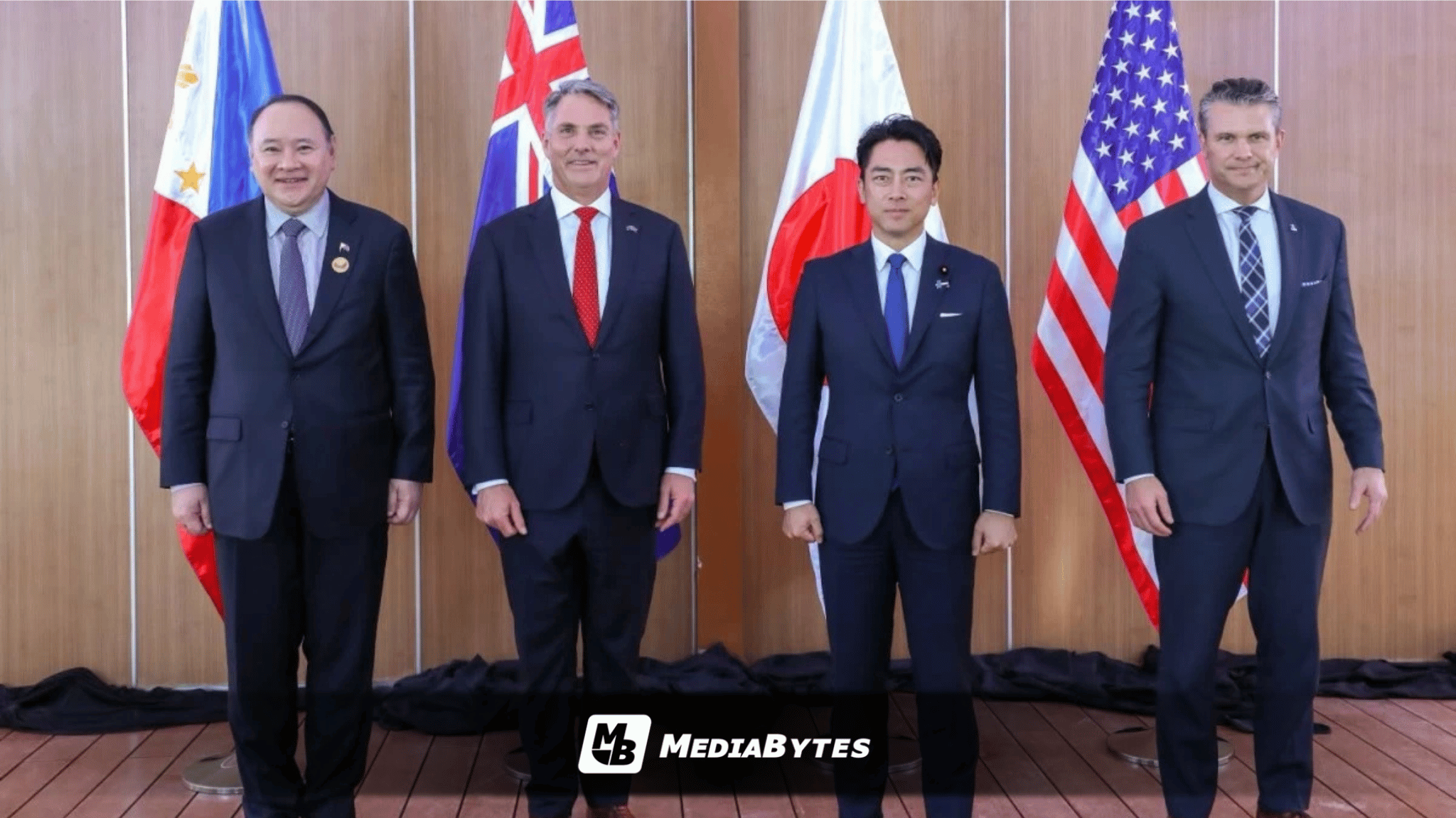
The Philippines, the United States, Japan, and Australia have agreed to establish a new joint coordination hub on Philippine soil to strengthen military cooperation and regional security in the Indo-Pacific.
The initiative to create the Combined Coordination Center (CCC) was finalized by Defense Secretary Gilberto “Gibo” Teodoro Jr., US Secretary of War Pete Hegseth, Japanese Defense Minister Koizumi Shinjiro, and Australian Deputy Prime Minister and Defense Minister Richard Marles. The four defense chiefs—collectively known as the “Squad”—convened in Cebu on October 28 on the sidelines of the ASEAN Defense Ministers’ Meeting-Plus (ADMM-Plus), according to a joint statement released by the Department of National Defense (DND) on Tuesday, November 10.
Under the new agreement, the nations plan to align defense investments to help protect the Philippine archipelago, enhance senior policy dialogue, and expand the frequency and scale of joint military exercises.
While the DND has not yet disclosed the hub’s exact location, operational timeline, or specific responsibilities, the initiative builds upon the Defense Cooperation Council (DCC) framework established in Singapore last May.
During their talks, the defense ministers reiterated shared concerns regarding tensions in the South China Sea and East China Sea.
”Strong opposition to any unilateral actions, including by force or coercion, which escalate tensions and undermine regional peace and stability,” the leaders reaffirmed in their joint statement.
The announcement comes amid heightened maritime friction involving Chinese vessels in the West Philippine Sea. Beijing continues to press sweeping claims over contested waters—overlapping with the Philippine exclusive economic zone—and rejects the 2016 arbitral ruling that invalidated its claims.
In response, Manila continues to broaden its security partnerships with allied nations to modernize its military capabilities and safeguard its maritime rights.