


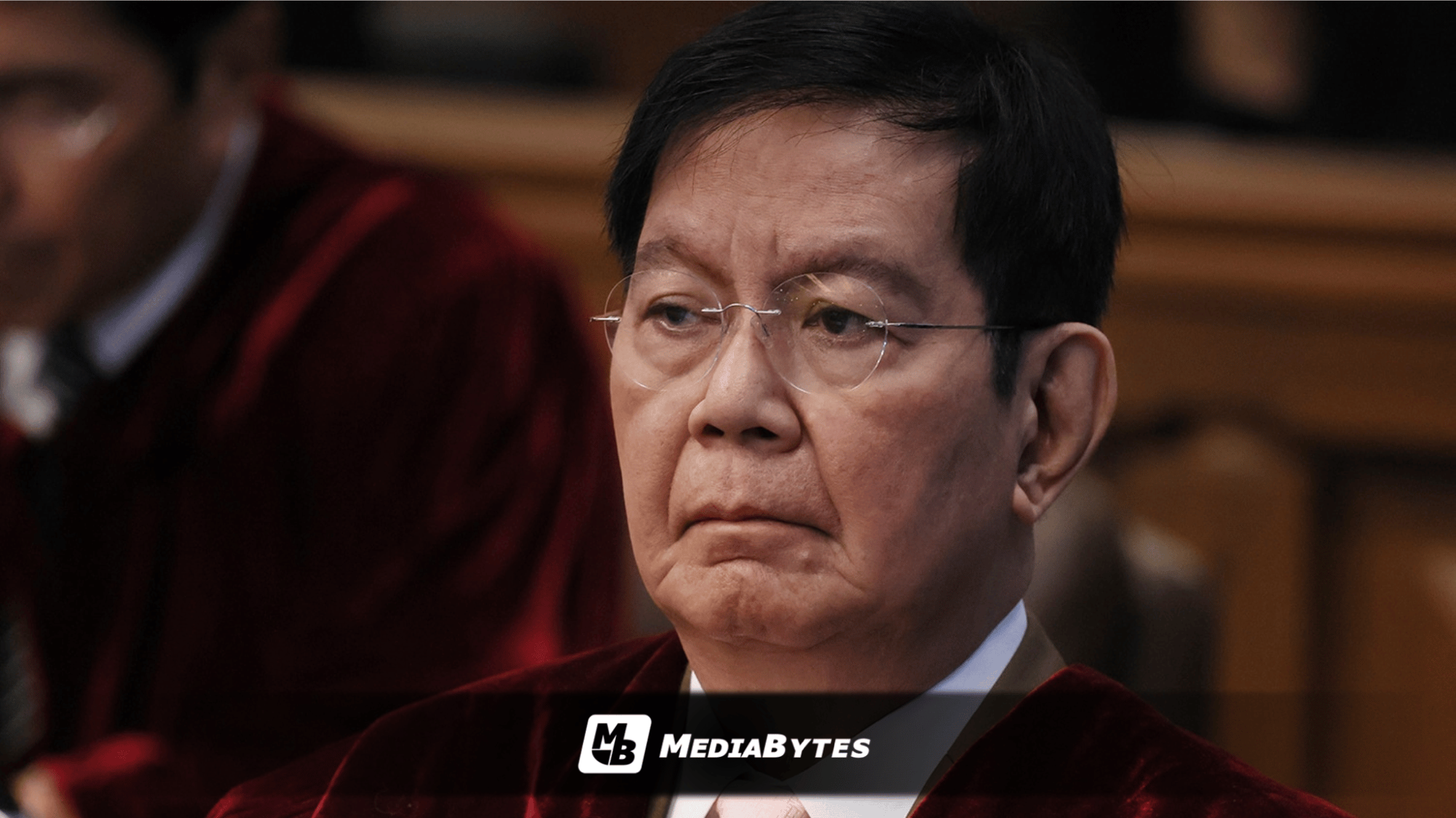
MANILA, Philippines — Senator Panfilo “Ping” Lacson has clarified that he is not advocating for a Cabinet revamp, emphasizing instead that his recent remarks were meant to urge President Ferdinand Marcos Jr. to evaluate his economic managers and review current fiscal policies in light of the country’s sluggish economic performance.
In a social media statement posted on Sunday, November 22, Lacson explained that his goal is a thorough review of existing strategies that may be exacerbating the nation’s financial challenges.
“I did not posit a Cabinet reshuffle, but a long hard look at our economic team to revisit some of our economic policies,” Lacson stated.
The senator also pushed back against Malacañang’s attribution of the domestic slowdown to geopolitical tensions in the Middle East. He pointed out that neighboring Southeast Asian nations are navigating the exact same global fuel price pressures while still managing to post robust economic expansion.
“With all due respect Mr President, blaming the US-Iran conflict will not suffice. Our ASEAN neighbors face the same oil-price pressures, yet Vietnam’s GDP (Gross Domestic Product) rises to 9.95 percent, Indonesia is steady at 5.47 percent, Singapore and Malaysia with 5.4 percent and 5.3 percent respectively. Our growth is lowest at 2.1 percent and still decelerating,” he argued.
Marcos had previously stood by his economic team against mounting criticism, asserting that the country’s current financial headwinds could be “clearly directly traced to the war in Iran.”
Lacson maintained that external factors alone fail to account for the broader domestic downturn, referencing his earlier warning regarding a range of worsening economic indicators, including currency depreciation, market declines, and rising poverty rates.
“ECONOMIC MALAISE: Stocks are sliding, the peso is losing its value, property is oversupplied, agriculture is in disarray, investors have stayed away, and inflation and poverty keep climbing. Mr. President, maybe it’s time to look hard at your economic team,” Lacson wrote in a previous post.
Data from the Philippine Statistics Authority (PSA) underscores these concerns, showing that the country’s gross domestic product (GDP) expanded by only 2.1 percent in the third quarter of 2026, decelerating from 2.4 percent in the preceding quarter.
PSA Chief Claire Dennis Mapa noted that this represents the Philippines’ weakest quarterly expansion since the first quarter of 2021, during the height of the COVID-19 pandemic. Compounding the sluggish growth, national inflation surged to a three-year peak of 7.8 percent in October, up from 7.2 percent in September.