


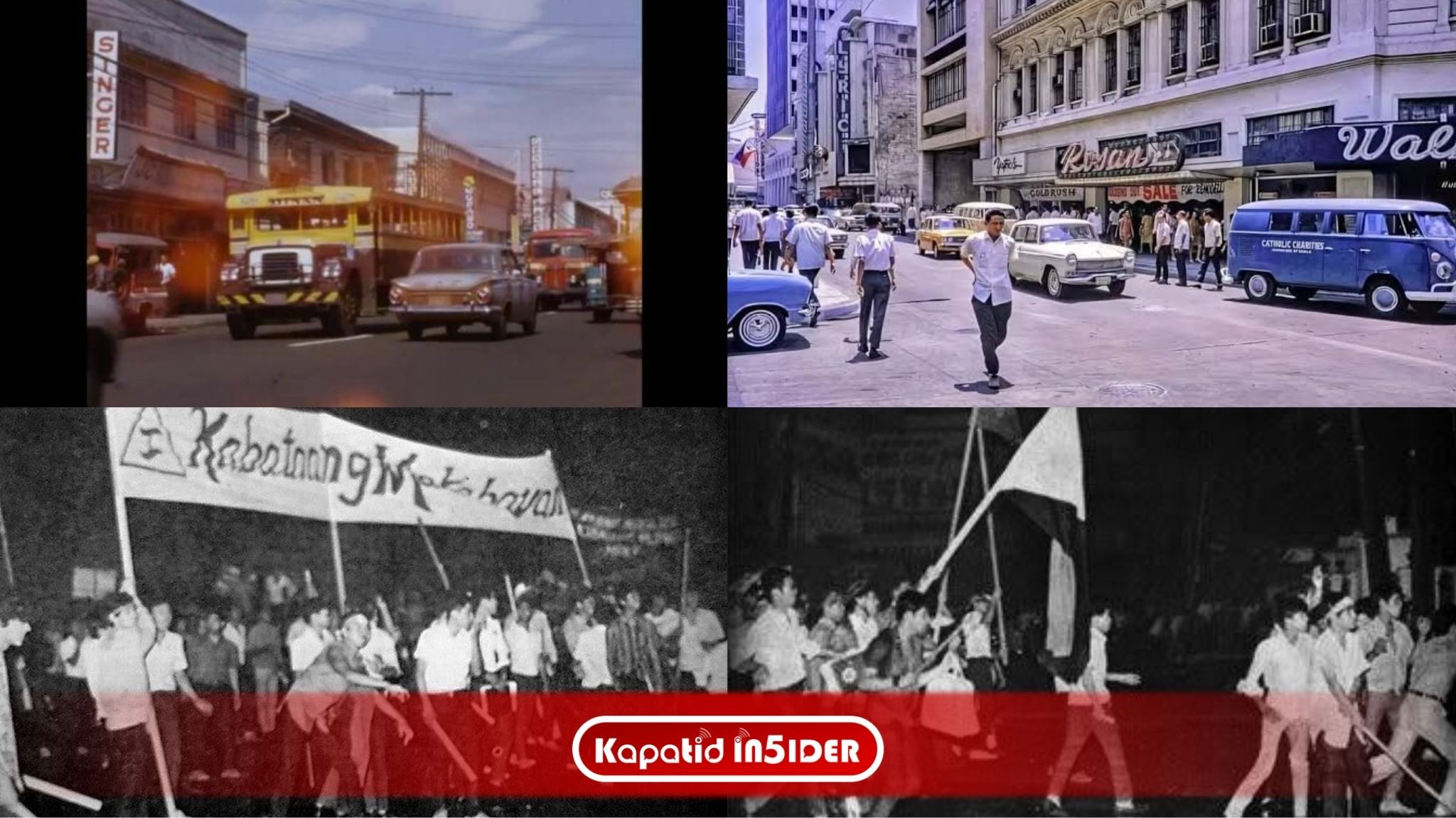
In 1969, the Ferdinand Marcos administration in the Philippines was at a turning point. Marcos was re‑elected that year — the first president of the independent republic to win a second term.

To secure his reelection, the government poured in massive funds — reportedly around $50 million — into public infrastructure projects. But this “spending spree” came at a heavy cost: it triggered the first major economic shock under Marcos — the 1969 Philippine balance of payments crisis.


As the economy unraveled, inflation soared and social inequality deepened. This fostered growing frustration among students, workers, peasants, and intellectuals — fueling protests, strikes, and grassroots organizing across urban and rural areas.


That unrest marked the rise of radical social movements and widespread dissent, setting the stage for the dramatic events that would soon reshape the country.
WHY 1969 MATTERS
- Economic instability: The balance‑of‑payments crisis exposed structural vulnerabilities in the economy, triggered by unsustainable deficit spending.
- Widening social divide: Inflation, devaluation, and stagnating wages hit ordinary Filipinos, while visible state‑funded projects benefited elites — spurring resentment.
- Growing dissent: Students, workers and peasants became more politically conscious and active — mobilizing protests and demanding systemic change.
- Prelude to authoritarianism: The unrest and economic trouble of this period laid the groundwork for what would become the sweeping crackdown under martial law just a few years later.
PARALLELS WITH “MANILA’S FINEST”
The backdrop of 1969 — a Philippines simmering with social tensions, inequality, and political unrest — resonates strongly with the themes of Manila’s Finest.
If Manila’s Finest explores the gritty realities of Manila — crime, social inequality, power struggles — these are rooted in the same economic and political fractures that grew sharper in 1969.

The discontent and activism of that era hint at deep‑seated frustrations among the urban poor and marginalized — likely reflected in Manila’s Finest’s characters and their challenges.
The sense of a society on edge, where ordinary lives are shaped by systemic instability, echoes the historical crisis of 1969 — giving the film’s story a strong historical parallel and emotional weight.