


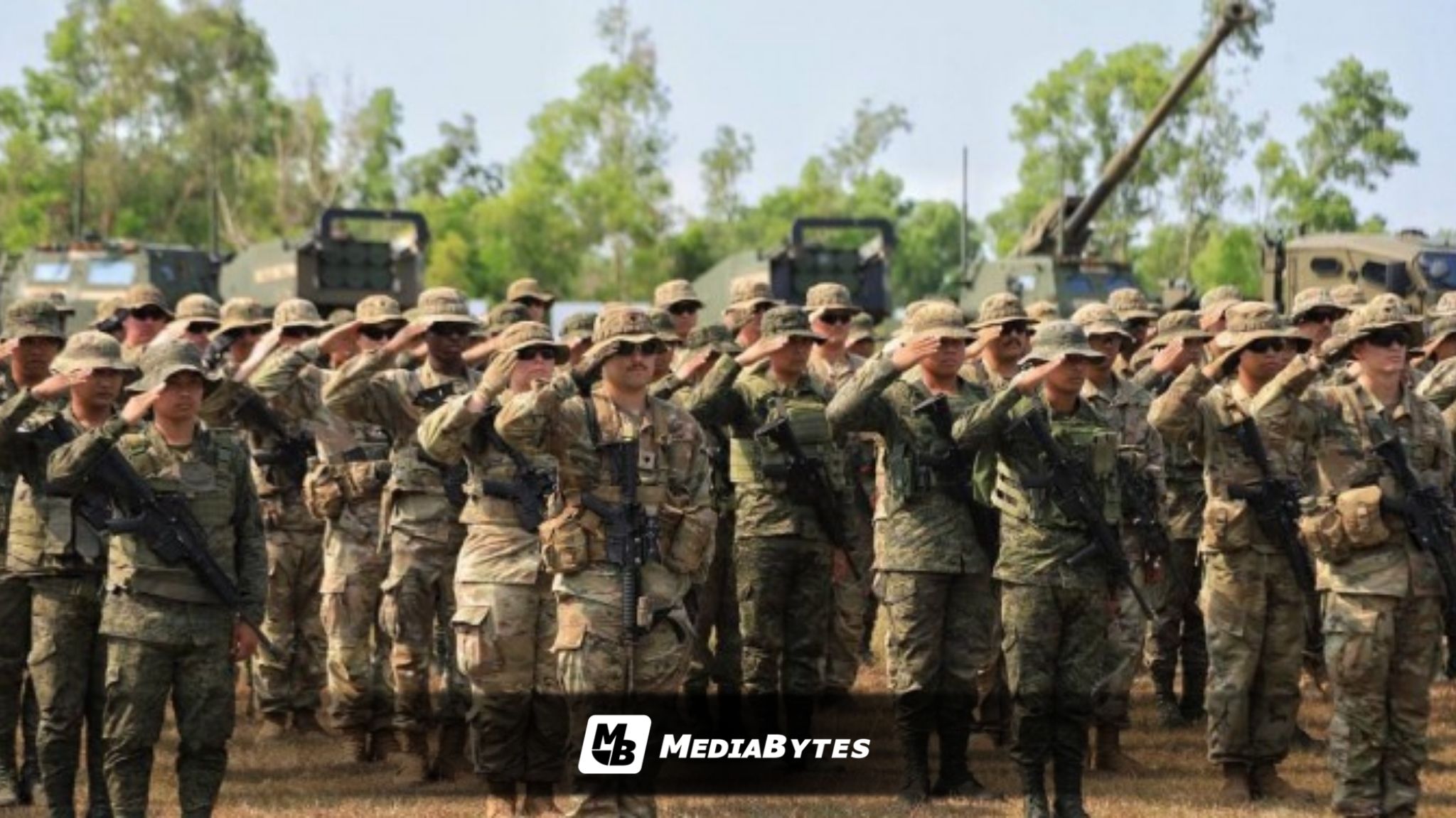
Top defense and security officials on Monday, March 2, dismissed concerns that the country’s nine Enhanced Defense Cooperation Agreement (EDCA) sites could become targets amid escalating tensions in the Middle East.
The assurance came after Senator Erwin Tulfo called for a review of EDCA, warning that the facilities might be vulnerable following recent hostilities involving the United States, Israel, and Iran.
DND: PH NOT A PARTY TO CONFLICT
National Defense Spokesperson and Assistant Secretary Arsenio Andolong stressed that the Philippines faces no direct threat.
“The DND respects the oversight role of the Philippine Senate and we will always cooperate with them. It must be stated, however, that the hostilities are confined to the Middle East. The Philippines is not a participant in the theater of conflict,” Andolong said.
“As such, there is no credible direct threat to the Philippines or facilities therein. Iran launched attacks on US facilities in countries that it shares maritime or land borders with. The Philippines poses no threat to Iran,” he explained.
EDCA SITES AND PURPOSE
There are currently nine EDCA locations where US forces may operate on a rotational basis:
- Antonio Bautista Air Base (Palawan)
- Basa Air Base (Pampanga)
- Benito Ebuen Air Base (Cebu)
- Fort Magsaysay (Nueva Ecija)
- Lumbia Airport (Cagayan de Oro)
- Balabac Island (Palawan)
- Camp Melchor Dela Cruz (Isabela)
- Lal-lo Airport (Cagayan)
- Naval Base Camilo Osias (Cagayan)
The first five sites were identified in 2014, while four more were approved in 2023 by President Ferdinand Marcos Jr. to enhance defense posture and strengthen humanitarian assistance and disaster response (HADR) capabilities.
AFP: EDCA SITES NOT US BASES
The AFP emphasized that EDCA sites are Philippine facilities, not permanent foreign bases, and remain under local ownership and control.
“Our EDCA sites are Philippine facilities. They do not belong to the US nor are they being used to launch or stage assaults against another country. They are for joint training, HADR, and the defense and security of our country,” Andolong said.
He also cited President Marcos’ earlier assurance that EDCA sites “will not be used for offensive action.”
The Supreme Court upheld EDCA’s constitutionality in 2016, reaffirming its role in implementing the 1951 Mutual Defense Treaty and the 1999 Visiting Forces Agreement.