


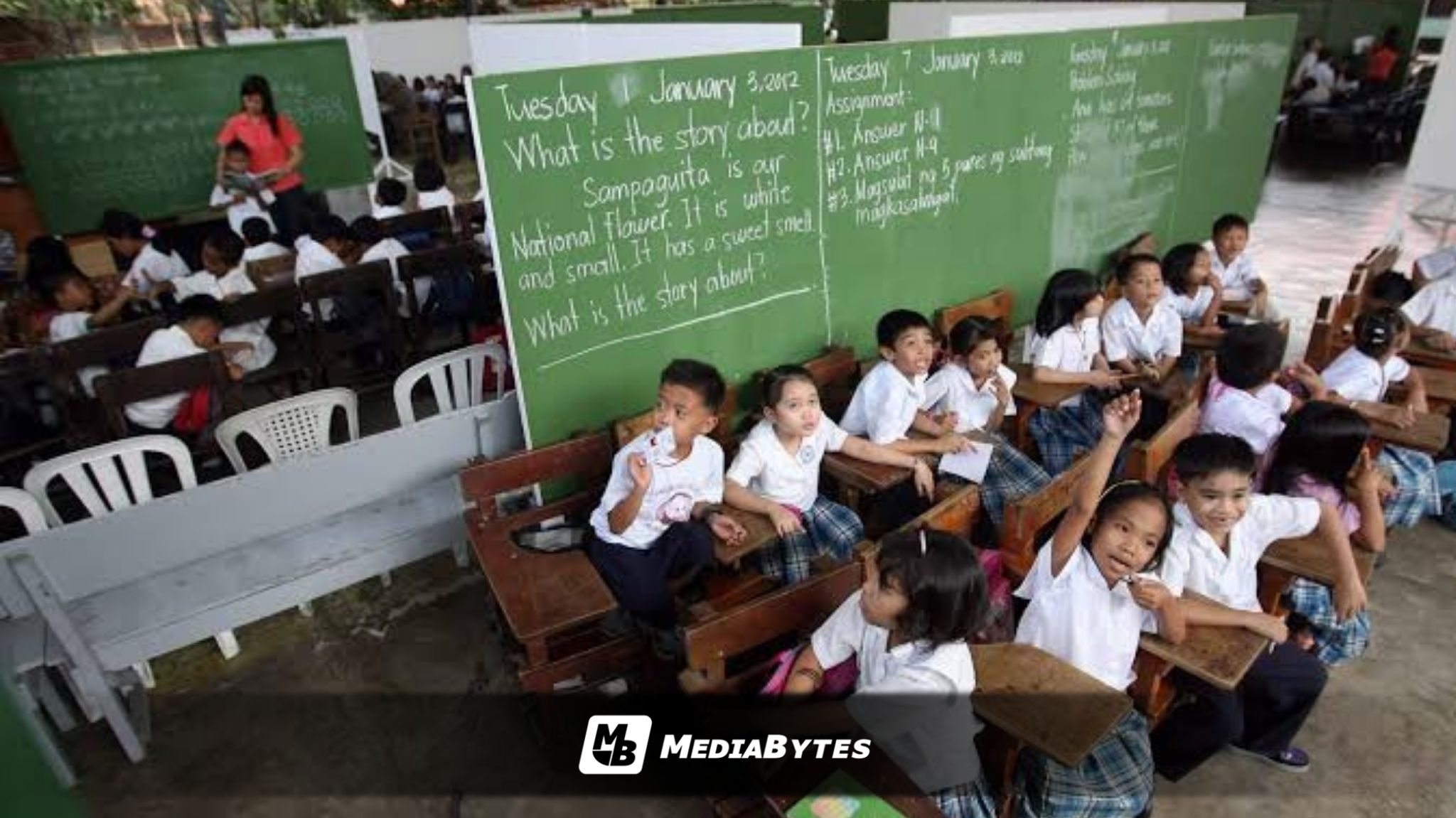
The Department of Education (DepEd) is exploring additional strategies to ease classroom overcrowding in public schools nationwide, with Education Secretary Sonny Angara stressing stronger coordination between national and local governments.
Speaking at the League of Municipalities of the Philippines (LMP) General Assembly 2026, Angara underscored the urgency of reforms in education service delivery.
“We are no longer content with the old system. We are changing the way we deliver to make it faster, more efficient, more effective, and more transparent,” Angara said.
Blended Learning and Alternative Spaces
DepEd is considering a pilot “4+1” blended learning model—four days onsite and one day online.
Other measures include expanding primary education vouchers, leasing or acquiring foreclosed private properties, and mobilizing private sector donations to create 2,000 additional learning spaces.
Foreclosed properties could immediately provide 1,000 classrooms, while pre-fabricated Learning Continuity Spaces (LCS), already piloted in Masbate and Davao del Norte, will be expanded with 2,571 units across 1,017 municipalities this year.
Strengthening LGU Partnerships
Angara led the ceremonial signing of a memorandum of understanding with the LMP to accelerate classroom construction.
“Education is a shared responsibility, and our LGUs are the best-positioned partners to ensure these funds are translated into actual, usable classrooms for our learners,” he said.
DepEd has also signed agreements with provincial and city governments to ensure efficiency and compliance in school building projects.
Long-Term Targets
DepEd plans to construct 30,000 classrooms nationwide by 2028 through conventional procurement.
An additional 16,000 classrooms are slated for high-congestion areas under Public-Private Partnerships (PPP) via the recently approved PPP for School Infrastructure Project Phase III.
The initiatives reflect DepEd’s push to modernize education delivery and address long-standing classroom shortages across the country.