


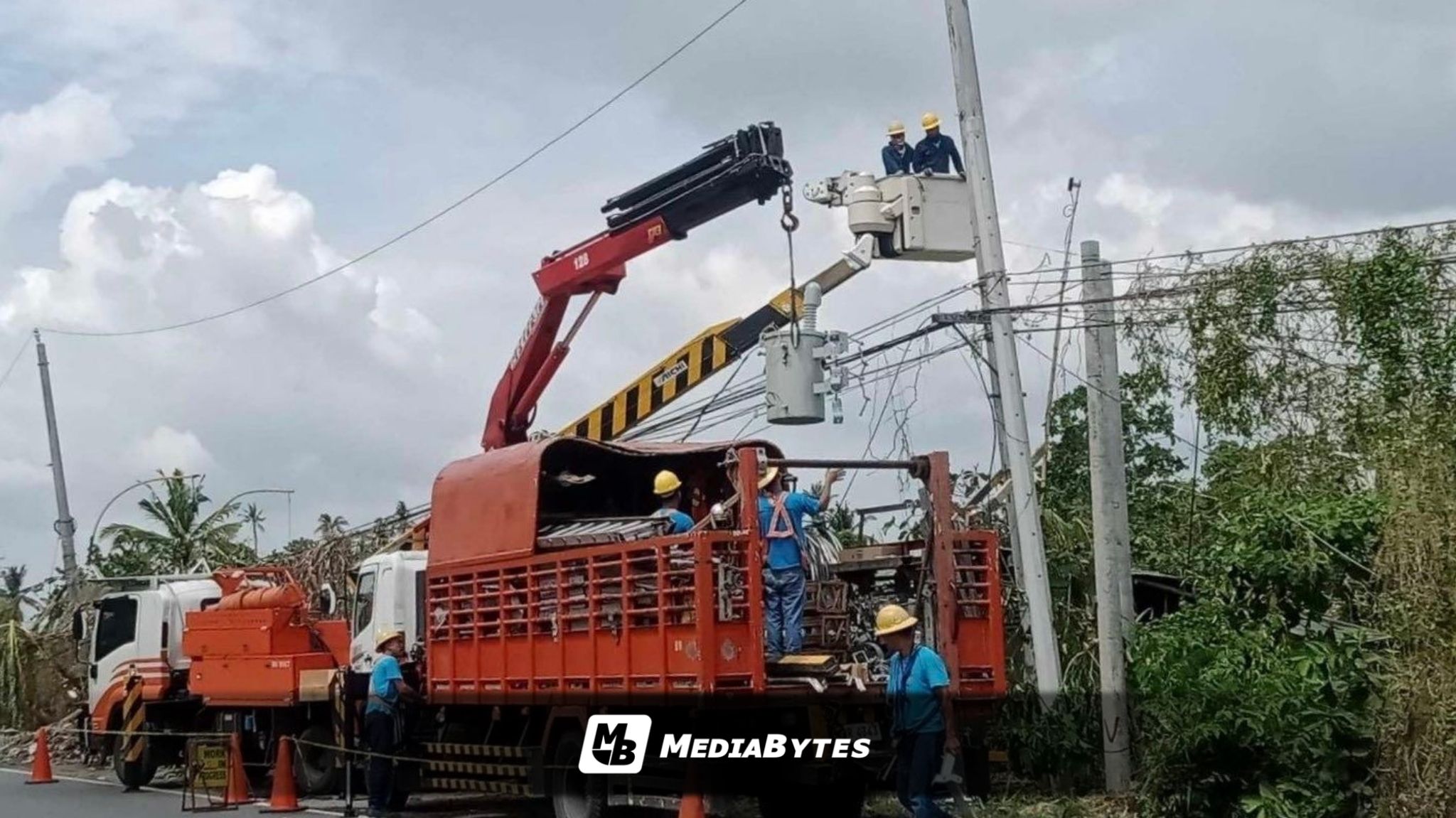
The House of Representatives on Wednesday night approved on final reading a measure requiring electric distribution, cable, and telecommunications companies to assume full responsibility for the safety and maintenance of overhead power and communication lines.
With 223 affirmative votes, lawmakers passed House Bill No. 7565, or the proposed Safe Overhead Electric Distribution, Cable, and Communications Lines Act, mandating stricter standards for managing utility wires and poles across the country.
The measure compels service providers to conduct regular inspections, remove dangling and unused wires, properly bundle active lines, replace damaged or leaning poles, and ensure that installations comply with the Philippine Electrical Code. The responsibility for preventing hazards to life and property is explicitly placed on the utilities.
Graduated penalties are outlined for non-compliance:
- ₱250,000 to ₱500,000 for a first offense
- ₱500,000 to ₱1 million for a second offense
- ₱1 million to ₱2 million for third and subsequent violations
The bill also institutionalizes periodic audits of overhead lines and requires firms to coordinate clean-up and rehabilitation efforts within their franchise areas.
To strengthen monitoring at the grassroots level, it mandates the creation of a Monitoring and Service Team in every city and municipality. These teams will conduct inspections twice a year, supervise the removal of unused cables, and oversee the replacement of defective poles and unsafe installations.
Local government units are empowered to pass implementing ordinances within 60 days from the issuance of the implementing rules and regulations. They may also withhold or deny the renewal of business permits for utilities that fail to comply.
At the national level, the proposed law creates an inter-agency committee chaired by the Energy Regulatory Commission.
The panel, composed of representatives from key government agencies and local governments, will be tasked with setting uniform standards, coordinating nationwide clean-up initiatives, and monitoring compliance with safety requirements.
The measure also promotes the shared use of poles and utility structures — subject to engineering and safety standards — to reduce visual clutter and improve efficiency, particularly in densely populated areas.
In cases where cables and poles need to be relocated or reinforced due to infrastructure projects, the bill provides that the implementing agency or private project proponent will shoulder the cost. This provision aims to prevent project delays while clearly defining financial accountability.
Ilocos Norte 1st District Representative Sandro Marcos, one of the principal authors, said the measure addresses long-standing safety concerns in communities nationwide.
“This bill makes it clear that utilities cannot simply leave hazardous wires hanging above our streets. They have the responsibility to maintain safe, orderly, and compliant systems because public safety must always come first,” Marcos said.
“We are setting uniform standards and meaningful penalties so that compliance becomes the norm, not the exception. This is about protecting lives, safeguarding property and ensuring that our infrastructure keeps pace with development.”