


Parañaque City 2nd District Rep. Brian Yamsuan is calling for stronger private sector participation to address the country’s long-standing classroom shortage, warning that the situation could worsen as thousands of public school buildings near the end of their structural lifespan.
Yamsuan filed House Bill No. 7362, or the proposed Classroom-Building Acceleration Program (CAP) Act, which seeks to institutionalize a mechanism to fast-track classroom construction nationwide.
He stressed that with around 145,000 classrooms currently lacking across the country, the problem could be aggravated by 2028 when some 51,000 school buildings are projected to become structurally unsafe after reaching their 50-year lifespan.
“We need all hands on deck to solve the massive classroom backlog. While many LGUs are qualified to take part in the Classroom-Building Acceleration Program, the private sector has shown that it is equally, if not more, capable in constructing school buildings of high quality at less cost,” Yamsuan said.
Under HB No. 7362, qualified local government units (LGUs) would be authorized to propose and implement classroom construction projects funded by the national government. The bill also seeks to encourage civil society and private sector participation by mandating alternative procurement modes and simplified accounting, auditing, and liquidation procedures.
The measure mandates the Department of Budget and Management, Government Procurement Policy Board, and Commission on Audit, in consultation with the Department of Education (DepEd), to develop mechanisms that would facilitate private sector participation as project proponents under CAP.
Yamsuan lauded Education Secretary Sonny Angara for leading efforts to address the classroom gap through Public-Private Partnerships (PPPs). The PPP School Infrastructure Project aims to build 15,000 classrooms by 2027, expected to benefit around 600,000 learners nationwide.
“This is a shared responsibility. Dahil na rin napakalaki ng ating classroom shortage, hindi kakayanin ng gobyerno na harapin ito ng mag-isa. Kailangan ang whole-of-nation strategy para matuldukan na ang problemang ito,” Yamsuan said.
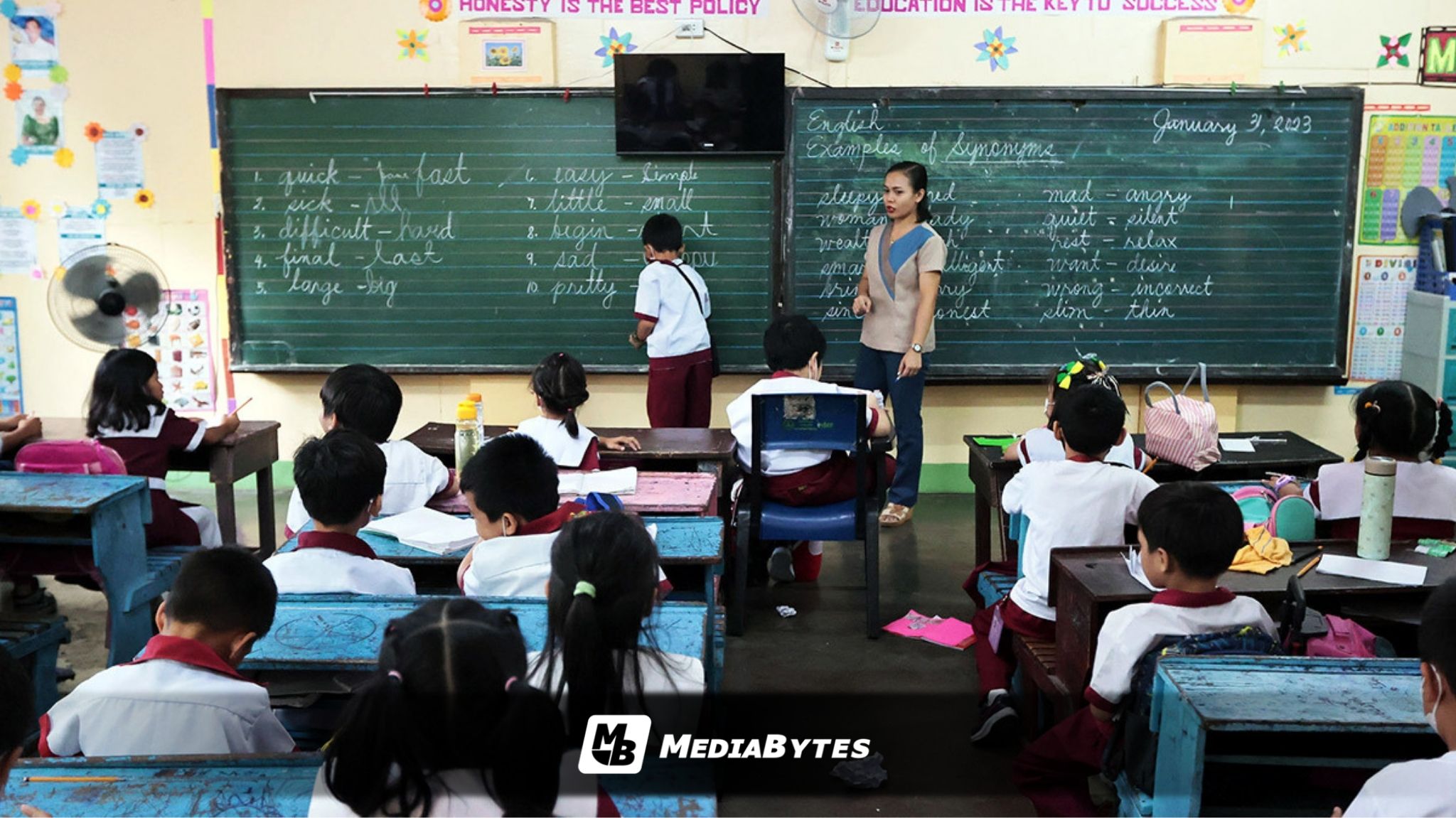
He also urged fellow lawmakers to expedite deliberations on the proposed CAP Act, citing the plight of students forced to endure overcrowded classrooms, hold classes in corridors, or even study under trees due to inadequate facilities.
The bill sets price ceilings for classroom construction in one- to four-story buildings at ₱1.6 million to ₱2.1 million per classroom, adjustable by up to 20 percent to account for regional cost variations, site conditions, labor expenses, and logistical considerations, subject to DepEd approval. All projects must comply with DepEd’s Minimum Performance Standards and Specifications.
The proposed CAP Act has been included in the Legislative-Executive Development Advisory Council’s priority measures, recently approved by President Ferdinand Marcos Jr.
While HB No. 7362 remains pending in the House of Representatives, the Senate has already approved its counterpart bill on third and final reading on January 26, 2026.
Yamsuan thanked the President for certifying CAP as a priority measure and expressed hope that it would be enacted into law by July.