


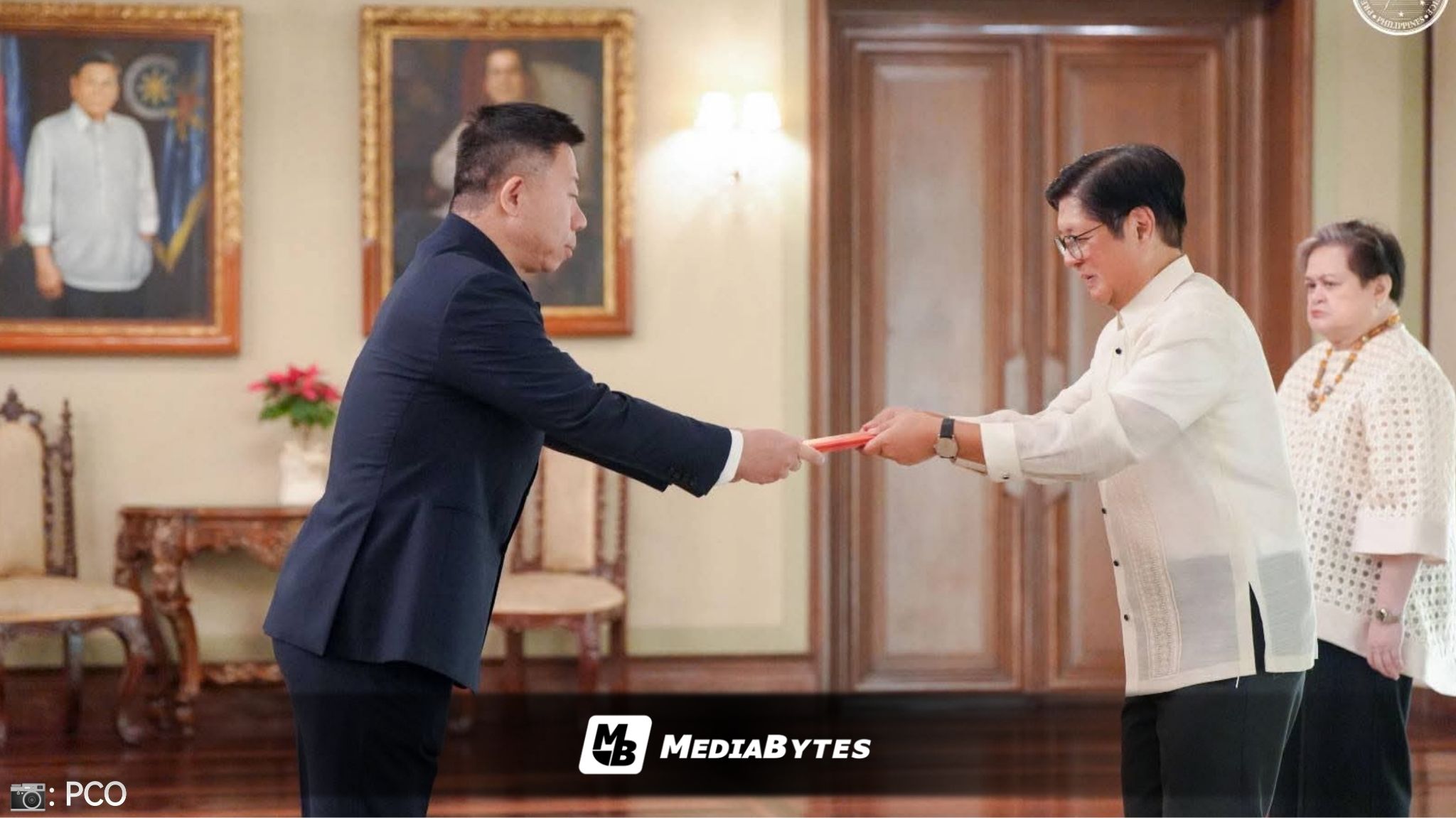
President Ferdinand “Bongbong” Marcos Jr. welcomed China’s newly designated ambassador, Jing Quan, in a courtesy meeting framed by both sides as a chance to steady and recalibrate Manila’s ties with Beijing.
Marcos described China as one of the Philippines’ “most important friends and partners,” expressing hope for “many opportunities” to boost cooperation despite persisting tensions.


“I look forward to working with you in managing the differences and intensifying the cooperation between our two countries,” he told Jing.
“Our differences should be the exception in our ties rather than the norm.”
Jing’s arrival comes at a sensitive moment in Philippine-China diplomacy. Upon landing, he signaled a stabilizing mission, saying he would “firmly safeguard China’s national interests and dignity,” while serving as a bridge to ensure ties “stabilize rather than deteriorate.”
The Marcos administration has emphasized its intention to “redefine” relations with China—expanding economic, infrastructure, energy, and cultural partnerships while addressing disputes in the West Philippine Sea with greater clarity and firmness.
Marcos earlier noted that discussions with China should broaden beyond maritime issues, saying, “I think there is a huge possibility for trade, for exchanges … that do not include these territorial disputes.”
Ties have been strained by recent Chinese actions, including the declaration of a “national nature reserve” over Bajo de Masinloc, which Manila condemned as a breach of sovereignty.
Marcos has pushed for a more proactive regional approach and remains optimistic that ASEAN-China Code of Conduct talks could advance under the Philippines’ ASEAN chairmanship in 2026.
The Chinese embassy said Jing’s priorities will include strengthening diplomatic dialogue and expanding economic and cultural engagement. He is expected to formally present his credentials to Marcos soon, marking the official start of his tenure.