


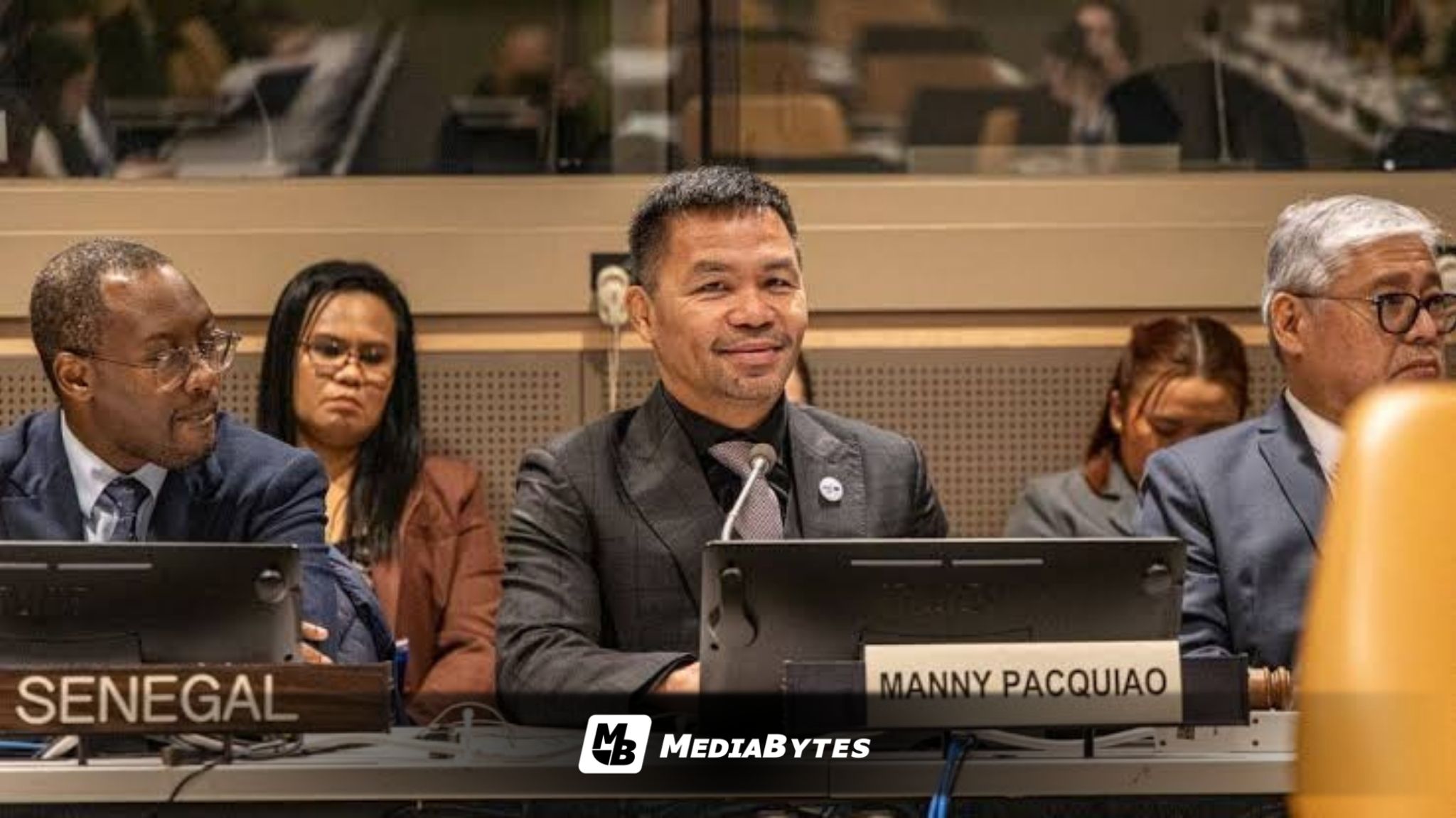
Filipino boxing icon and former Senator Manny Pacquiao addressed global leaders at the United Nations Headquarters on April 8, supporting the Philippines’ bid for a non-permanent seat on the UN Security Council.
The Philippines is seeking one of the available seats, with elections scheduled for June 2. To secure a spot, a candidate must obtain at least one-third of the votes from the 198 UN member states.
In his speech, Pacquiao highlighted the power of sports in fostering diplomacy, youth development, and peacebuilding efforts worldwide.
“I am deeply honored to be here at the United Nations, a place where nations come together to promote peace, development, and cooperation,” he told delegates.
He also shed light on the challenges faced by young people globally, emphasizing that “many young people around the world continue to face uncertainty. Poverty persists, opportunities remain uneven… young people are left without direction, vulnerable to violence, crime, and extremism.”
Drawing from his upbringing in General Santos City, Pacquiao shared his personal journey out of poverty.
“I was born in poverty, in a community shaped by hardship… I faced a choice: to follow the wrong path or to work hard to support my family. I chose boxing,” he said. “There was a time when I stepped into the ring not for victory, but simply to buy food for my family.”
Pacquiao stressed that sports go beyond competition, describing them as a powerful platform for inclusion and personal growth.
“Sport is not only competition or entertainment. It is a platform for inclusion, a space for discipline, and a pathway to opportunity. It teaches respect, teamwork, and resilience… the very factors that reduce the appeal of violence and extremist recruitment,” he said.
He cited community-based sports initiatives in Mindanao that have helped promote trust and reconciliation in conflict-affected areas, noting that “the same energy that can be lost to violence can be transformed into strength, discipline, and purpose.”
Pacquiao also highlighted the initiatives of the Manny Pacquiao Foundation, which has provided housing for low-income families and assistance to disaster-stricken communities and vulnerable youth.
As a former lawmaker, he emphasized the role of policy in creating opportunities, stating:
“When people have access to support services and opportunities, they are less likely to turn to violence.”
He concluded by calling for stronger international collaboration, urging “partnerships among governments, the United Nations, civil society, and the sports community to expand programs that work and reach more young people.”
“Let us work together to strengthen the role of sport as a tool for peace, development, and the prevention of violence and extremism… and ensure that every young person, no matter where they come from, has the chance to choose a better future,” Pacquiao said.