


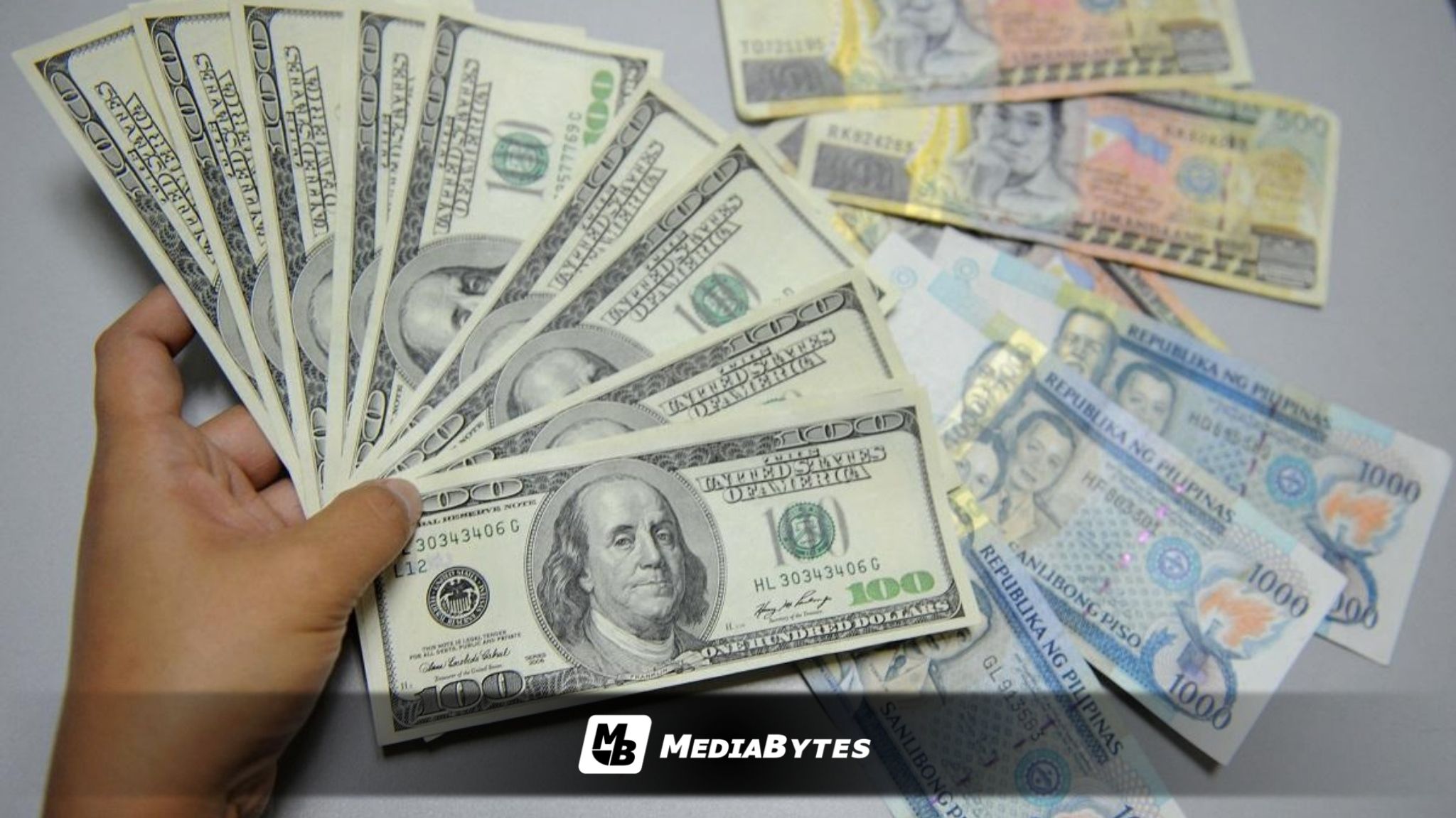
The peso sank to a record low of ₱59.355 against the US dollar on Wednesday, marking its weakest level in history amid strong demand for foreign currency.
Data from the Bankers Association of the Philippines (BAP) showed the peso opened at ₱59.24 per dollar on January 7, weaker than Tuesday’s ₱59.21 close.
It briefly recovered to ₱59.20 in morning trade before sliding to ₱59.38 and settling at ₱59.355. The peso averaged ₱59.329 for the day, with total trading volume reaching $1.317 billion.
The currency typically weakens when demand for dollars increases, particularly from oil firms, importers settling foreign obligations, and businesses servicing foreign-denominated loans.
The Bangko Sentral ng Pilipinas (BSP) earlier warned that more dollars and other foreign currencies are expected to leave the Philippine economy this year than enter it. In its outlook, the BSP estimated a $6.9 billion balance of payments (BOP) deficit in 2025.
The BOP records all foreign currency inflows and outflows, including payments for imports, foreign debt servicing, repatriation of investments, exports, new investments and remittances from overseas Filipino workers.
For this year, the BSP projects an additional $3.4 billion net outflow, driven by higher expected imports worth $126.4 million compared to exports estimated at only $56.2 million.
Economists note that a BOP deficit usually puts pressure on the peso, as stronger demand for dollars weakens the local currency.