


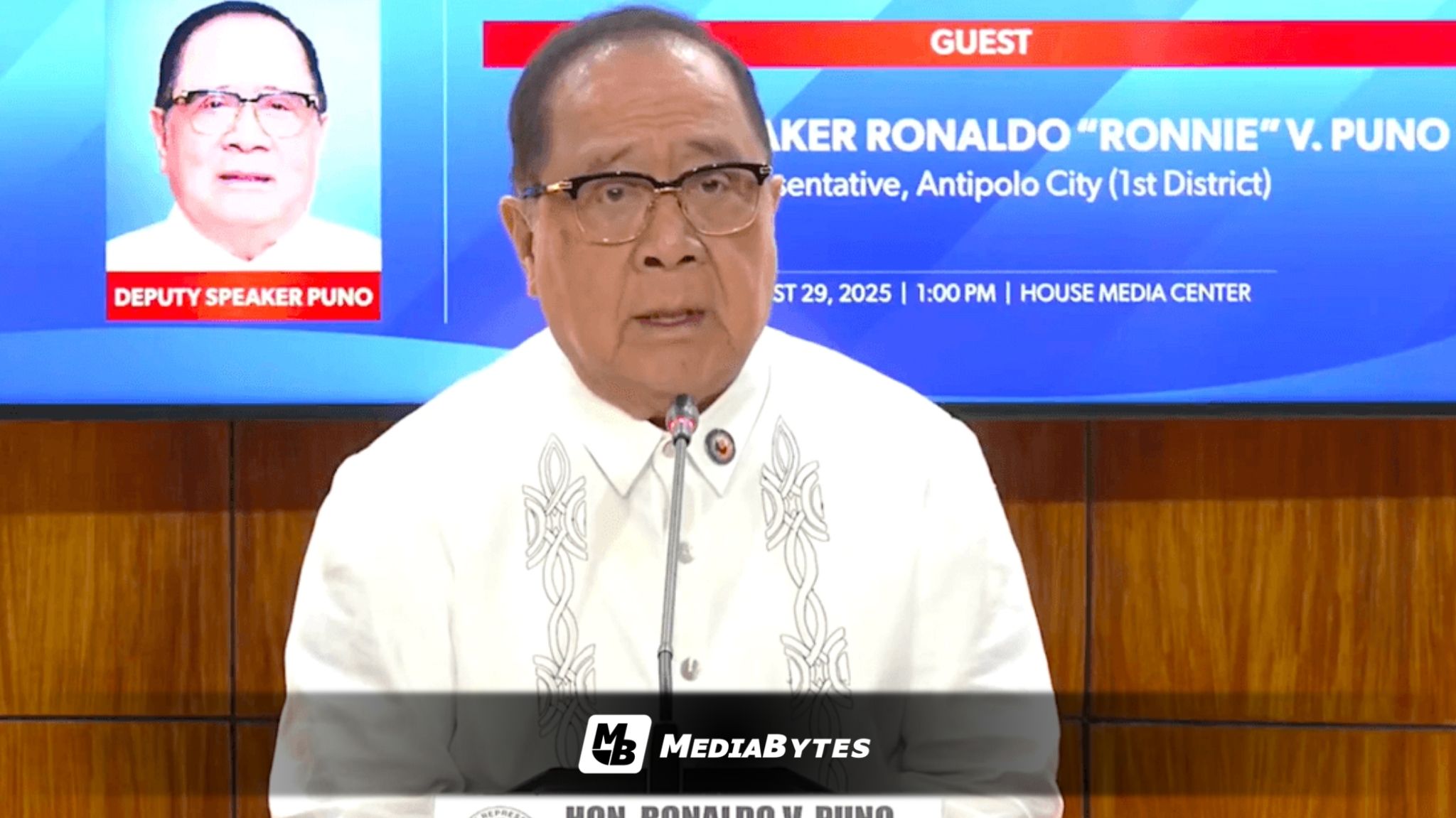
Antipolo City 1st District Representative Ronaldo Puno on Monday, December 29, defended the issuance of guarantee or referral letters by lawmakers, saying it is not a form of political intervention but part of their duty to advocate for constituents.
“They say, no political figure, person, officer, or whatever, can be involved in any way in the distribution of these funds. How do you operationalize that? Right now, all of us are required to put in our requests to the DSWD, DOLE, or DOH. Wala naman kami pera diyan talaga. It is a request that we send to the departments because as is evidenced in the GAA (General Appropriations Act), the budget goes to the departments, not to individuals, not to the congressman,” Puno said.
He clarified that lawmakers merely endorse qualified beneficiaries.
“Ang tulong lang naman kasi ng ating mga mambabatas is mag-refer at mag-rekomenda. ‘Di ba? Hindi naman kami nagbabayad. Ang guarantee letter is not our guarantee. It is an assurance that you know, the beneficiary of this assistance is qualified. ‘Yun lang. Masama ba ‘yun? Sa tingin ko, hindi,” he added.
Puno said the provision in the 2026 budget barring political involvement in aid distribution needs clarification.
“If it’s (guarantee letter issuance) understood to be what it really is, which is merely a referral letter, in order that the Department of Health will help the patient involved, sa tingin ko, okay lang ‘yun,” he said. “I’m not saying that the bicam version needs to be rejected. But I think that it has to be clarified.”
He also addressed concerns over the files of the late Public Works Undersecretary Catalina Cabral, saying they do not indicate any wrongdoing. Puno explained that DPWH District Engineering Offices consult lawmakers on proposed infrastructure projects and may allocate funds for recommended initiatives.
“The DE (District Engineer) goes to you and informs you of the projects in your district. Why? Because we are supposed to verify and oversee these projects… What the DPWH did was to put a certain amount [out of their budget] for our recommended projects. For example, it could be ₱100 million. That is an allocable, but that does not mean that it is us lawmakers who will get to spend that money,” he said.
“That money is under DPWH, and they have the final say where it would be spent on. There’s nothing irregular [on allocables]. I don’t know why, you know, people are getting all excited when they hear these terms. They don’t understand what the terms mean. You have to understand it before you can talk about it,” Puno added.