


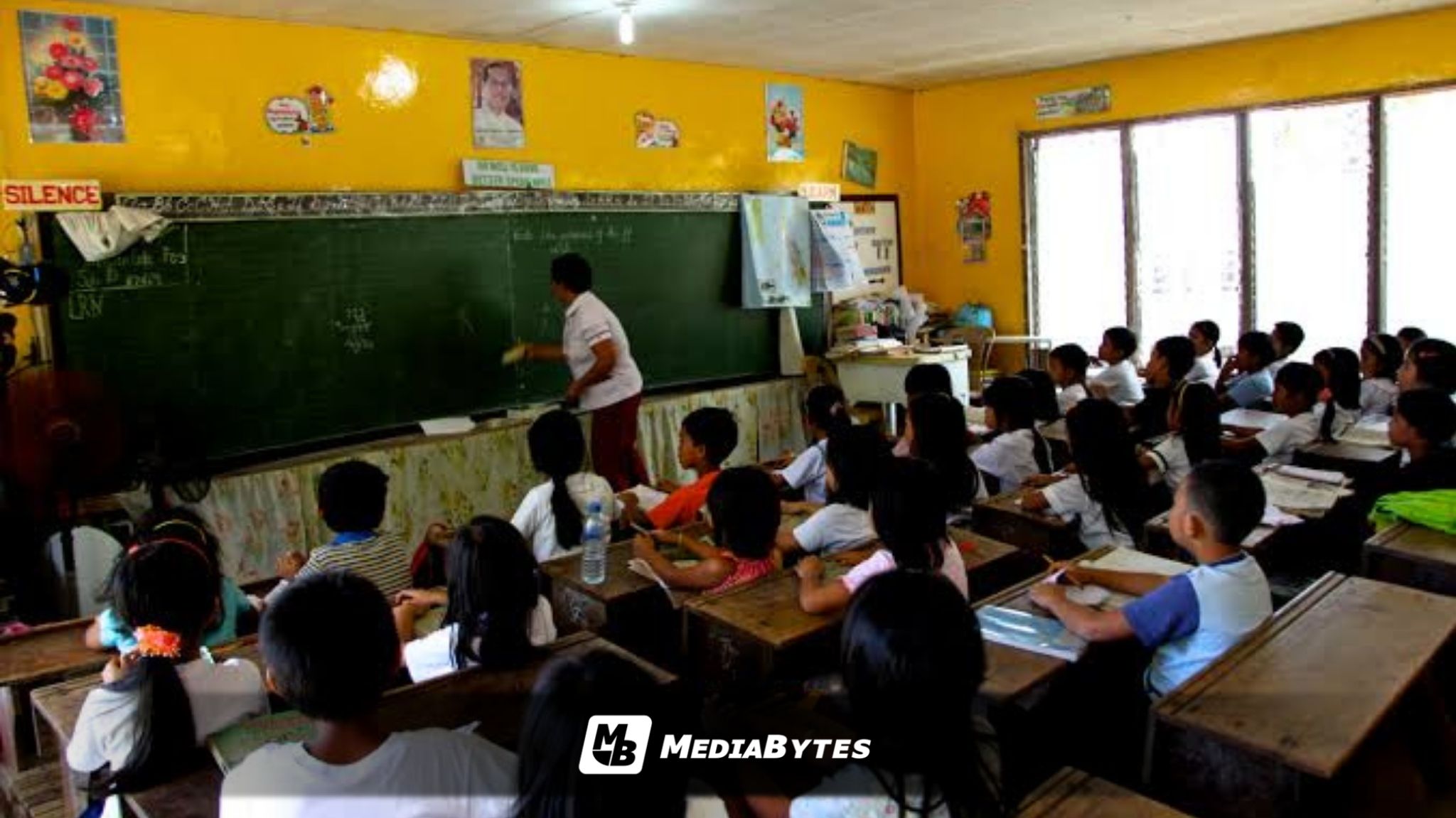
Executive Secretary Ralph Recto on Friday directed government agencies to accelerate the procurement and hiring of essential education resources under the 2026 national budget, stressing that delays must be avoided.
Recto likened the sector’s needs to a “big shopping cart” of goods, manpower, and facilities that must be delivered within the year.
He underscored the directive of President Ferdinand Marcos Jr., saying:
“Kailangan ng catch-up dito. Kaya ang utos ng Pangulo ay i-monitor ng mabuti at huwag lubayan sa paghingi ng resulta.”
Malacañang will implement regular progress monitoring, which Recto compared to a “grading period” aimed at quickly identifying and resolving bottlenecks in implementation.
The 2026 national budget allocates ₱1.345 trillion for education, equivalent to 4.36% of the country’s GDP.
Recto emphasized the urgency of translating funding into actual services:
“This historic high spending should not be squandered to slow procurement. What is in the budget must leapfrog to classrooms.”
Among the priority items are classrooms, teachers, and learning materials. The budget includes ₱120.17 million for textbooks and instructional materials, along with the procurement of 121,000 laptops.
Recto reiterated the timeline for delivery:
“The rule should be what is budgeted for one fiscal year must be delivered within one school year.”
Addressing longstanding delays in classroom construction, Recto announced corrective measures, including partnerships with local government units to speed up implementation.
“There will no longer be a (Department of Public Works and Highways) monopoly on this. Let the stakeholders themselves build what will directly benefit them,” he said.
He also instructed the Department of Education to fast-track hiring, noting that 65,184 new teaching and nonteaching positions are funded under the 2026 budget.
“We are hiring 179 new DepEd personnel daily, merit-based, but fast-tracked. Some government vacancies can be filled later or never, but teacher hiring in areas where there are critical shortages is something that cannot be postponed,” Recto said.
For tertiary education, infrastructure development for state universities will continue to support 1.28 million students, alongside scholarship and free tuition programs.
Recto stressed that quality must accompany access:
“Hindi sapat ang libre, dapat quality. Providing access is one thing. Kailangan mahusay din.”