


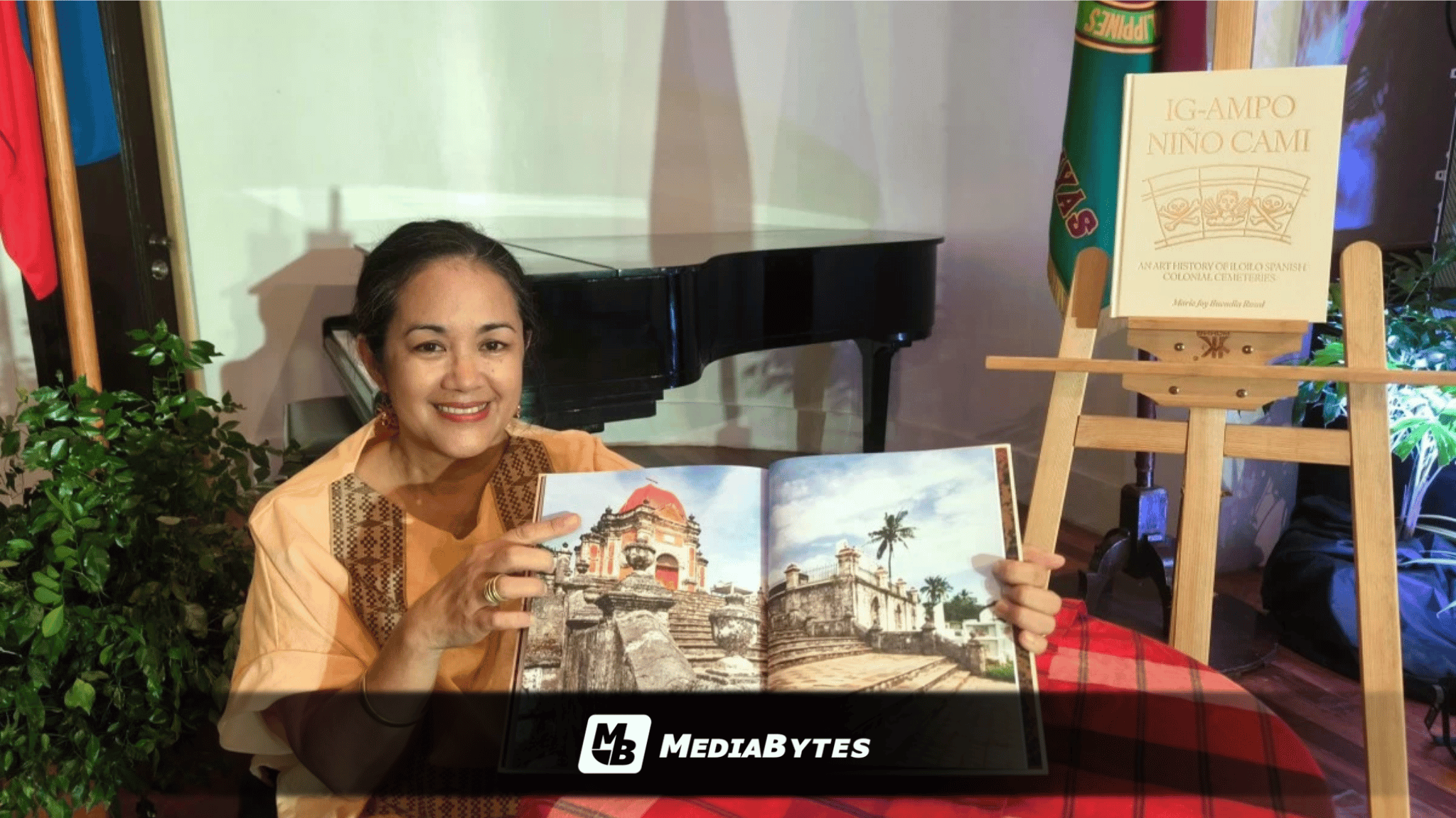
University of the Philippines Visayas Professor Marie Joy Buendia Rosal-Sumagaysay explores Spanish-era burial grounds beyond their traditional association with the Undas season in her new book, “Ig-Ampo Niño Cami: An Art History of Iloilo Spanish Colonial Cemeteries.”
Published by the National Historical Commission of the Philippines (NHCP), the volume provides a detailed art and cultural documentation of eight surviving colonial-era cemeteries across the province of Iloilo.
The NHCP noted how the book made “the histories and heritage embodied by Iloilo’s Spanish colonial cemeteries become part of a wider conversation on how we understand, document, and preserve places associated with death, memory, faith, art, and community life.”
The publication investigates the architecture, history, and cultural value of cemeteries located in Dingle, Pototan, Janiuay, Cabatuan, Santa Barbara, Oton, Miag-ao, and San Joaquin. It highlights construction techniques and materials such as sandstone, coral stone, and bricks, while also recognizing the contributions of early construction workers.
A key focus of the study is the historic cemetery in San Joaquin, renowned for its visually striking Campo Santo mortuary chapel, which has been designated a National Cultural Treasure.
Sumagaysay initially began her research on these cemeteries between 1993 and 1995 as a thesis project while pursuing her master’s degree in art history at UP Diliman. More than three decades later, the NHCP adapted the research into a published book featuring updated photography by Stan Cabigas.
The author derived the book’s title from an engraved stone tablet discovered in the Santa Barbara cemetery, featuring a phrase traditionally recited during intercessory prayers as a reflection on mortality and the afterlife.