


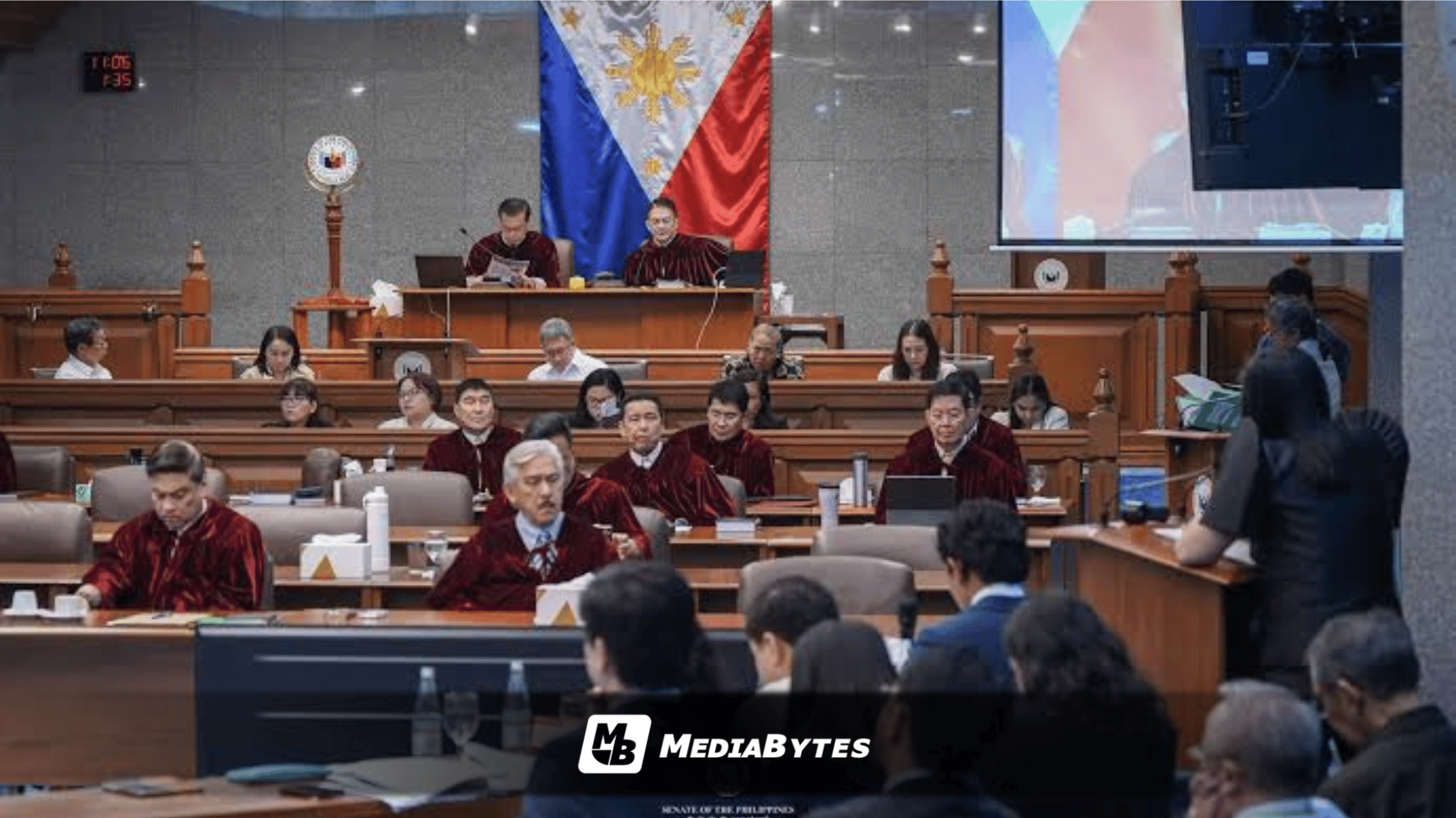
MANILA, Philippines — The Senate impeachment court has defended its stance on the voting threshold required to convict an impeached official, asserting that it operated well within its constitutional authority and did not rewrite the fundamental law.
Through the Office of the Solicitor General (OSG), the tribunal submitted its formal comment to the Supreme Court on November 3, seeking the outright dismissal of the petition filed by Senators Robin Padilla and Christopher “Bong” Go. The court also asked the high tribunal to deny any requests for a temporary restraining order or injunctive relief.
Impeachment court spokesperson Atty. Regie Tongol explained that the Senate’s authority under Article XI, Section 3(6) of the Constitution includes the power to determine how the two-thirds vote requirement is computed when specific senators are restricted from participating due to legal or physical limitations.
According to Tongol, the disputed September 23 resolution did not alter the constitutional conviction threshold. Instead, it clarified that the computation would account only for senator-judges who actively took part in hearing the evidence.
“The Impeachment Court did not amend the Constitution; it simply ensured that the verdict will be decided strictly by the Senator-Judges who actually heard the evidence, rather than allowing absent or detained Senators who never participated in the trial to cast an artificial vote of acquittal,” Tongol said.
The tribunal likewise dismissed allegations of grave abuse of discretion, emphasizing that both the prosecution and the defense were given full opportunities to present their arguments. Furthermore, the court sought the insights of four retired Supreme Court jurists who served as amici curiae with the mutual consent of both parties.
“There can be no grave abuse of discretion when a constitutional tribunal hears both the Prosecution and the Respondent, consults four retired Supreme Court jurists appointed as amici curiae with the parties’ agreement, and resolves the issue by an open, recorded vote,” Tongol stated.
Describing the legal challenge as premature, Tongol pointed out that the pro hac vice ruling does not automatically bar any senator from joining the trial. He noted that requests submitted by detained senators to participate remain under review, meaning the final voting denominator may ultimately remain unchanged.
The impeachment court stressed that the pending Supreme Court case will not disrupt ongoing proceedings, noting that constitutional provisions require impeachment trials to move forward without delay.
“The presentation of the defense’s evidence-in-chief on Article II of the impeachment complaint against Vice President Sara Duterte will continue as scheduled on Monday, November 9,” Tongol said.