


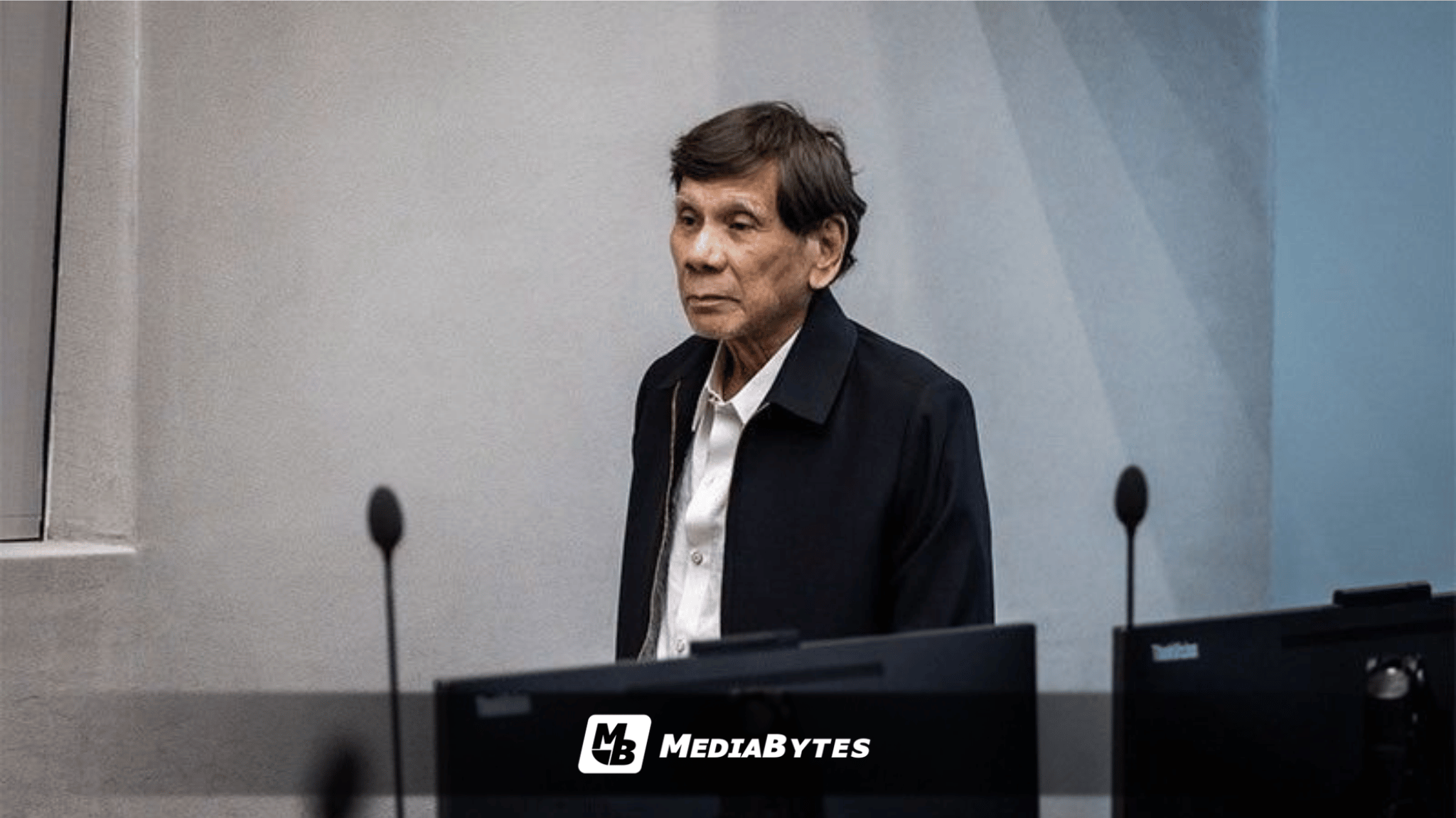
MANILA, Philippines — The Supreme Court has dismissed the habeas corpus petitions filed by the children of former President Rodrigo Duterte challenging his arrest on March 11, 2025, and his immediate turnover to the International Criminal Court (ICC).
In an en banc ruling penned by Associate Justice Japar Dimaampao, the high tribunal declared the petitions moot because Duterte is already detained at the ICC facility in The Hague, Netherlands, and is actively participating in proceedings over charges of crimes against humanity. The decision passed by a 9–4 vote, with one justice on official leave.
The court emphasized that a writ of habeas corpus is strictly a domestic remedy enforceable only within Philippine territory. Because Philippine courts lack authority beyond national borders and local officials no longer hold custody of the former leader, issuing the writ would serve no practical purpose.
”Significantly, [Duterte] is not just beyond the Court’s coercive powers, but also stands accused before an international tribunal that has assumed jurisdiction over his person,” the Supreme Court pointed out.
A writ of habeas corpus is defined as an order “directing a person detaining another and commanding the former to produce the body of the latter at a designated time and place.”
It further “extends to all cases of illegal or arbitrary detention by which any person is deprived of his liberty or by which the rightful custody of any person is withheld from the person entitled thereto.”
According to a summary released by the Supreme Court Office of the Spokesperson—with the full ruling yet to be uploaded online—the dismissal does not validate the legality of Duterte’s arrest or rule out possible violations of his constitutional rights. Instead, the decision solely resolves whether habeas corpus remains an enforceable remedy. Any claims for damages or official liability must be pursued through separate legal actions.
The tribunal also noted that Duterte is availing himself of legal remedies under ICC rules and that his children are already contesting his detention before the international court.
In their petitions, Duterte’s children argued that the arrest warrant violated the Philippine Constitution, domestic statutes, and international law, asserting it could not be enforced following the country’s 2019 withdrawal from the Rome Statute—a withdrawal initiated by Duterte in 2018.
Meanwhile, the Office of the Solicitor General maintained that the petitions were moot due to territorial limits and asserted that the arrest fulfilled the Philippines’ international obligations.
Duterte, alongside Senator Ronald “Bato” dela Rosa and several others, also filed a separate petition raising “an urgent and fundamental question concerning the jurisdiction of the ICC and the situation in the Philippines following its withdrawal from the Rome Statute.”
In that filing, they contended that “the ICC’s claim of jurisdiction is patently erroneous and violates the sovereign prerogatives of the Republic of the Philippines, as the preliminary examination conducted prior to the withdrawal’s effectivity does not qualify as a “matter under consideration” by the Court under Article 127(2) of the Rome Statute.”