


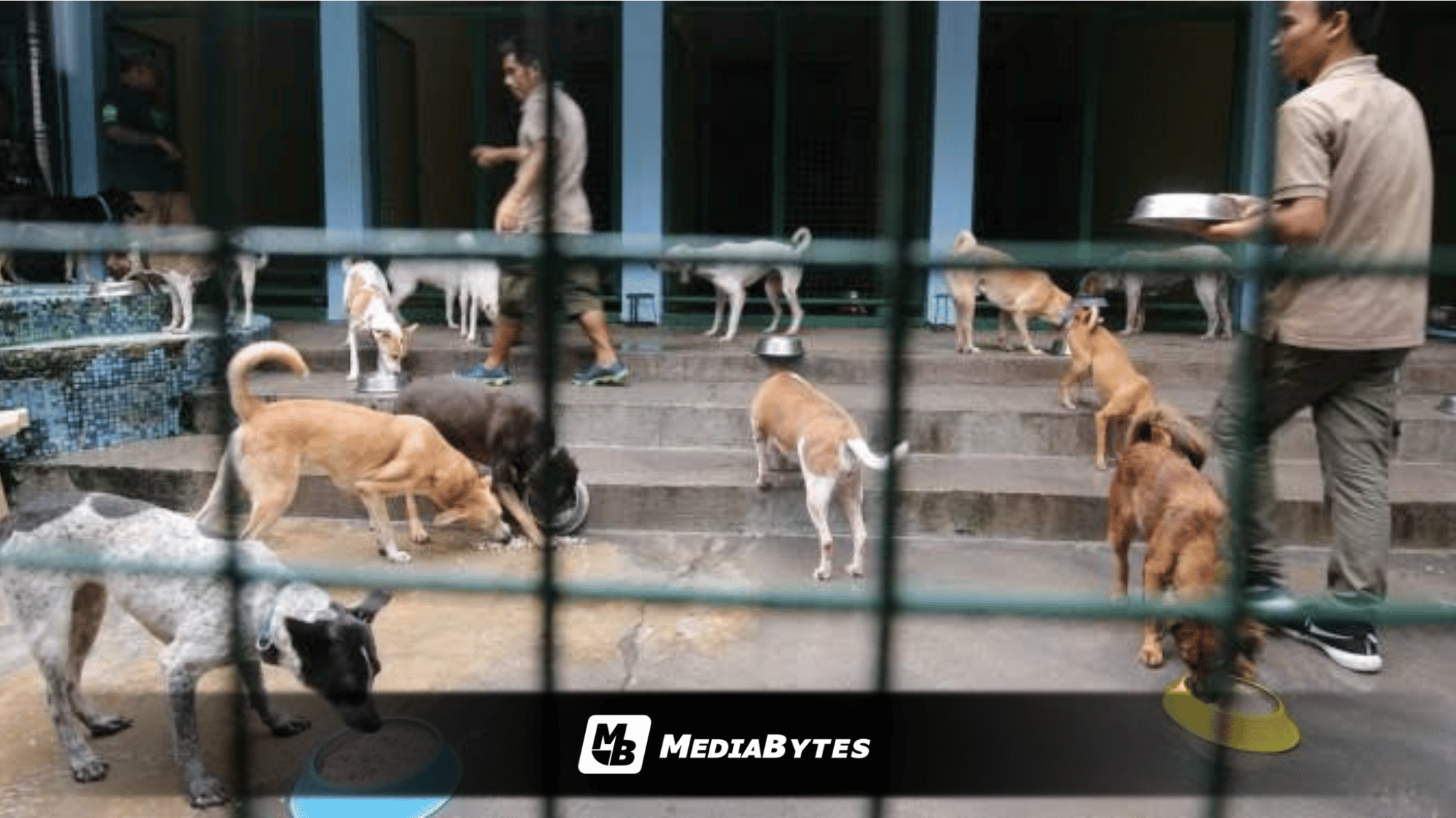
QUEZON CITY, Philippines — The Akbayan Party-List submitted a measure at the House of Representatives on Tuesday, September 29, aimed at imposing harsher punishments for animal cruelty, abuse, and abandonment.
Akbayan Representative Perci Cendaña filed House Bill 11495, known as the ALAGA Act, accompanied by animal welfare advocates from the Philippine Animal Welfare Society (PAWS) and several therapy dogs. The legislation is co-authored by Akbayan Representatives Chel Diokno and Dadah Ismula, along with Dinagat Islands Lone District Representative Kaka Bag-ao.
Under the provisions of the proposed bill, animal cruelty, maltreatment, or neglect resulting in death will carry a penalty of one year, six months, and one day to three years of imprisonment, alongside fines ranging from ₱100,000 to ₱500,000.
Inflicting severe injuries on animals will be punishable by one year and one day up to one year and six months of jail time, with fines set between ₱50,000 and ₱80,000. Less serious injuries will carry a penalty of six months to one year in prison and a fine of up to ₱30,000.
The legislation primarily covers companion animals. Livestock and animals raised for food or farming purposes are excluded from general provisions, though they remain protected against unnecessary cruelty and suffering.
Explaining the necessity of the measure, Cendaña pointed out that existing regulations make it difficult to hold abusers accountable.
“Nakita natin na, parang sa dulo, nakalulusot lang under the current policy regime ‘yung mga nananakit sa kanila, at mas mahirap ‘yung prosecution under the current policy regime,” Cendaña said.
PAWS Executive Director Anna Cabrera emphasized the strict nature of the proposed sanctions, noting that:
“It’s fine and imprisonment all across convicted animal offenders.”
The ALAGA Act also explicitly bans and penalizes the dog-meat trade, animal fighting in all forms, and the creation, distribution, or broadcast of media showing the deliberate infliction of harm or death on animals for commercial gain or entertainment.
Additionally, the bill prohibits animal experimentation and dissection in elementary schools, while requiring secondary and tertiary educational institutions to adhere to international humane standards for scientific testing.
To ensure proper enforcement, House Bill 11495 proposes establishing the National Commission on Animal Welfare. The independent quasi-judicial body would hold fiscal autonomy, regulatory authority, and licensing powers to oversee the prosecution of animal cruelty cases.
”It will have the fiscal mandate, admin, budget to implement all across, even ‘yung farm animals, wild animals, all included,” Cabrera added.
The bill offers legal immunity to individuals who rescue neglected animals, protecting them from criminal liability such as theft charges when entering private property to carry out a rescue. Cabrera highlighted that this provision prevents well-meaning rescuers from facing legal retaliation.
Furthermore, local government units would be required to deploy trained personnel to implement Trap-Neuter-Vaccinate-Return (TNVR) programs as the primary humane method for managing stray animal populations.
Animal control facilities would also be mandated to maintain publicly accessible logs tracking impounded animals, adoptions, deaths, disease outbreaks, and euthanasia.
To help pet owners retrieve lost animals after work, public pounds would need to stay open until at least 7 p.m. on weekdays and remain accessible on weekends and holidays.