


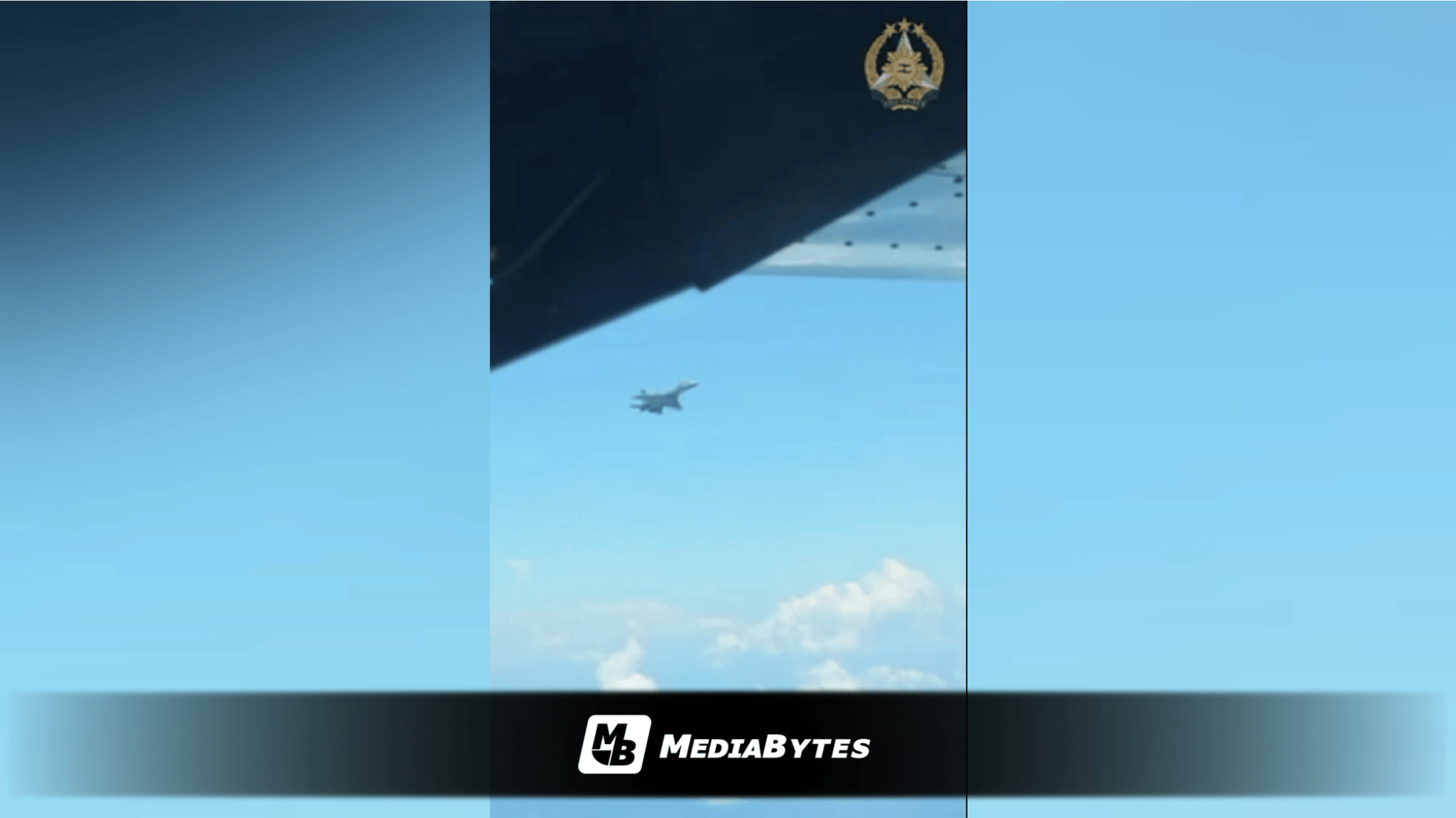
MANILA, Philippines — A Chinese J-16 fighter jet came within about 300 feet of a Philippine Air Force (PAF) C-208 aircraft during a routine maritime patrol over Bajo de Masinloc on October 3, prompting the Armed Forces of the Philippines (AFP) to describe the encounter as “dangerous, coercive, and aggressive.”
Rear Admiral Roy Vincent Trinidad (Ret.), AFP spokesperson for the West Philippine Sea, said the Chinese fighter repeatedly approached the Philippine aircraft and made maneuvers that appeared intended to place the C-208 directly behind it and in the path of its jet wash.
Jet wash refers to the powerful and turbulent air produced behind a fast-moving aircraft. At close range, the turbulence can affect another aircraft’s stability and potentially cause it to shake, tilt, or lose control.
“The jet plane came within close proximity of our aircraft and there were attempts to put our aircraft in the jet wash, behind the fighter jet. It would pass in front of our aircraft so that we would be hit by turbulence,” Trinidad told reporters during an online briefing on Tuesday, October 6.
The AFP said two Chinese military aircraft were involved in the encounter, with one confirmed to be a J-16. Video footage showed the fighter moving toward the Philippine aircraft before crossing in front of it.
According to the military, the incident followed what it described as a recurring pattern of unsafe and coercive actions against Philippine government aircraft and vessels conducting lawful operations in the West Philippine Sea.
Trinidad said the PAF crew remained calm and followed their training throughout the encounter.
“Their actions were very professional. They were not intimidated. They conducted the mission and they returned back safely to base,” he said.
Trinidad declined to speculate on the possible consequences had the Philippine aircraft been caught directly in the fighter’s wake.
He emphasized that Philippine forces must continue to follow established procedures and rules during such encounters.
“It is very important in situations like this, all our actions must be within established protocols, within the rules of engagement. Our actions must all be professional because if there is an untoward incident, we do not want it to reach that point,” he said.
“Rest assured, our actions will all be within the bounds of domestic and international law, the rules of engagement, and whatever protocols there are among pilots,” he added.
Trinidad said the Chinese aircraft were believed to have originated from Hainan, which he identified as the nearest Chinese territory where such aircraft could be based in relation to Bajo de Masinloc.
He also stressed that the latest encounter was part of a longer pattern of similar incidents involving Philippine government aircraft.
“There have been recorded incidents in the past. If you remember two years ago, last year, BFAR [Bureau of Fisheries and Aquatic Resources] aircraft, Philippine Coast Guard (PCG) aircraft have been subjected to similar actions, unprofessional and illegal actions up in the air,” Trinidad said.
The Philippine Coast Guard has also reported incidents in which Chinese military aircraft fired flares near the flight paths of its aircraft.
Trinidad said, however, that no live weapons have so far been used against Philippine aircraft.
“We do not look at the gravity of each situation. All of these are unprofessional. All of these are dangerous. They are coercive and aggressive. They are not expected of a professional armed force that the PLA [People’s Liberation Army] claims to be,” Trinidad said.
The AFP said it has completed its documentation of the October 3 encounter and will submit the details to the Department of Foreign Affairs for possible diplomatic action.