


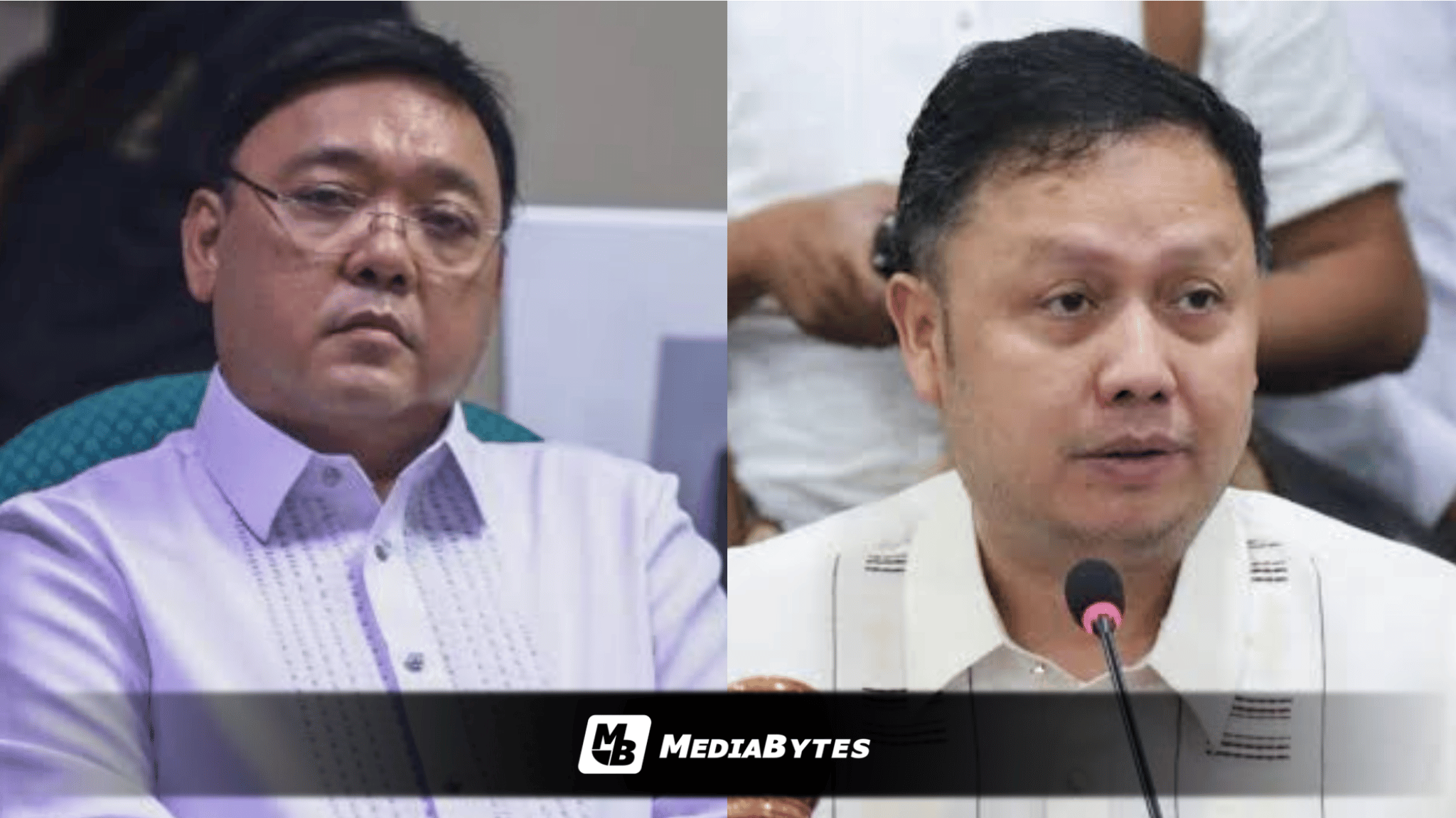
The Department of Foreign Affairs (DFA) said it has been unable to secure detailed information on the whereabouts of former Ako Bicol Party-list Representative Zaldy Co and the reported asylum case of former presidential spokesperson Harry Roque because of strict privacy regulations in the European Union (EU).
Foreign Affairs Secretary Ma. Theresa Lazaro made the disclosure on Friday, September 18, during a Senate Committee on Finance subcommittee hearing on the DFA’s proposed 2027 budget.
Responding to a question from Senator Erwin Tulfo about Co, Lazaro said EU member states, including France, are bound by stringent rules governing personal information.
“Mr. Chair, the European Union—including France—has very strict privacy regulations. So, if he (Co) has filed for asylum, we will not be provided with information, as this is their law and their regulation. That is the current status,” Lazaro said.
The DFA chief said Philippine diplomatic missions cannot obtain such details even when they formally inquire with the authorities of the countries concerned.
“No matter what inquiries our embassy makes, we will not be given information—again, due to their very strict privacy rules. The same applies to the situation with Harry Roque in Austria,” she also said.
Lazaro said the DFA’s information that Co was in France came from a previous conversation with the Czech Republic’s foreign minister, rather than from French authorities.
“After all, wasn’t he last seen there? The foreign minister told me, ‘Oh, he has been taken; he is already in France’. But that was the extent of the information,” she pointed out.
Tulfo also asked Lazaro about reports concerning Roque’s whereabouts and his alleged asylum application.
“What country is he in right now? Netherlands?” Tulfo asked.
Lazaro replied that Roque was in Austria and said the Philippine Embassy in Vienna had not received information confirming whether his asylum request had been rejected.
“Austria sir. According to our embassy in Vienna, there is no information at all if the asylum has been denied. Again, back to their basic tenets of strict privacy issues,” she said.
Despite the difficulty in obtaining information, Lazaro said the DFA continues to raise three legal cooperation arrangements during its bilateral political consultations with foreign governments: extradition, the transfer of sentenced persons and mutual legal assistance.
“And those are agreements: extradition, transfer of sentenced persons, and mutual legal assistance,” she said.
“So, regarding those three—if we had these three agreements with the various countries, I think it would be easier,” she pointed out.
Lazaro said the absence of such agreements with EU countries has complicated efforts to address cases involving individuals sought by Philippine authorities.
“However, with these EU countries, we don’t have these extradition arrangements—these three treaties or agreements. That is likely what is causing the difficulties,” she lamented.
On the passports of Co and Roque, Lazaro said the DFA would follow the directives of Philippine courts and guidance from other government agencies handling their cases.
“I think that will be subject to a court order and other agencies that will guide us on this,” she said.
She added that if an arrest warrant is issued, the DFA may withhold a passport or issue a travel document that would allow the individual to return to the Philippines.
“If there’s a warrant of arrest, we will not give him a passport or we will give him a travel document so he can return home. That’s one way, from the foreign country to the Philippines, travel document is what we give,” the DFA chief said.