


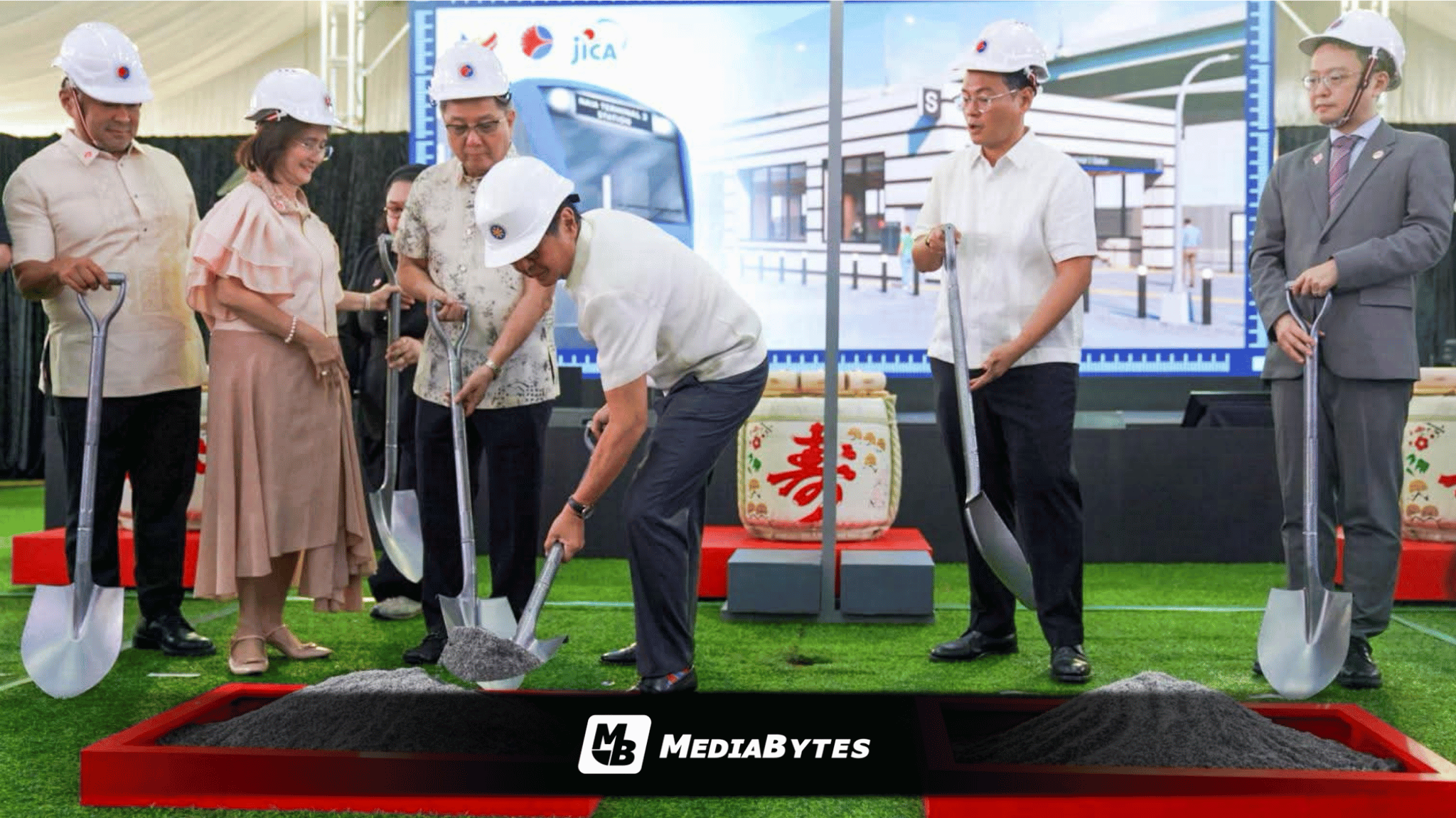
Senate Deputy Majority Leader JV Ejercito on Wednesday, September 16, assured the timely execution of major transport infrastructure, promising to secure dedicated funding for both the Metro Manila Subway Project (MMSP) and the North-South Commuter Railway (NSCR).
Ejercito, who chairs the Senate Committee on Finance, stressed that providing reliable budget allocations will ensure the seamless implementation of President Ferdinand Marcos Jr.’s key infrastructure initiatives while maintaining fiscal transparency.
The lawmaker made the commitment during the groundbreaking ceremony for MMSP Contract Package 109 (CP109), a 2.41-kilometer underground alignment connecting Taguig City and Pasay City, featuring a dedicated station at the Ninoy Aquino International Airport (NAIA) Terminal 3.
“Under my leadership as chairperson of the Committee on Finance, I will make sure that there will be no more delays, and that our obligations will be met, especially for the North-South Commuter Railway and the Metro Manila Subway System,” Ejercito told reporters.
To avoid past operational bottlenecks, Ejercito pledged to shift the government’s counterpart funding for foreign-assisted projects out of unprogrammed funds and directly into regular programmed appropriations.
“I will make sure that foreign-assisted projects and the government participation, yung [counterpart funding] natin, will be now in the programmed appropriations and it will be prioritized,” he added.
“Kasi obligasyon natin ‘to and I don’t think we can afford for the delays kasi we are paying the commitment fee. Nagbabayad tayo kapag nade-delay.”
He warned that disbursement delays strain contractors and delay project completion, incurring unnecessary commitment fees for the government.
Funded through the Japan International Cooperation Agency (JICA), the 33.1-kilometer MMSP aims to reduce travel time between Valenzuela City and NAIA Terminal 3 from over 90 minutes to 41 minutes. The NAIA Terminal 3 station alone is projected to handle 70,000 passengers daily by 2035, scaling up to 74,000 by 2045.
Full system operations—utilizing 30 eight-car trainsets running at speeds up to 80 km/h—are slated for the third quarter of 2031.
Acknowledging tight national finances, Ejercito maintained that accelerating strategic infrastructure spending remains critical for broader economic recovery.
“We need to accelerate spending, and our economy depends so much on public spending. ‘Yan po yung infrastructure. That’s why I have always been pushing for infrastructure development because of its multiplier effect and long-term effect that will stimulate economic growth and spread out the development,” he said.
“We need to start reaping the economic benefits of our railways.”