


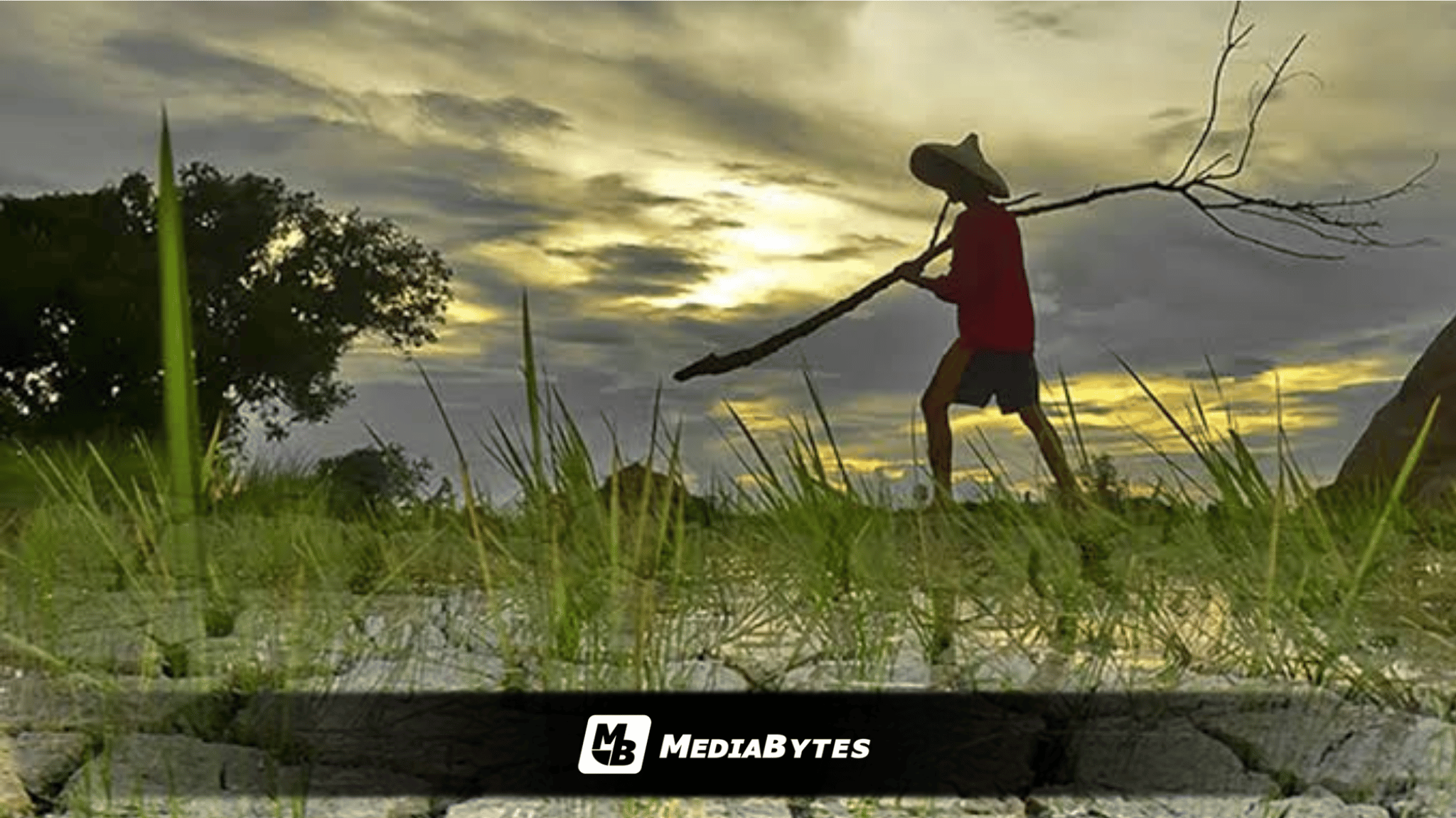
MANILA, Philippines — The Office of Civil Defense (OCD) is coordinating water supply interventions and livelihood assistance for farmers and fisherfolk as prolonged dry conditions associated with El Niño have affected more than 451,000 people nationwide.
OCD Director Vicente Gregorio Tomas said government agencies and local government units (LGUs) are implementing coordinated measures to protect communities, agricultural production and other sectors vulnerable to an expected very strong El Niño.
As of Sunday, October 11, the agency recorded 451,889 affected individuals, equivalent to 121,185 families, across 1,019 barangays in several regions, including Cagayan Valley, Calabarzon, Mimaropa, Bicol, Eastern Visayas and Caraga.
Tomas said authorities are also working to prevent misinformation, panic buying and the possible exploitation of consumers amid concerns over water availability. The OCD is coordinating with the Department of Trade and Industry (DTI) and other government agencies to address misleading online claims, including those involving water shortages and water-purification products.
“We are continuously coordinating with the DTI and other government agencies, especially those involved in the response cluster, to address misinformation, rumors, and speculation,” Tomas said.
He explained that preparations for the anticipated dry spell began during the first quarter of the year, following early assessments from the Department of Science and Technology (DOST).
“As early as the first quarter of this year, there was already a meeting among all national government agencies under the National Disaster Risk Reduction and Management Council (NDRRMC), particularly the science-based agencies. DOST Secretary Renato Solidum provided early data analytics on what we should do in preparation for the coming extreme or very strong El Niño,” he said.
Planned interventions include deploying water tankers and identifying alternative sources of drinking water and irrigation to help affected communities maintain supplies and minimize agricultural losses.
The Department of Agriculture (DA) and the Bureau of Fisheries and Aquatic Resources (BFAR) are also expected to provide support to farmers and fisherfolk whose livelihoods have been affected by the dry conditions.
Agricultural losses reach P5.6 billion
The OCD reported that damage to agriculture has reached P5.6 billion, with estimated production losses of 117,613.72 metric tons. Around 224,170.76 hectares of farmland have been affected, involving 202,267 farmers and fisherfolk.
The reported agricultural impact covers parts of Cagayan Valley, Calabarzon, Bicol, Western Visayas, Central Visayas, the Zamboanga Peninsula, Davao Region, Soccsksargen and Caraga.
Water supply interruptions have also been recorded in four areas in Caraga: the municipalities of Tubajon and Loreto in Dinagat Islands, Butuan City and Bayugan City in Agusan del Sur.
In response to the effects of El Niño, 107 localities have declared a state of calamity, allowing their local governments to access resources and carry out emergency measures.
Cagayan Valley accounts for 66 of the declarations, including 37 areas in Isabela and 29 in Cagayan, where province-wide calamity declarations were issued.
Caraga has 23 affected localities under calamity declarations, including seven in Dinagat Islands, one in Butuan City, one in Carmen, Surigao del Sur, and 14 in Agusan del Sur.
Meanwhile, 12 areas in Camarines Norte have declared a state of calamity. Four municipalities in Quezon province—Alabat, Guinayangan, Jomalig and General Nakar—have also been included. Other affected localities include Lope de Vega in Northern Samar and Kalamansig in Sultan Kudarat.
Government assistance reaches thousands of families
Despite the widespread effects, government assistance totaling P46.47 million has been distributed to 36,275 families in Isabela, Oriental Mindoro, Albay, Camarines Norte, Catanduanes, Northern Samar, Samar, Dinagat Islands and Surigao del Sur.
Tomas said the OCD and the NDRRMC continue to coordinate with science-based agencies, including the Philippine Atmospheric, Geophysical and Astronomical Services Administration (PAGASA), to ensure that response measures are guided by scientific data and assessments.
The government’s ongoing efforts aim to reduce the impact of prolonged dry conditions, maintain access to essential water supplies and support communities whose livelihoods depend on agriculture and fisheries.