


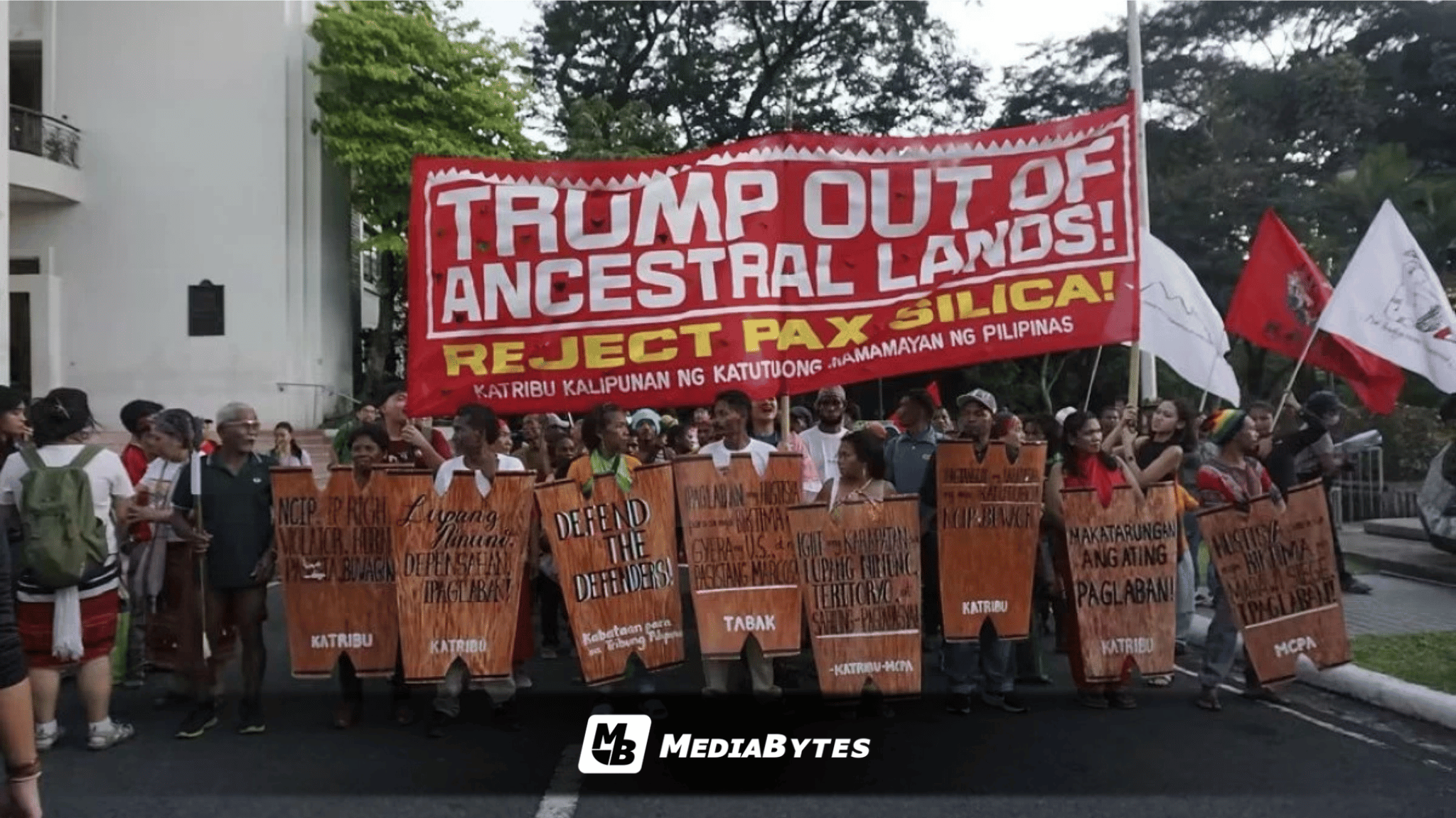
MANILA — Malacañang defended the police response to ongoing student protests against the proposed U.S.-led Pax Silica initiative, pointing to President Ferdinand Marcos Jr.’s standing directive for law enforcers to exercise “maximum tolerance.”
Speaking during a press briefing on Saturday, November 14, Communications Undersecretary and Palace Press Officer Claire Castro responded to demonstrations staged as U.S. President Donald Trump prepares to arrive in the country for the 49th Association of Southeast Asian Nations (ASEAN) Summit on November 17.
“Simula’t mula pa lang, alam na namin kung paano dapat itrato ang mga nagpoprotesta. Iyan ay sa utos ng Pangulo – maximum tolerance,” Castro said.
Addressing reports of police misconduct—including allegations that officers dragged students, punched a female student, and placed a demonstrator in a headlock during an arrest of three University of Makati students in Taguig City’s Bonifacio Global City—Castro urged the media and the public to thoroughly examine the context of the photographs before jumping to conclusions.
While acknowledging the public’s right to peaceful assembly, she stressed that law enforcement must step in if demonstrations break the law.
“Ang hindi kasi mato-tolerate ng ating pamahalaan ay pinagbibigyan ang bawat mga kababayan natin ng kanilang karapatan – gamitin nila ang karapatan sa tama, pero kung ito naman ay sosobra at lalabag sa batas, hindi naman puwedeng magtulug-tulugan ang ating mga kapulisan,” she stated.
Castro also noted an incident where protesters allegedly burned tires on a vehicle, maintaining that police still exercised restraint.
While recognizing the students’ patriotism and intent, the Palace official encouraged protest groups to engage in intensive dialogue and submit formal position papers detailing their specific objections rather than relying on confrontational tactics.
She questioned the premature outcry over the initiative, noting that the administration has yet to categorically confirm whether a Pax Silica agreement will even be signed during Trump’s visit.
“Saan ba nila nakuha ang kanilang kaalaman na magkakaroon ng pirmahan? Kung magkakaroon ng pirmahan, nakita na ba nila iyong pipirmahan para agad-agad na umalma?” she asked.
“Ibinibigay natin sa mga estudyante ang karapatan nilang magsalita, pero siguro bago magkaroon ng mainit na pag-react, kailangan nilang busisiin muna ang lahat,” Castro added.
“Hindi po nadadaan ang magandang pakikipag-usap sa harassment, sa pagsigaw-sigaw,” she concluded.
Pax Silica is a U.S.-led initiative aimed at establishing secure supply chains for artificial intelligence and advanced technology, spanning critical minerals, energy, semiconductors, data centers, and logistics. Critics warn the agreement could increase dependence on the United States, strain local natural resources, and threaten ancestral lands.
Conversely, the government champions the partnership as a voluntary opportunity to attract foreign investment and drive high-value manufacturing growth, with assurances from the Bases Conversion and Development Authority and President Marcos that safeguards are in place to protect Indigenous communities and the environment.