


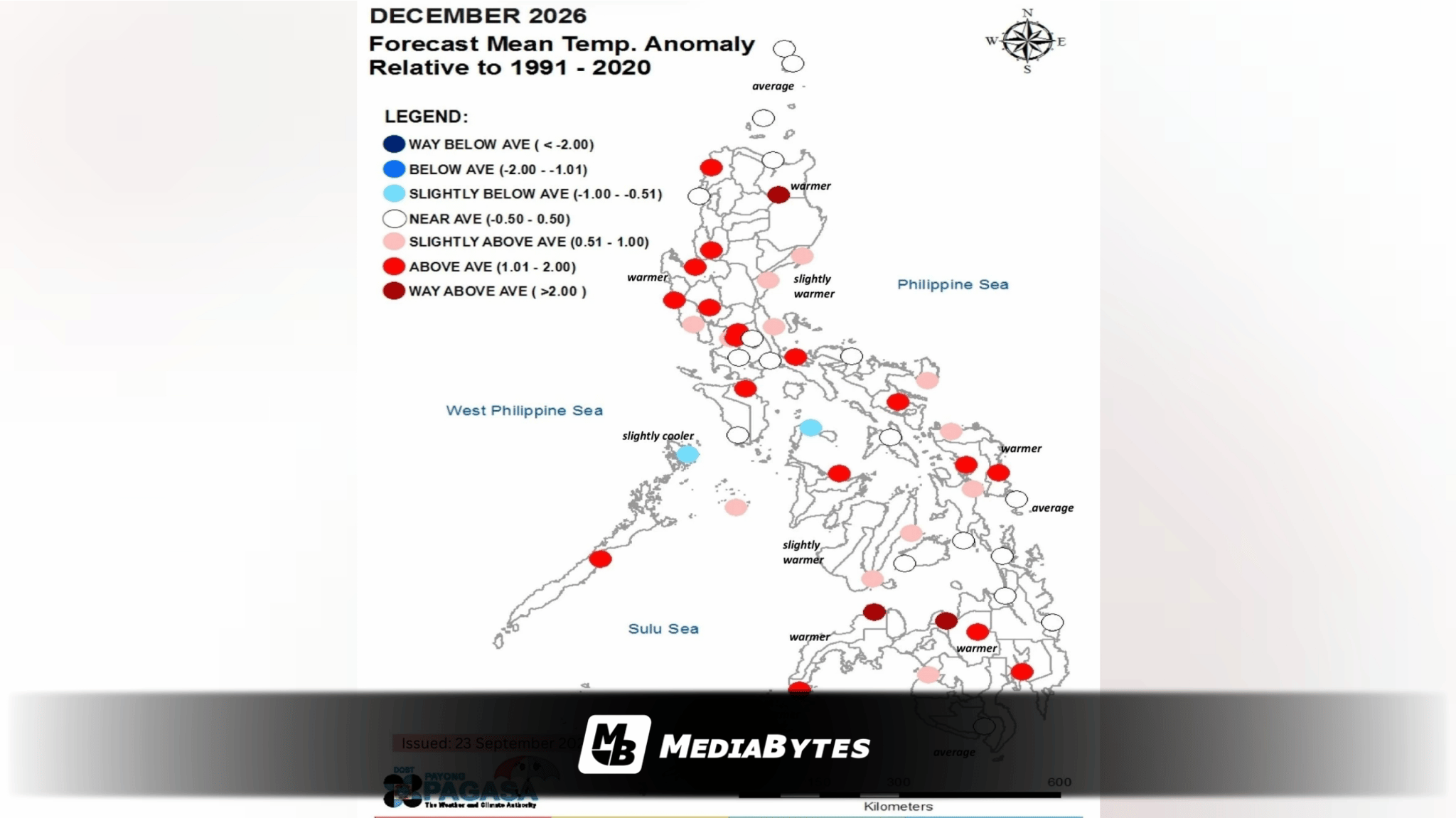
QUEZON CITY, Philippines — The upcoming northeast monsoon season, locally known as amihan, is expected to bring noticeably warmer temperatures compared to last year as a intensifying El Niño event takes hold, state weather bureau PAGASA reported.
Climate Monitoring and Prediction Section chief Ana Liza Solis explained that while the signature cool breezes will still arrive, conditions will not match the chilly temperatures experienced during the previous La Niña-influenced season.
”Pero dito nakikita natin, compared dun sa last amihan season natin, this could be warmer than the amihan last year. Mararanasan pa rin natin yung simoy ng amihan pero hindi ganun kalamig,” Solis stated.
The amihan typically commences between late October and early November, extending through late March or early April. However, forecasters warn that a strong El Niño pattern—projected to peak in intensity late in the year and persist through mid-2027—will cushion the usual seasonal drop in temperature.
Solis noted that intense heat will become particularly prominent heading into the dry season.
”Also, nakikita po natin, as early as March, we could get as high as more than 39 degrees po na mainit na temperature diyan po sa may Mindanao,” she added.
PAGASA cautioned that the combination of elevated heat and below-average precipitation could rapidly deplete soil moisture across key agricultural zones. The agency defines dry conditions, dry spells, and droughts based on cumulative rainfall deficits over consecutive months:
- Dry Condition: Two straight months of below-normal rainfall (21% to 60% reduction).
- Dry Spell: Three consecutive months of below-normal rainfall or two months of way-below-normal rainfall (over 60% reduction).
- Drought: Five consecutive months of below-normal rainfall or three months of way-below-normal rainfall.
Projections indicate a steep rise in water scarcity across the archipelago over the coming months:
- Late October: 28 areas under dry conditions, 9 in a dry spell, and 8 facing drought.
- Late November: 7 areas under dry conditions, 35 in a dry spell, and 8 facing drought.
- Late December: 16 areas under dry conditions, 37 in a dry spell, and 43 facing drought.
- Late January: 5 areas under dry conditions, 35 in a dry spell, and 50 facing drought.
- Late February: 0 areas under dry conditions, 35 in a dry spell, and 50 facing drought.
- Late March: 5 areas in a dry spell, with 79 provinces and regions expected to suffer full drought conditions.