


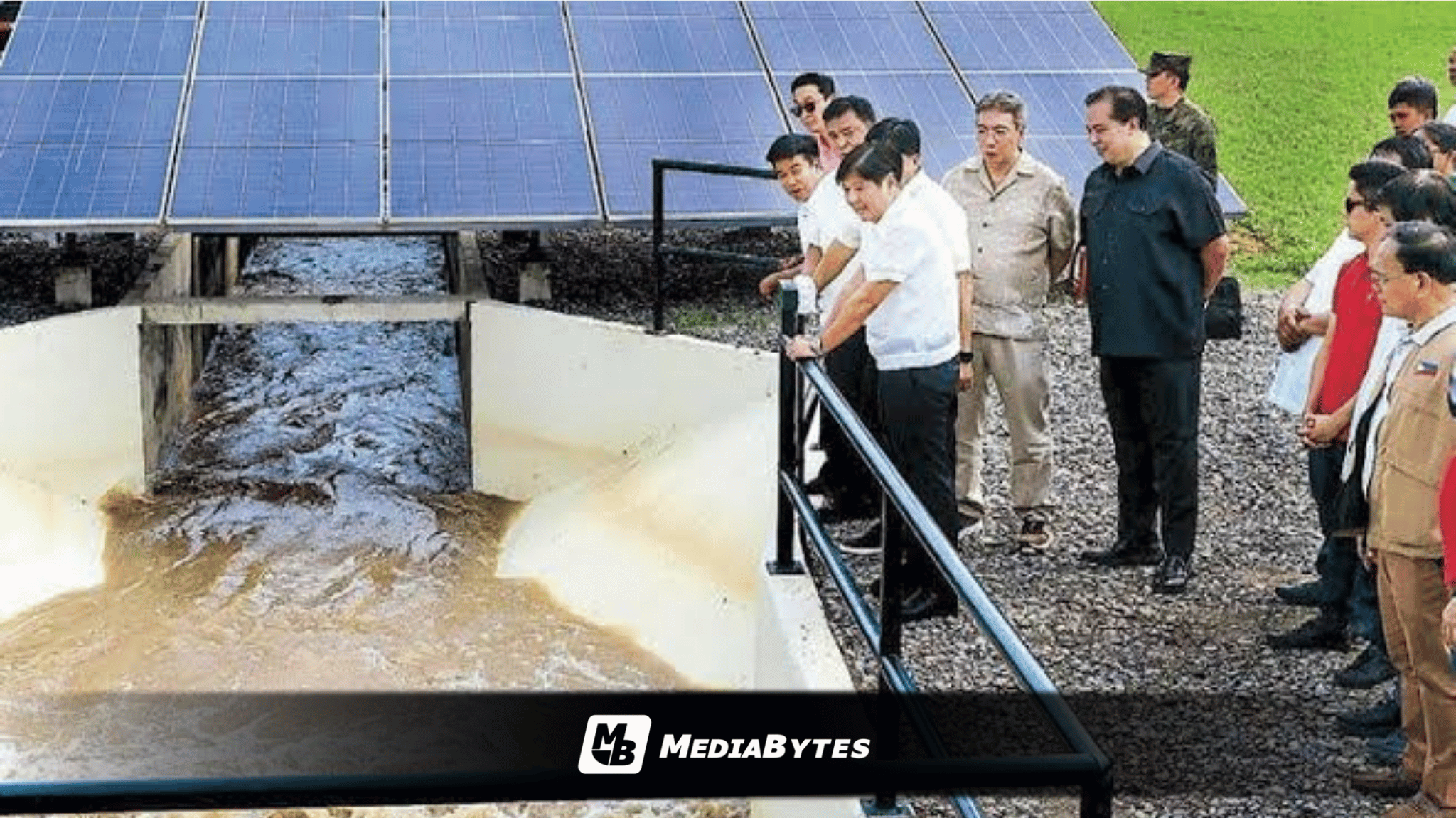
MANILA, Philippines — President Ferdinand Marcos Jr. is pushing for the nationwide expansion of solar-powered irrigation systems as the government seeks to cut farming expenses, improve agricultural productivity and strengthen food security, Executive Secretary Ralph Recto said.
Recto said the National Irrigation Administration’s (NIA) Solar-Powered Pump Irrigation Program (SPIP) is being expanded as part of the administration’s efforts to modernize the country’s irrigation infrastructure and make it more resilient to climate change.
The program currently covers 4,036 solar-powered irrigation sites in 43 provinces across all 17 regions. Of these, 2,147 are located in Luzon, 1,102 in the Visayas and 787 in Mindanao.
Under the NIA’s Vision 2030 roadmap, the government aims to increase the number of SPIP sites to 10,000 nationwide by 2030. The expansion is expected to benefit about two million farmers, provide irrigation to an additional 100,000 hectares of agricultural land and help move the country toward net-zero energy use in irrigation.
“We want to move from traditional irrigation to smart, digital and climate-resilient water management,” Recto said, emphasizing the need to reduce irrigation expenses, improve farm yields and ensure a stable water supply despite changing weather conditions.
Recto said the solar irrigation initiative is also intended to become part of the Marcos administration’s long-term contribution to Philippine agriculture.
“This will be an important part of President Marcos’ legacy, a modern irrigation system that harnesses clean energy, embraces new technology, strengthens our food security and, most importantly, improves the lives and livelihoods of Filipino farmers,” Recto said.
The program is designed to reduce farmers’ reliance on diesel-powered pumps by using solar energy to operate irrigation equipment. This can help shield farmers from rising and fluctuating fuel prices while also reducing operating and maintenance expenses.
Recto said the President wants farmers to have dependable irrigation without having to allocate a large portion of their income to water and pumping costs.
“Habang tumitindi ang epekto ng pagbabago ng panahon, magtatayo tayo ng mga sistemang maaasahan sa tagtuyot, matibay sa panahon ng sakuna, at tunay na nagpapalakas sa kabuhayan ng ating mga magsasaka,” Recto said.
He also described the initiative as a long-term investment in agricultural productivity and food security.
“This is a long-term investment in food security. Every peso farmers save on diesel can instead be used for seeds, fertilizer, equipment and other needs that directly improve their productivity and income,” Recto said.
Aside from expanding solar-powered irrigation, NIA is developing an artificial intelligence-based monitoring system that will use real-time information to assess water availability, soil conditions and irrigation requirements.
The system is intended to improve the distribution of irrigation water, reduce wastage and allow authorities to respond more quickly to changes in weather and farm conditions.
NIA data indicate that existing solar-powered irrigation facilities have maintained high operational availability and are capable of providing between six and eight hours of irrigation each day.