


MANILA, Philippines — Defense Secretary Gilberto “Gibo” Teodoro Jr. declared on Saturday, September 26, that the Philippines should explore filing a legal case over a recent maritime confrontation involving a Chinese vessel in the West Philippine Sea.
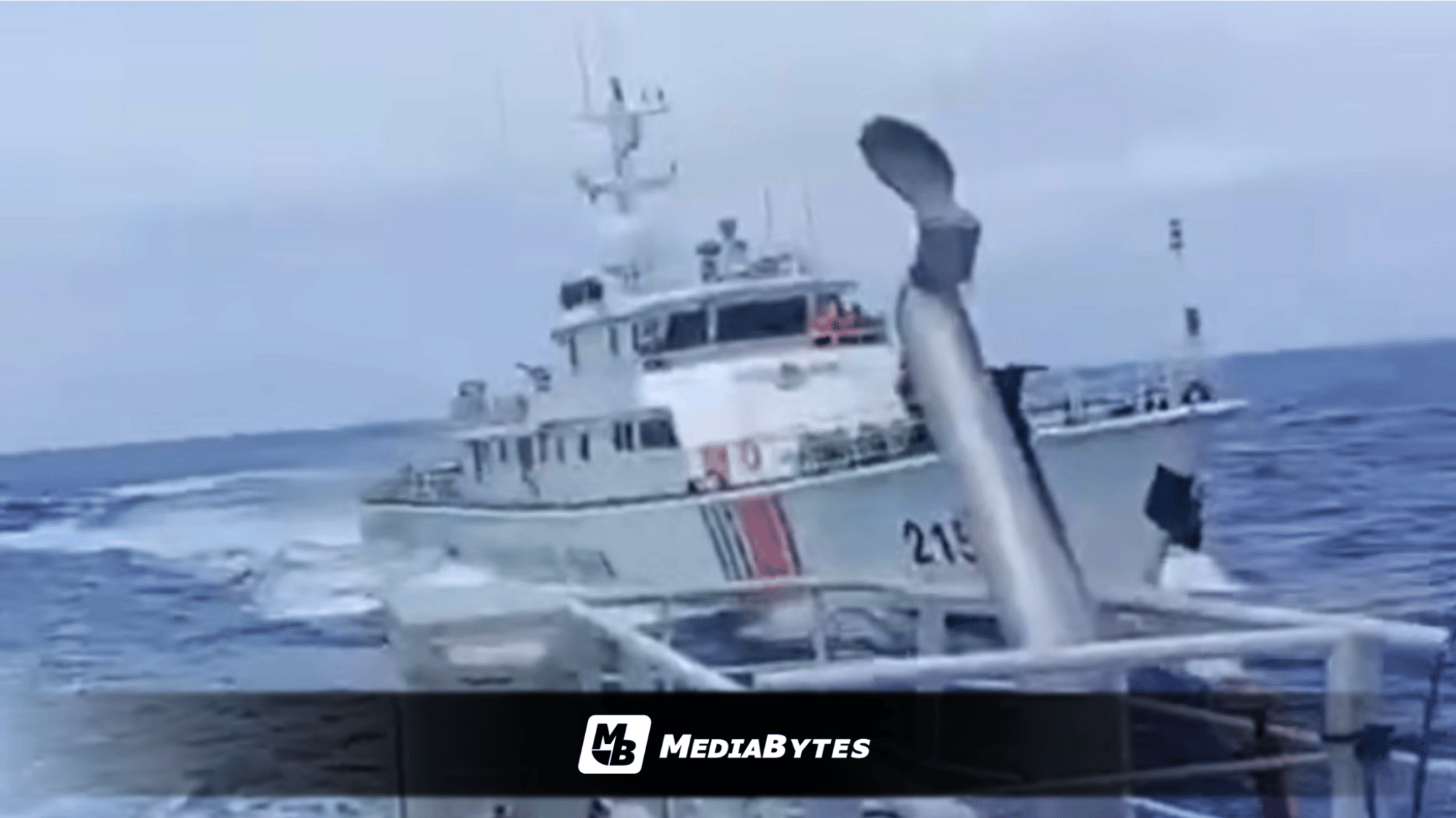
Speaking during a media forum, Teodoro condemned the September 18 incident, in which China Coast Guard (CCG) vessel 21585 rammed the BRP Datu Magat Salamat, an unarmed civilian ship operated by the Bureau of Fisheries and Aquatic Resources (BFAR).
The collision occurred approximately 54 nautical miles off Palawan—well inside the Philippines’ Exclusive Economic Zone (EEZ)—while the BFAR vessel was delivering fuel subsidies to local fishermen.
Teodoro classified the deliberate action as a crime rather than a mere violation of maritime safety rules.
“For me, this is it, and I am not afraid to say it: the act of ramming an unarmed civilian vessel with the intent to ram is a criminal act,” Teodoro said.
“And if somebody was hurt there, let us say, God forbid, no one was hurt, that is a malicious act, compounded, qualified in certain offenses, or exacerbated by treachery. It is a treacherous act. It is a criminal act, and it should really be condemned, or if there is a proper procedure in the world, a case should be filed,” he added.
The Defense Chief rejected the notion that Manila should remain passive to maintain diplomatic ties with Beijing, pointing out that the Philippines had already demonstrated good faith through past dialogues and the historical 2016 arbitral ruling, which invalidated China’s expansive sea claims.
“We already showed good faith. How? We went through talks. They refused. We filed a case before the Arbitral Award. If they truly believed in what they were saying, they should have presented it there in the Arbitral Award. They knew they would lose. They lost. That’s it,” he said.
Teodoro stated that the Department of National Defense is coordinating closely with the Philippine Coast Guard to protect civilian vessels in domestic waters.
Under this operational approach, the Coast Guard maintains primary responsibility for maritime law enforcement, while the Philippine Navy provides defensive deterrence.
He further noted that the country will continue enhancing its defense capabilities and deepening security partnerships with international allies—including Australia, Canada, France, Japan, New Zealand, and the United Kingdom—that uphold freedom of navigation and a rules-based international order.