


The Senate impeachment court on Tuesday, September 15, examined Vice President Sara Duterte’s financial declarations as the prosecution presented records it said could support allegations of unexplained wealth, inaccurate Statements of Assets, Liabilities and Net Worth (SALNs), and undisclosed or continuing business interests.
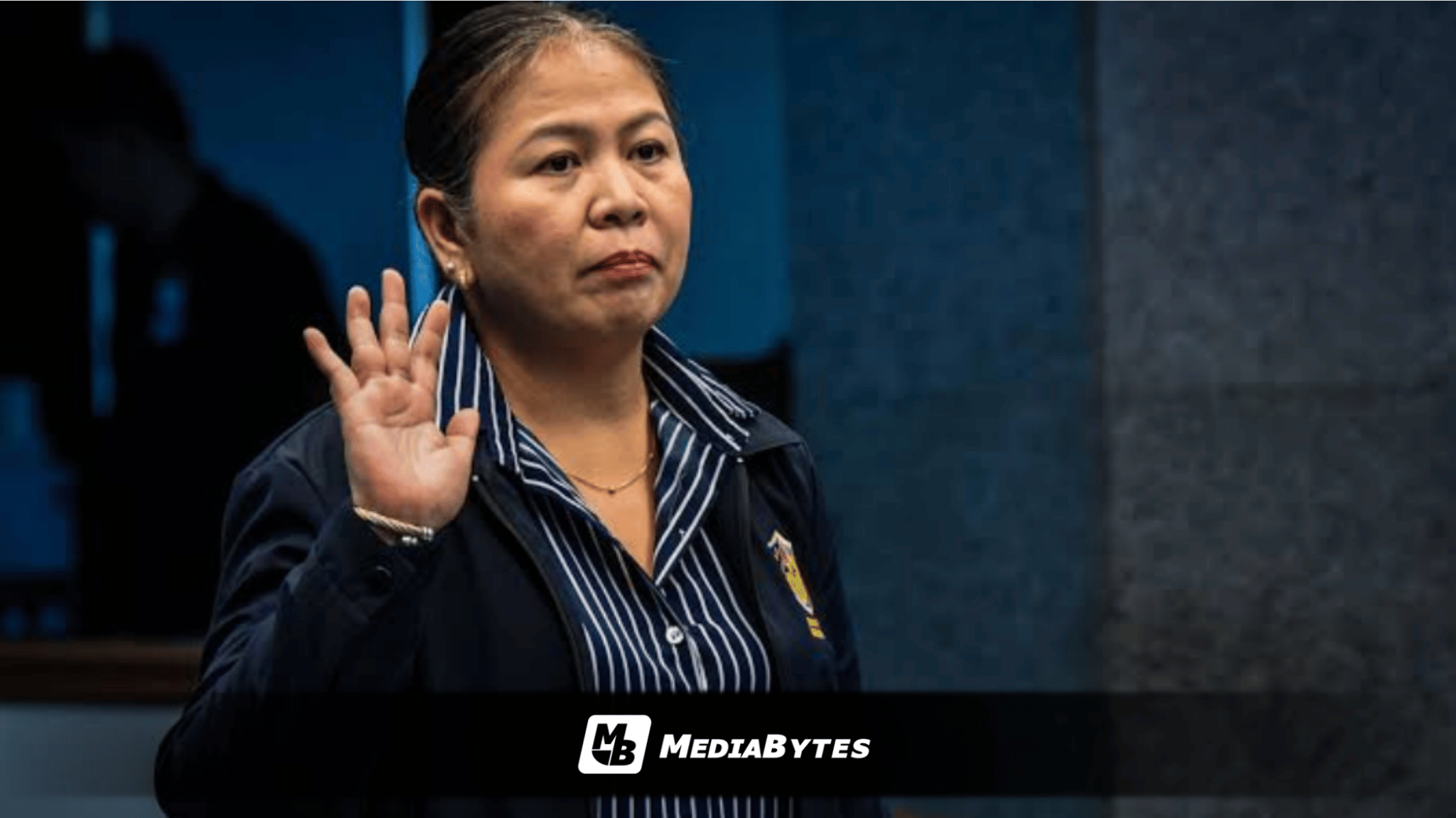
On the 25th day of the impeachment trial, the House prosecution panel called Karen Batu, officer-in-charge of the Office of the Ombudsman’s Records Division, to testify about Duterte’s SALNs and related documents maintained by the anti-graft agency.
Batu told senator-judges that Duterte’s declared net worth rose from ₱7.25 million in 2007 to ₱98.66 million in 2025. She also noted that while Duterte had declared cash on hand and cash in bank in some earlier SALNs, no such amounts were listed beginning in 2019.
“For SALNs 2021, 2022, 2023, 2024, and 2025, wala pong naka-declare na (there was no declared) cash on hand or in bank,” Batu said.
The prosecution pointed to the lack of declared cash while highlighting the substantial increase in Duterte’s net worth, saying the figures should be considered alongside her legitimate income, tax payments and other financial documents.
Batu, however, clarified that the Ombudsman’s Records Division does not assess whether the information contained in a SALN is accurate or truthful. She explained that the office mainly checks whether the forms follow the prescribed format and contain the required signatures, dates and pagination.
“But the contents, your honor, we do not review,” Batu told the court.
During cross-examination, Batu also acknowledged that SALN forms do not have a dedicated section for cash on hand or cash in bank. The forms likewise do not specifically require officials to state the acquisition cost of business interests.
The clarification prompted senator-judges to question whether some of the issues raised by the prosecution could be related to the limitations of the SALN format.
Senate President Win Gatchalian asked whether the lack of acquisition costs for business interests could affect the computation of a public official’s declared net worth.
“Without concluding anything, yes, it can be a possibility,” Atty. James Bryan Ibrahim Alih, one of the prosecution lawyers, replied when asked whether missing acquisition values could lead to an understated net worth.
The defense, meanwhile, focused on the limits of Batu’s testimony. Defense lawyer Atty. Justin Nicol Gular established that the Ombudsman official had no personal knowledge of the properties Duterte listed in her SALNs and could not independently determine whether the declarations were inaccurate or irregular.
Tuesday’s proceedings followed the testimony of retired Sandiganbayan Presiding Justice Amparo Cabotaje-Tang, who appeared before the impeachment court a day earlier to discuss constitutional and statutory rules concerning the wealth and business activities of senior government officials.
Cabotaje-Tang testified that unexplained wealth can be assessed by looking at a public official’s SALN, lifestyle, income tax returns and assets held by the official’s spouse and minor children. She also discussed constitutional restrictions on the President and Vice President engaging in business while in office.
The defense had objected to Cabotaje-Tang’s testimony, raising questions about her qualifications and the manner in which the prosecution presented her. The retired justice denied having any political bias against the Duterte family and rejected claims that she received or was promised anything in exchange for appearing before the court.
The prosecution also continued presenting evidence concerning Duterte’s business interests as it sought to establish its allegation that she maintained business connections while serving as Vice President.
The impeachment court later revised its schedule for Securities and Exchange Commission Company Registration and Monitoring Department Director Gerardo del Rosario, who is expected to testify on corporate records involving Duterte and her husband, Atty. Manases “Mans” Carpio. His testimony was moved to September 21 and 22 because of the large volume of documents involved.
Duterte’s defense team, meanwhile, said it already has a plan to address questions involving changes in the figures appearing in the Vice President’s SALNs when it presents its own evidence.
“We have a strategy on that matter, actually. Obviously, without disclosing the specifics, I will also not deny na siyempre napag-isipan na ng depensa kung paano natin gagawin ‘yan,” Atty. Michael Poa, a defense panel member and spokesperson, said.
“Asahan ninyo na lang po at abangan ninyo na lang po pag kami naman ang nagprisinta ng ebidensya, kung sakaling may mga kailangan ipaliwanag du’n sa mga nakalagay,” he added.
The impeachment court will suspend evidentiary proceedings on Wednesday, September 16, as retired Chief Justices Artemio Panganiban, Hilario Davide III and Reynato Puno and retired Associate Justice Adolfo Azcuna are expected to appear as amici curiae. They are set to offer their views on the disputed 16-vote requirement for conviction, while retired Chief Justice Hilario Davide Jr. has submitted a written memorandum on the issue.
Oral arguments on the voting threshold are scheduled for September 23. The dispute centers on whether the two-thirds requirement should be calculated based on all 24 senators or only those participating in the trial.
Article II of the impeachment complaint accuses Duterte of accumulating unexplained wealth, making allegedly false SALN declarations, and failing to divest from or properly disclose business interests while serving as Vice President.
The prosecution is expected to continue presenting financial, corporate and other documentary evidence in the next hearings.