


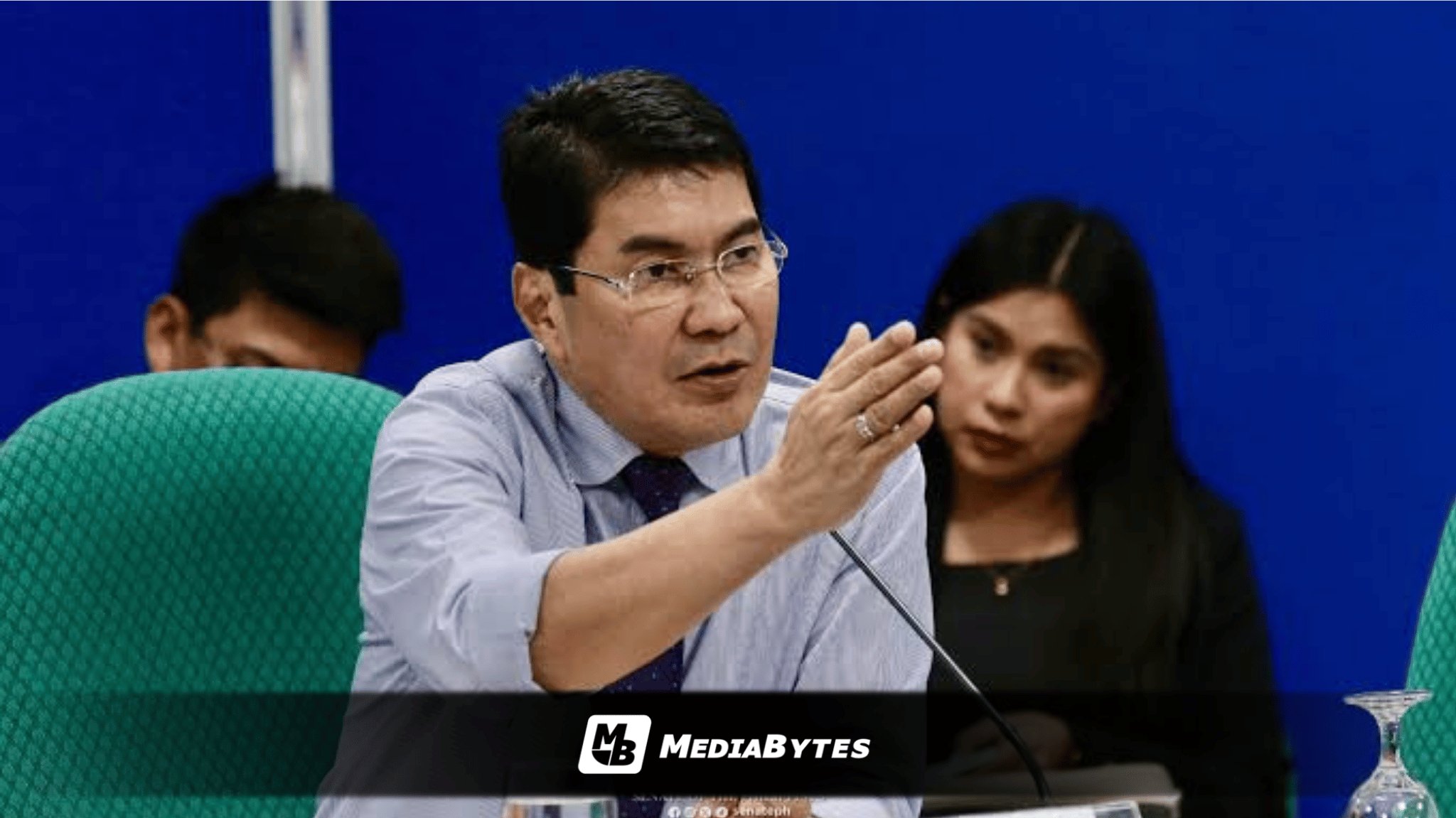
PASAY CITY — Senator Erwin Tulfo has raised concerns over the complete lack of a dedicated allocation for the Department of Education’s (DepEd) Academic Recovery and Accessible Learning (ARAL) Program under the proposed 2027 National Expenditure Program (NEP), stressing that the government must secure stable financing for the initiative.
During Senate budget deliberations on Friday, October 16, Tulfo noted that while DepEd originally sought ₱15.32 billion for the academic recovery plan, it was left with no funding in the executive branch’s expenditure blueprint and only a minimal amount inserted in the House of Representatives’ version of the General Appropriations Bill (GAB).
“I don’t understand bakit ginawang zero po ito? Pero ang GAB naman, naawa pa ng konti, nilagyan ng ₱350 million, nagbibigay ng barya,” Tulfo said.
DepEd Undersecretary Carmela Oracion clarified that the ARAL Program operates as a vital remediation measure mandated by law to resolve learning deficiencies among students in core subjects such as reading, mathematics, and science. She explained that the program was instituted to counter the country’s dismal standings in international and domestic educational assessments, serving as the department’s primary vehicle to uplift students struggling below grade-level requirements.
Despite operating without an initial distinct financial provision, the initiative pushed through, expanding its curriculum from reading to literacy, mathematics, and exploring science applications for the current academic year.
Oracion reported that the number of struggling readers dropped significantly from 6.7 million during its launch year down to 2.2 million at the end of the school term, alongside a noticeable rise in students achieving grade-appropriate reading skills.
Under the framework, educators manage small tutorial groups of 10 to 15 students during flexible hours outside regular classes.
Querying the Department of Budget and Management (DBM), Tulfo pressed officials on the absence of a distinct line item for the program in the NEP.
DBM Director Vivien Labastilla responded that the program’s financial support had historically been integrated under broader program, activities, and projects (PAPs) intended for textbooks and learning materials.
“Zero po siya kasi wala po siyang line item. Pero under po ng textbooks,” Labastilla said.
When Tulfo inquired about how teachers rendering tutorial services would be compensated for the extra workload, Labastilla confirmed that participating educators are eligible for overtime pay.
Concluding the exchange, Tulfo urged the DBM to properly embed and account for a separate, dedicated budget provision when reviewing DepEd’s upcoming financial submissions.
“When DepEd submits its budget sa DBM, I think we have to factor that in,” Tulfo said.
Labastilla expressed agreement with the senator’s recommendation.