


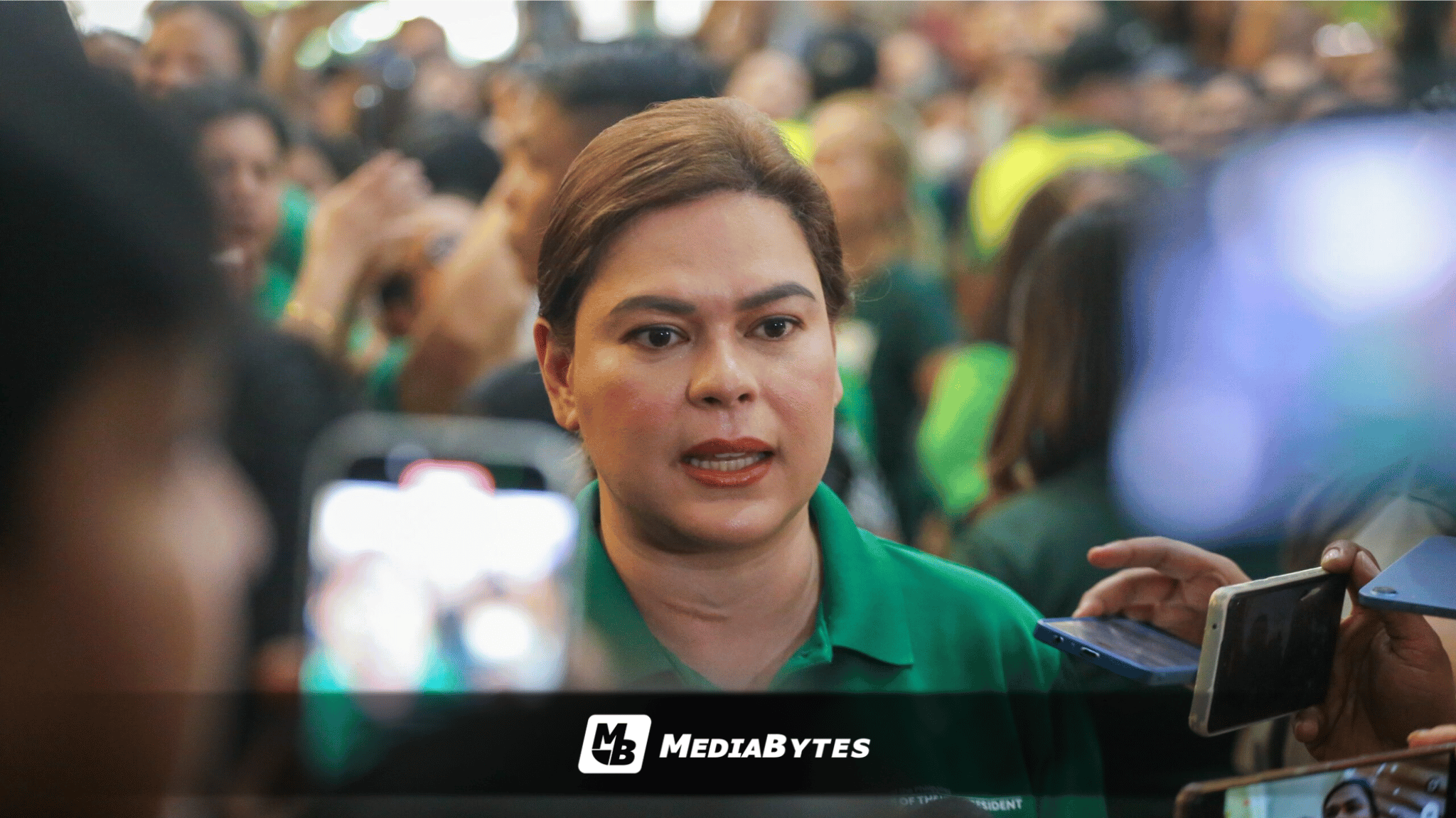
Vice President Sara Duterte has called on the national government to focus on safeguarding the country’s food supply rather than advising citizens to rely on household water collection in preparation for an approaching El Niño phenomenon.
Speaking to overseas Filipino workers in Hong Kong over the weekend, Duterte emphasized that expert warnings regarding impending drought demand broader structural planning.
”Ang warning ng mga experts sa El Niño ay hindi pangkaraniwan. Sinasabi nila na meron talagang punto na aabot sa drought… Kahit ilan pang balde ang ihanda mo dyan, hindi yan makakatulong,” Duterte said.
”Ang kailangan paghandaan ng pamahalaan ay kung ano ang supply ng pagkain pagdating ng panahon na ‘yan kasi ibig sabihin, pag nasira yung ating ani, mag-import tayo,” she added. “Kailangan paghandaan yun ng pamahalaan na hindi lang balde-balde.”
The remarks follow previous statements from President Ferdinand Marcos Jr., who urged Filipinos to prepare buckets to collect rainwater as part of adaptation measures against the weather phenomenon. Malacañang defended the directive, explaining it aligns with broader strategies on rain harvesting and water purification.
The Department of Social Welfare and Development (DSWD) subsequently announced plans to distribute free water filtration devices and provide community training on their use.
Scientific agencies warn that the upcoming climate pattern could bring severe impacts. According to the Philippine Atmospheric, Geophysical and Astronomical Services Administration (PAGASA), the El Niño event—projected to peak before the end of 2026 and persist through the first half of 2027—is expected to raise temperatures nationwide by 2 degrees Celsius.
PAGASA Climate Monitoring and Prediction Section Chief Ana Liza Solis noted that climate models point to extended dry conditions lasting into early 2027.
Department of Science and Technology (DOST) Secretary Renato Solidum Jr. previously assured the public that domestic water supplies remain stable for the coming months, advising citizens to conserve and reuse rainwater for non-potable household chores such as washing vehicles and watering plants.
Meanwhile, international and agricultural organizations have stressed the importance of proactive resource management.
The Food and Agriculture Organization (FAO) has recommended conducting soil assessments in farmlands to protect agricultural output.
”There may not be rain, but if our groundwater is really secure and it’s available, then farmers would be able to produce food,” said Dulce Carandang, FAO Philippines assistant representative for the programme.