


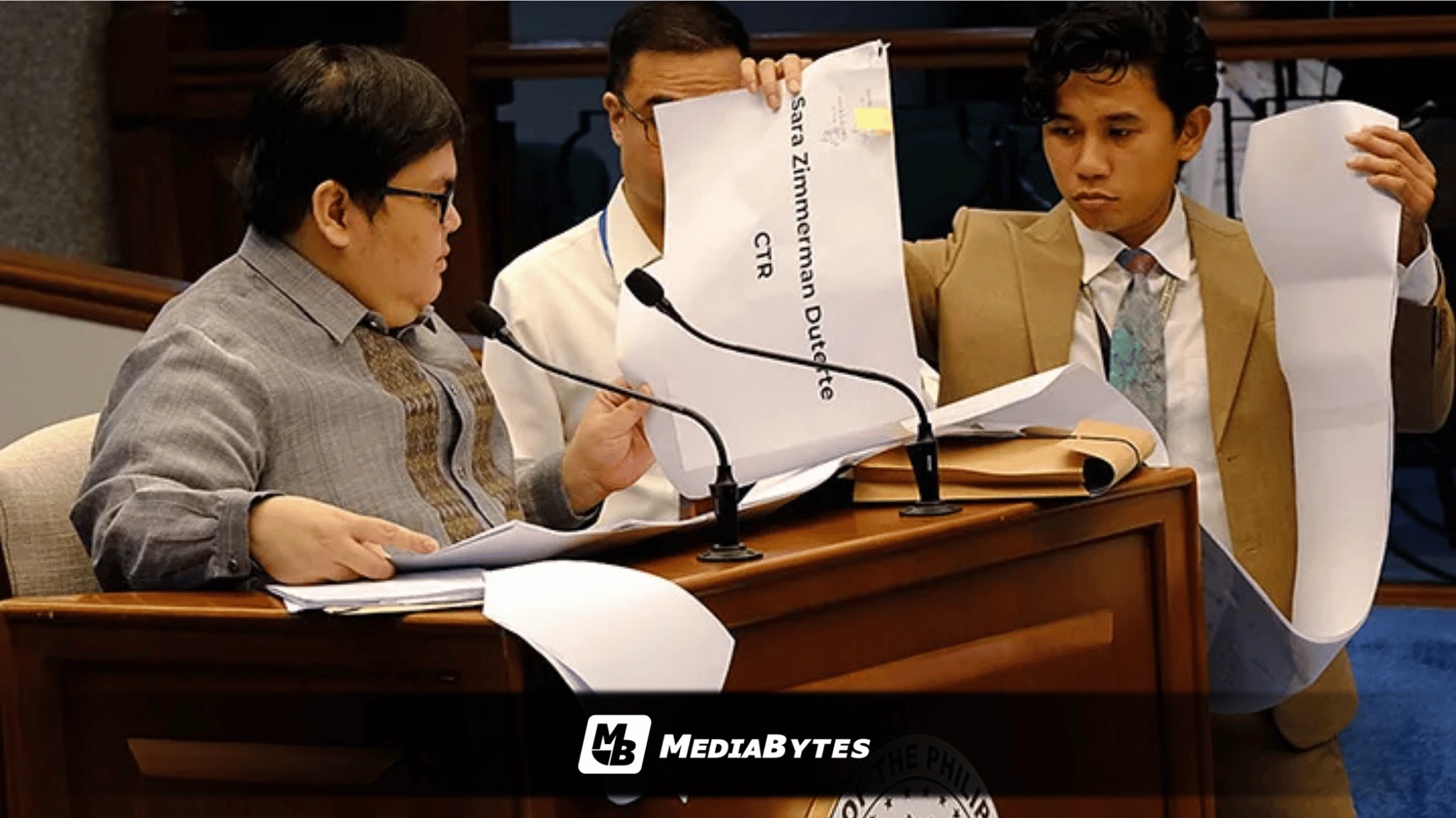
MANILA, Philippines — The legal defense team for Vice President Sara Duterte dismissed claims on Tuesday that recent testimony from the Anti-Money Laundering Council (AMLC) executive director corroborated allegations made by former Senator Antonio Trillanes IV.
Speaking on behalf of the Vice President, spokesperson Atty. Paolo Panelo clarified that the financial regulator’s statements were strictly limited to routine reports submitted by banking institutions regarding covered and suspicious transactions.
He maintained that the testimony failed to demonstrate that any assets linked to Duterte were unlawfully obtained, concealed, or under her ownership.
“If anything was confirmed, it is only that Trillanes obtained his information illegally in violation of the Anti-Money Laundering Act and Bank Secrecy Laws,” Panelo stated.
Panelo emphasized that the AMLC official “merely testified on covered and suspicious transactions” and reiterated the limits of the agency’s statements.
“He did not, because he could not, confirm, and the prosecution still has to prove, that any money attributed to the Vice President was illegally sourced, was hidden, or was even hers to begin with,” he added.
The spokesperson asserted that the testimony should not be interpreted as validation of any wrongdoing. Taking aim at the source of the claims, Panelo characterized Trillanes as a “professional anti-Duterte propagandist” attempting to shore up a weak prosecution case.
“Trillanes is no truth-teller,” Panelo said. “He is a professional anti-Duterte propagandist who tried to fill the gaps in the prosecution’s evidence with hearsay, rumors, malicious speculation, and outright lies, delivered at a press conference where none of it could be scrutinized.”
Panelo also cited evaluation from Senator Panfilo “Ping” Lacson to undermine the weight of the allegations.
“Senator-Judge Lacson himself has confirmed that his accusations have no probative value. His allegations are better suited for the parlor, not the court,” Panelo remarked.
The Vice President’s camp concluded by reminding the public that the burden of proof rests entirely on the prosecution, which must substantiate its claims through formal evidentiary channels rather than unverified assertions.