


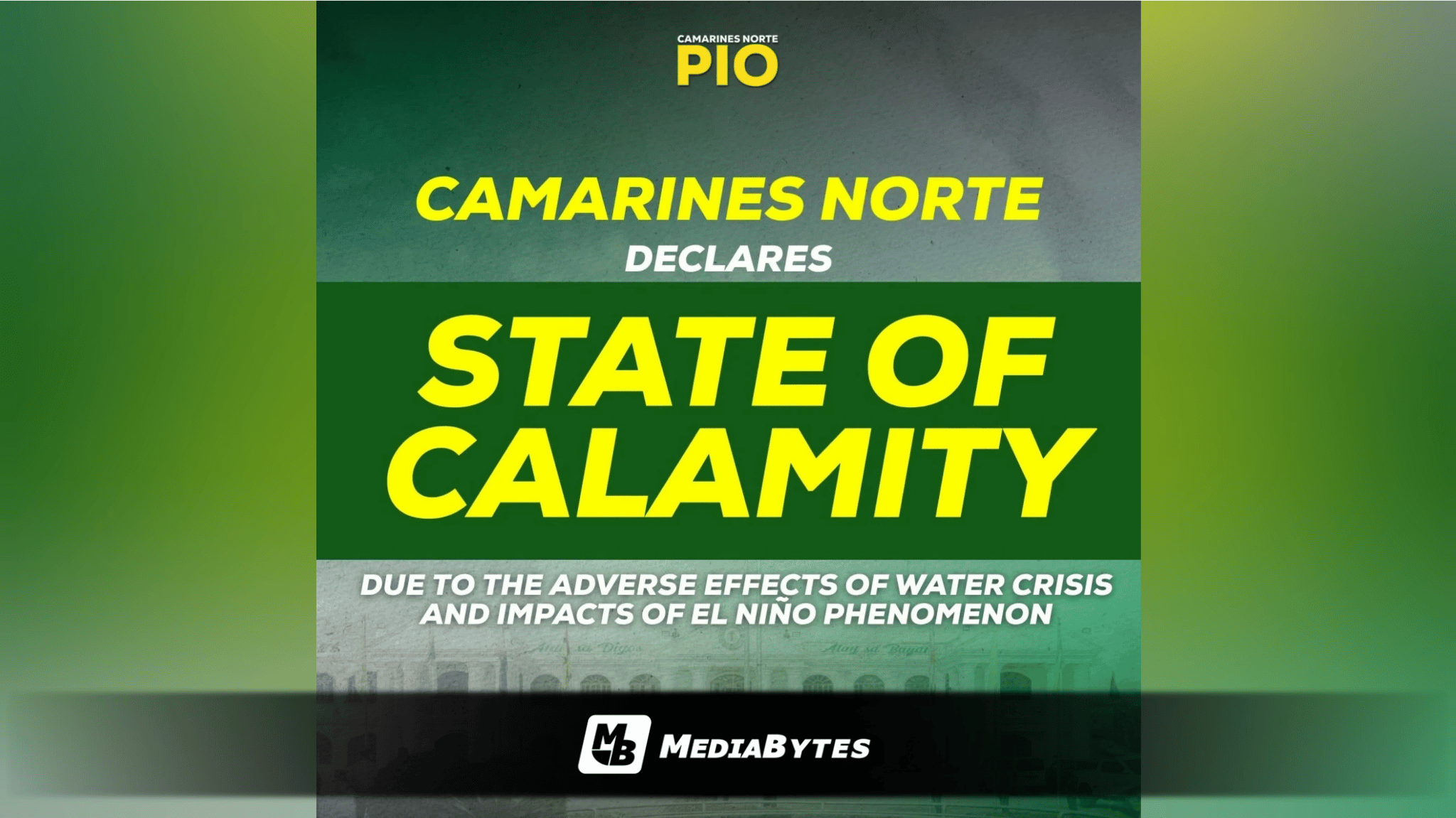
DAET, Camarines Norte — The provincial government of Camarines Norte officially declared a state of calamity on Monday, September 21, in response to escalating water shortages and the prolonged impact of the El Niño phenomenon across the province.
The severe water crisis has disrupted household water supplies, compromised sanitation, and severely threatened local agricultural production.
Camarines Norte Governor Ricarte Padilla explained that the province-wide declaration will enable local authorities to efficiently mobilize disaster response funds, streamline resource allocation, and prioritize relief, recovery, and mitigation programs.
Under the approved resolution, the state of calamity authorizes the provincial government to utilize emergency funds for immediate interventions, particularly food security initiatives and assistance programs for affected farmers.
Relevant provincial offices and national agencies have been ordered to coordinate efforts addressing the widespread impact on public health, livelihoods, and essential public services.
The provincial council passed the resolution following a formal recommendation from the Provincial Disaster Risk Reduction and Management Council (PDRRMC), citing the extensive damage to communities and food production systems.
Prior to the province-wide measure, the local governments of San Vicente and San Lorenzo Ruiz had already declared individual states of calamity.
In San Vicente alone, local authorities reported that 1,312 families—comprising nearly 6,000 residents across four barangays—were directly affected by critical water scarcity. San Lorenzo Ruiz issued its declaration on September 10 after experiencing severe shortages of drinking water.
Data from the Office of the Provincial Agriculturist revealed that only 29% of the province’s rice fields have been planted for the current cropping season.
Joint monitoring from the Department of Environment and Natural Resources (DENR) and the National Irrigation Administration (NIA) confirmed that water levels in critical sources remain dangerously low, posing continued risks to irrigation and regional crop yields.