


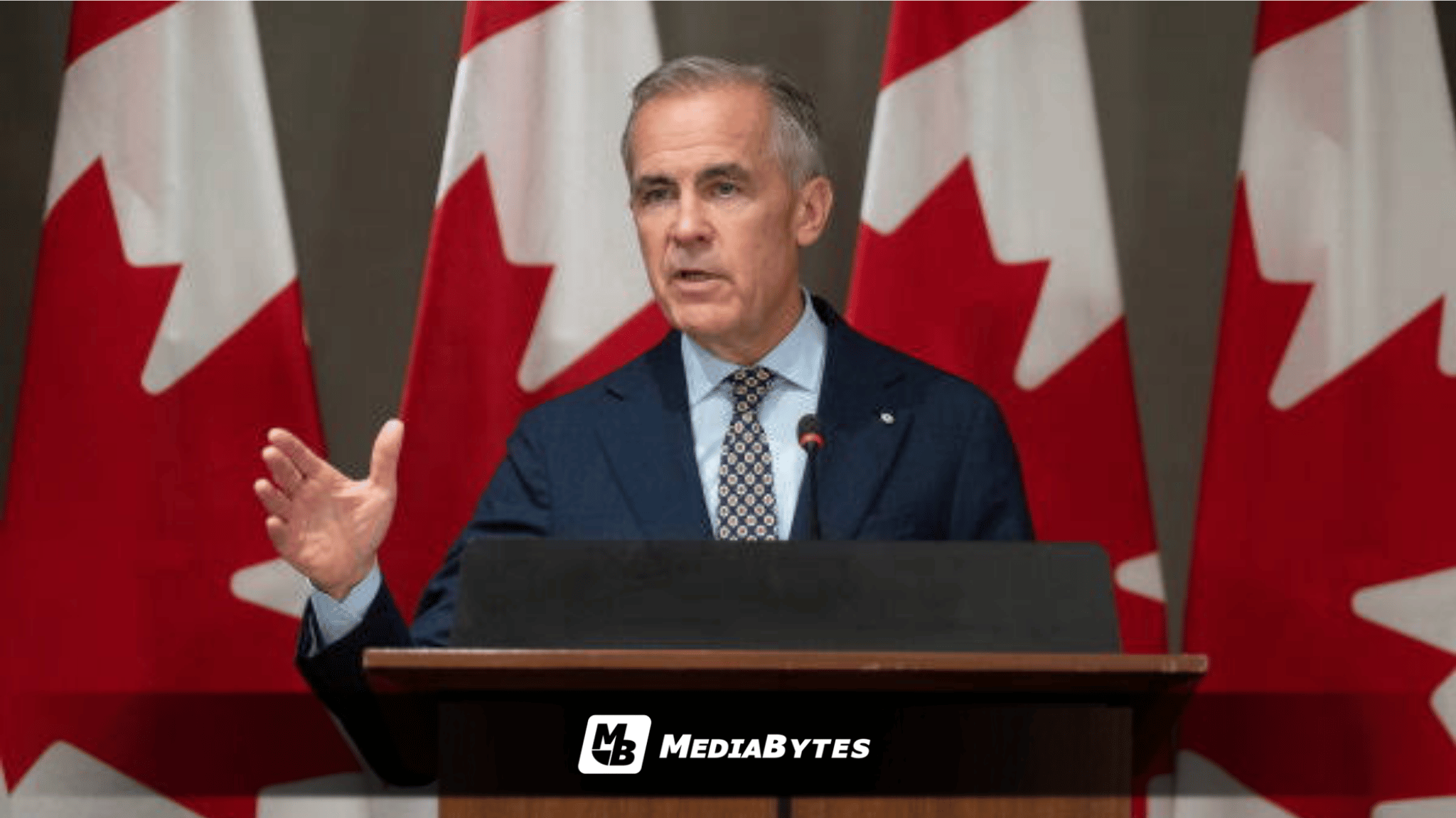
Prime Minister Mark Carney signaled a major shift in Canada’s foreign policy on Friday, September 18, declaring that the country is swiftly pivoting away from its traditional economic reliance on the United States to build a deeper strategic alliance with the European Union.
Addressing Liberal lawmakers in Ottawa after returning from Strasbourg, Carney announced that Canada and the EU have set in motion a foundation for enhanced bilateral cooperation.
“Amidst this global rupture, we must move forward,” Carney said.
Reflecting on recent trade frictions, Carney characterized the latest U.S. tariffs as a “miscalculation” while defending Ottawa’s decision to pause trade negotiations with Washington last month.
The remarks followed his address to the European Parliament a day earlier, where he advocated for stronger transatlantic cooperation to prevent any single nation from dominating global markets, eroding national sovereignty, or dictating foreign choices.
Carney emphasized that Canada’s current fiscal health serves as a distinct advantage, noting the favorable gap in borrowing costs between Canada and the U.S. as financial markets increasingly evaluate national economic stability.
“We’re now seeing financial markets starting to change the pricing … to separate the strong from the weak,” Carney said. “We are the strong. We are Canada strong.”
The address capped a week of intense diplomatic and economic activity for the Prime Minister, which included hosting Ukrainian President Volodymyr Zelenskyy, convening top international investors in Toronto, meeting with new U.K. Prime Minister Andy Burnham in Liverpool, and speaking in Strasbourg. Carney pushed for heightened Canada-EU integration across key sectors, including energy, critical minerals, defense, artificial intelligence, and research.
Both sides are set to advance these initiatives further at the upcoming Canada-EU summit in Montreal on October 29 and 30.
Diplomatic relations between Ottawa and Washington have grown increasingly strained following U.S. President Donald Trump’s tariff policies, repeated suggestions that Canada join the U.S. as a 51st state, and broader economic threats, leading to the suspension of bilateral trade talks.
Highlighting home-front initiatives, Carney showcased a new business tax incentive introduced during this week’s Canada Investment Summit, designed to drop the effective tax rate on new investments to 6.4%—less than half the comparable U.S. rate.
“We didn’t need a big beautiful bill. We needed a targeted initiative,” Carney said.
In a lighthearted moment during his speech, Carney gestured using an accordion-like motion to mimic the U.S. president while describing a major clean-energy project that he noted would produce power equivalent to “18 Hoover Dams.”
Federal officials reported that total investment pledges announced around the summit reached nearly half a trillion dollars.
“In the last seven days, we have stood shoulder to shoulder with an ally, we’ve catalyzed record investment into our country, we’ve deepened our ties with Europe,” Carney said.
“It’s a lot, but that was the warm-up.”