


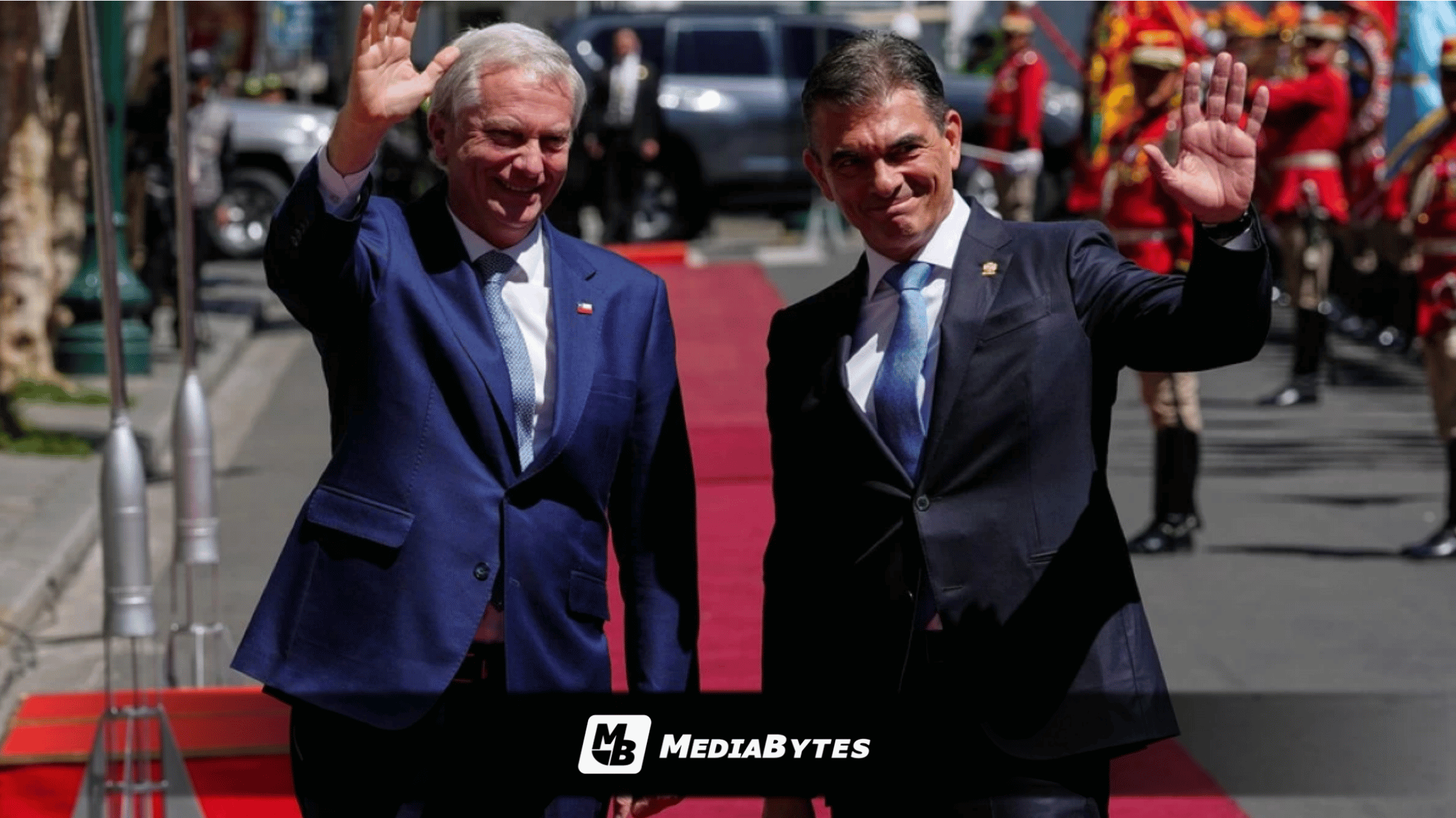
LA PAZ — Chilean President José Antonio Kast traveled to Bolivia on Friday to meet with Bolivian President Rodrigo Paz, marking the first state visit by a Chilean head of state in over seventy years as a wave of conservative leadership alters regional dynamics in South America.
The historic summit brings together two newly elected conservative leaders who share an alignment with U.S. President Donald Trump. Both administrations have aligned with Washington’s “Shield of the Americas” anti-narcotics initiative, reflecting a broader strategy by the United States to foster security alliances with politically aligned governments across Latin America.
Although the two countries share a border and maintain consulates alongside ongoing cooperation in trade and migration, they have lacked ambassador-level diplomatic representation since 1978. Officials confirmed that restoring full diplomatic ties was not part of the current agenda.
”It’s too early. There’s a path to work on to change the approach to relations, and it will take time,” stated Bolivian Minister of the Presidency Fernando Aramayo. “It’s about signing mutually beneficial agreements.”
Bolivian officials welcomed Kast with official honors in Plaza Murillo outside the presidential palace. In a striking historical moment, the Colorados—a ceremonial military regiment that fought against Chile in the nineteenth-century conflict that deprived Bolivia of its ocean access—played the Chilean national anthem.
During the meeting, the two leaders signed a joint declaration and committed to launching negotiations to revise their existing commercial agreement. Their discussions also tackled regional security, cross-border crime along their shared 861-kilometer (535-mile) frontier, and joint ventures in energy and mining.
Paz characterized the visit as a historic milestone, sharing on social media that the encounter “marks a before and after: frank dialogue, mutual respect and a work agenda that translates into opportunities for Bolivian and Chilean citizens.”
Kast echoed this sentiment in a post on X, writing: “Let’s begin to build the future of our nations together.” The prior official visit by a Chilean president took place in 1955 under former army general Carlos Ibáñez del Campo.
The diplomatic engagement unfolds as Paz handles domestic demonstrations triggered by his removal of fuel subsidies, implemented amid fuel deficits and falling hydrocarbon output in a nation that previously exported natural gas.
Practical economic necessities drive both nations toward cooperation. Deprived of a coastline since the 1879–1884 War of the Pacific, Bolivia routes roughly 70 percent of its international trade through northern Chilean ports. In return, Paz proposed granting Chile access to the Paraguay-Paraná waterway, linking South America’s interior to the Atlantic Ocean.
Significantly omitted from the bilateral agenda was Bolivia’s long-standing pursuit of a sovereign land corridor to the Pacific Ocean, a central pillar of foreign policy under former leftist President Evo Morales. Under Morales, Bolivia pursued legal action at the International Court of Justice to compel Chile into negotiations, a case Bolivia ultimately lost in 2018.
Morales, currently a vocal opponent of Paz, criticized the omission, calling it “an affront to historical memory.”
Aramayo clarified that the administration has not discarded the territorial demand, noting that the government first needs to “create the conditions to work on this matter.”