


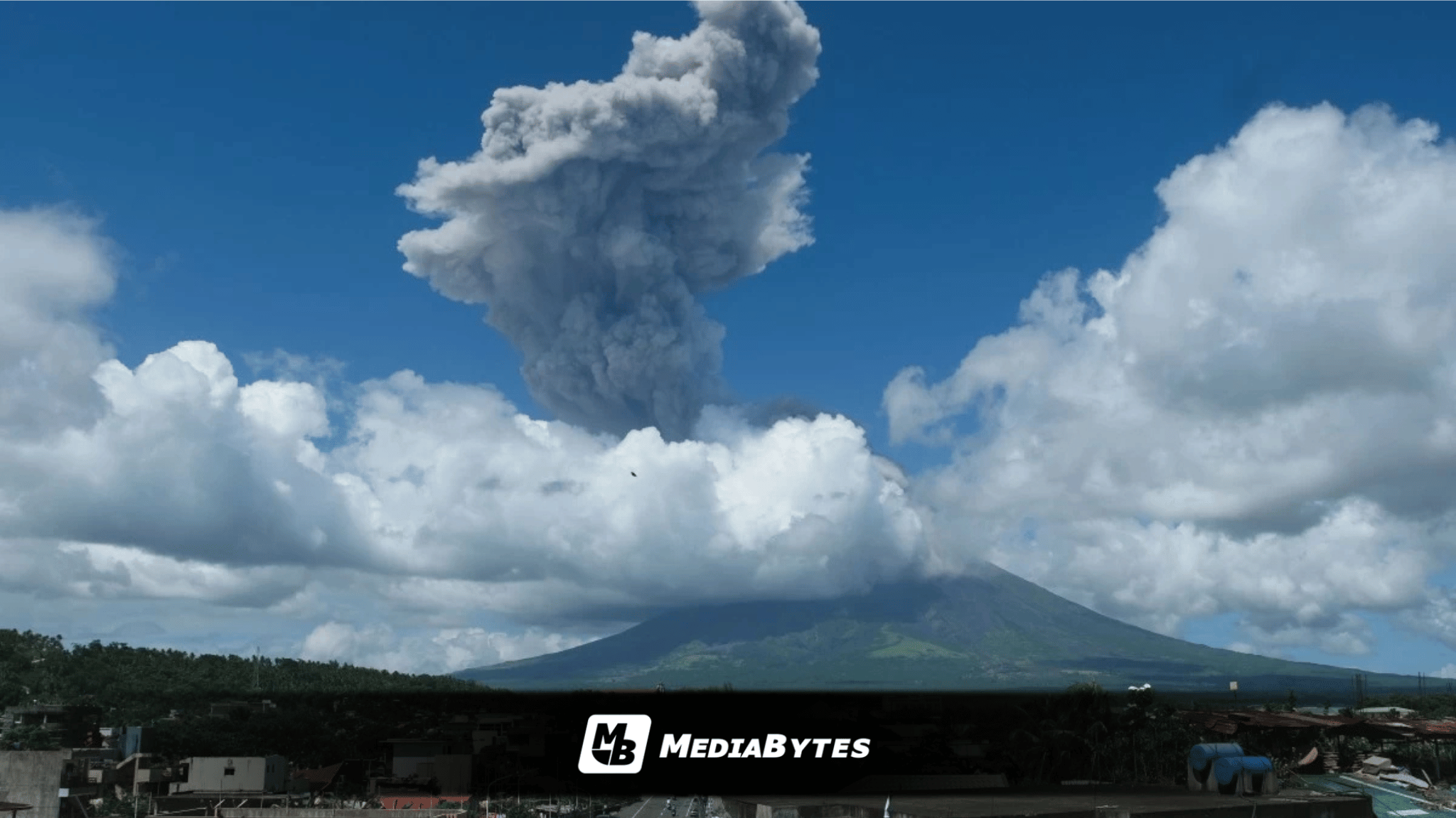
At least 410 families, translating to 1,433 individuals, were evacuated from three areas in Albay following a moderate eruption of Mayon Volcano around noon on Friday, October 30.
Bobby Cristobal, chief of the Albay Public Safety and Emergency Management Office (APSEMO), reported that the displaced residents consisted of 233 families from Tabaco City, 167 from the municipality of Camalig, and 10 from Ligao City.
”The evacuees were residents living within the volcano’s six-kilometer Permanent Danger Zone (PDZ) who were transferred to safer areas as a precautionary measure following the volcanic activity,” Cristobal said.
To tackle the aftermath of the event, the Bureau of Fire Protection (BFP) launched clearing operations along major thoroughfares in the affected towns and cities to sweep away thick ash layers covering the roads. These measures are designed to restore traffic flow and protect motorists and pedestrians from ashfall hazards.
In response to the eruption, Albay Governor Noel Rosal activated a Code Blue Alert across the provincial health sector to boost readiness and emergency management.
Following Disaster Risk Reduction and Management in Health (DRRM-H) Memorandum No. 09 and PDRRM-APSEMO Advisory No. 2026-19, the Albay Provincial Health Office (APHO) upgraded its alert status from white to blue on October 30.
The Code Blue framework mandates the mobilization of 50% of relevant agency resources to bolster health emergency responses and readiness for potential secondary incidents. Consequently, rural and city health units, regional hospitals, DRRM-H managers, and healthcare personnel have been instructed to activate emergency protocols, maintain adequate medical supplies, and deploy standby rescue teams to support impacted communities and evacuees.
Local authorities continue to monitor Mayon Volcano closely and urge residents and stakeholders to remain vigilant.