


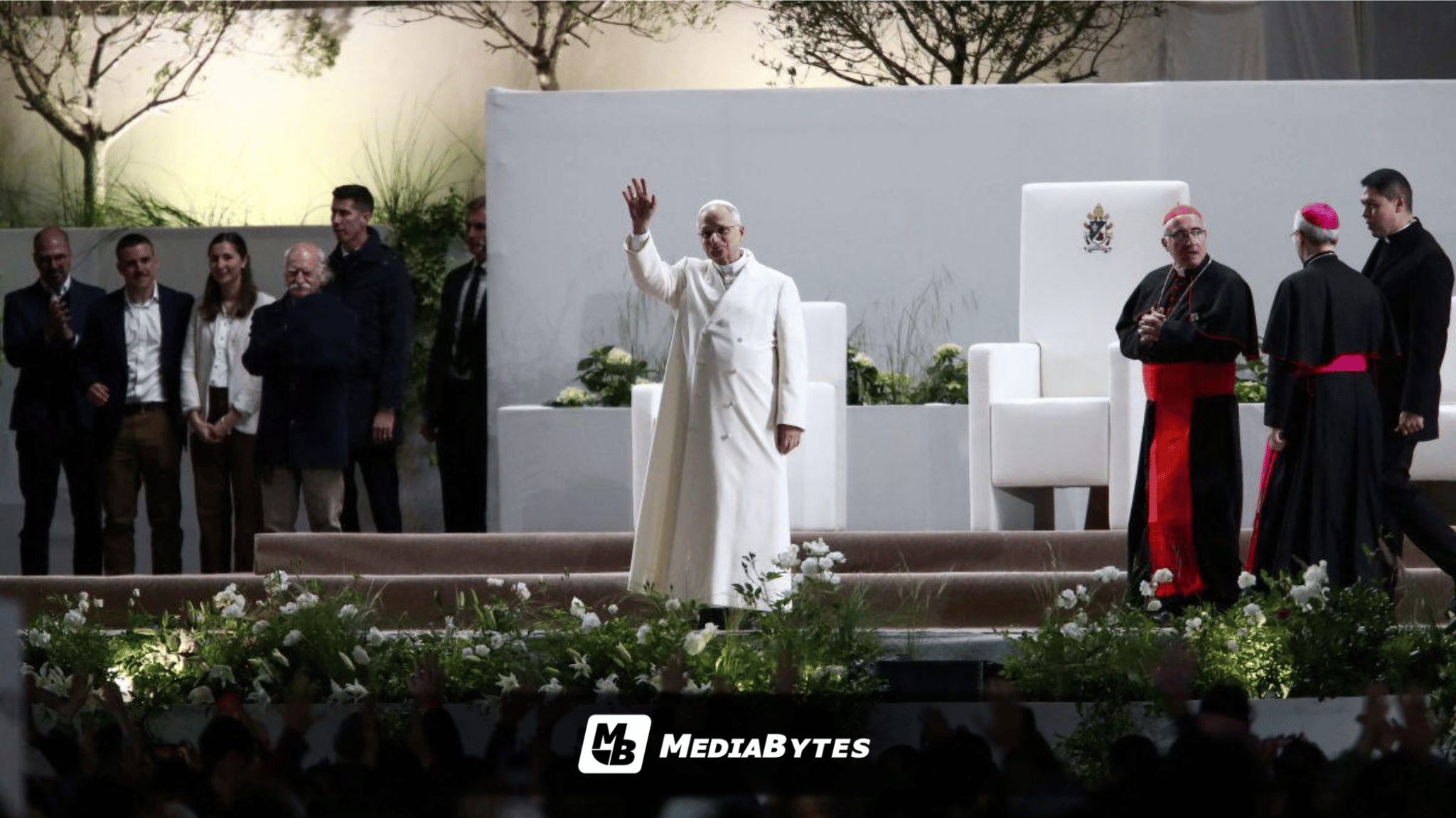
MONTEVIDEO, Uruguay — Pope Leo XIV urged an estimated 40,000 pilgrims to bridge political and social divides on Saturday, delivering his first South American Mass in Paysandú during an ambitious 12-day, three-country tour.
Braving heavy rain and blustery winds on the Uruguay-Argentina border, the 71-year-old pontiff—making one of the most physically demanding papal trips in decades less than a month after undergoing lung cancer surgery—used the nearby General Artigas International Bridge as a metaphor for regional harmony.
”It is not difficult to imagine the benefits a bridge brings: openness, communication and exchange. That is why it is so important to be builders of bridges!” Leo said in his sermon.
”This is the vocation to which we are all called: to build bridges, strengthen bonds, unite, communicate.”
Later in the evening, the pope addressed a crowd of roughly 100,000 people at Montevideo’s Centenary Stadium for a vibrant prayer vigil. The massive turnout underscored a notable display of faith in Uruguay, widely considered Latin America’s most secular nation where only about a third of adults identify as Catholic.
”We’re always told this is the most secular country in Latin America, but events like this show something different,” said 18-year-old attendee Mathias Franco. “I see this visit as a big opportunity for Uruguay, for us to grow as a community.”
Earlier Saturday afternoon, Leo visited Casavalle, an impoverished and violence-scarred neighborhood on the northern outskirts of Montevideo known for drug-related crime. Walking among makeshift homes, he comforted a weeping mother and called on citizens to combat indifference toward poverty and inequality.
”We cannot ignore the many people around us who are suffering,” he urged.
The U.S.-born pontiff, who spent decades as a missionary in Peru and holds Peruvian citizenship, is visiting Uruguay through Sunday morning before heading to Argentina.
His upcoming schedule includes a high-profile meeting with Argentine President Javier Milei, followed by a final leg in Peru.