


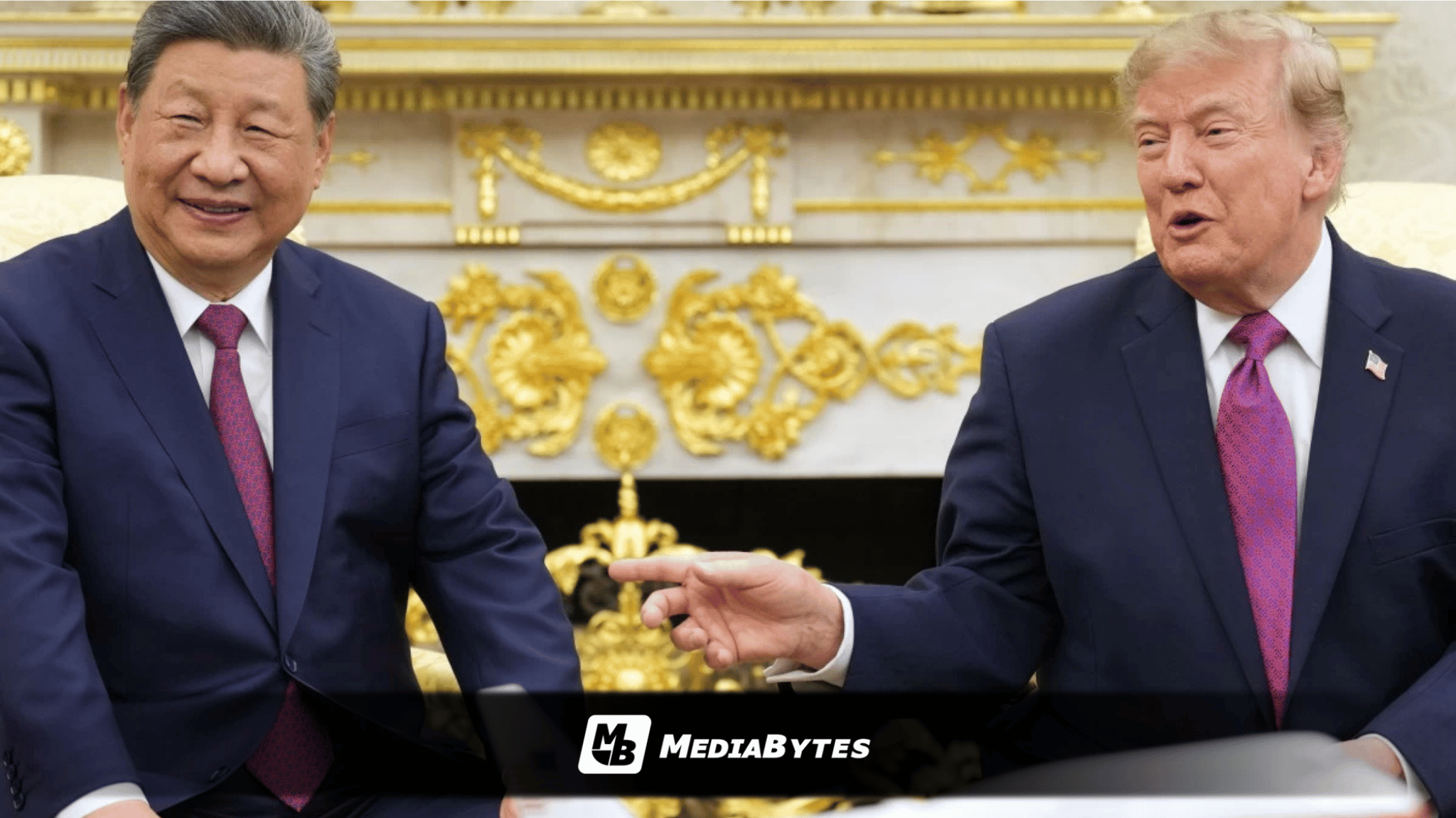
WASHINGTON, D.C. — U.S. President Donald Trump and Chinese President Xi Jinping met for critical discussions at the White House on Thursday, seeking to stabilize a complex bilateral relationship amid mounting differences over global security, economic policy, and emerging technologies.
The high-profile summit comes as both superpowers navigate competing interests on the ongoing war in Iran, trade policy, and the rapid growth of artificial intelligence.
Despite an intensifying rivalry for global technological and economic leadership, both heads of state signaled a desire to keep competition from escalating into direct confrontation.
Welcoming the Chinese leader during a formal state visit, President Trump highlighted their personal relationship.
”From the time of my first election in 2016, President Xi and I have forged a friendship, a truly great friendship, actually, built on mutual respect and the vital interests of our people,” Trump said.
President Xi offered a more direct assessment of the dynamic, emphasizing the deep ties between the two nations while calling for controlled competition.
”competition should be a healthy one and should be kept within bounds,” Xi stated.
The Chinese president reiterated his warning against falling into the “Thucydides trap”—the geopolitical concept where a dominant power and an emerging rival are drawn into conflict—repeating a caution he previously issued during Trump’s visit to Beijing in May.
”It should be a race of catching up with one another, not a wrestle in which one either wins or loses,” Xi added.
The meeting follows Beijing’s resistance to Washington’s pressure to use its influence to help end the nearly seven-month conflict in Iran. Meanwhile, Xi continues to push for a permanent end to U.S. weapon sales to Taiwan and the easing of export restrictions on advanced semiconductor technology.
Ahead of the summit on Wednesday, both nations agreed to a two-month extension of their ongoing trade truce to allow further negotiations on a long-term deal.