


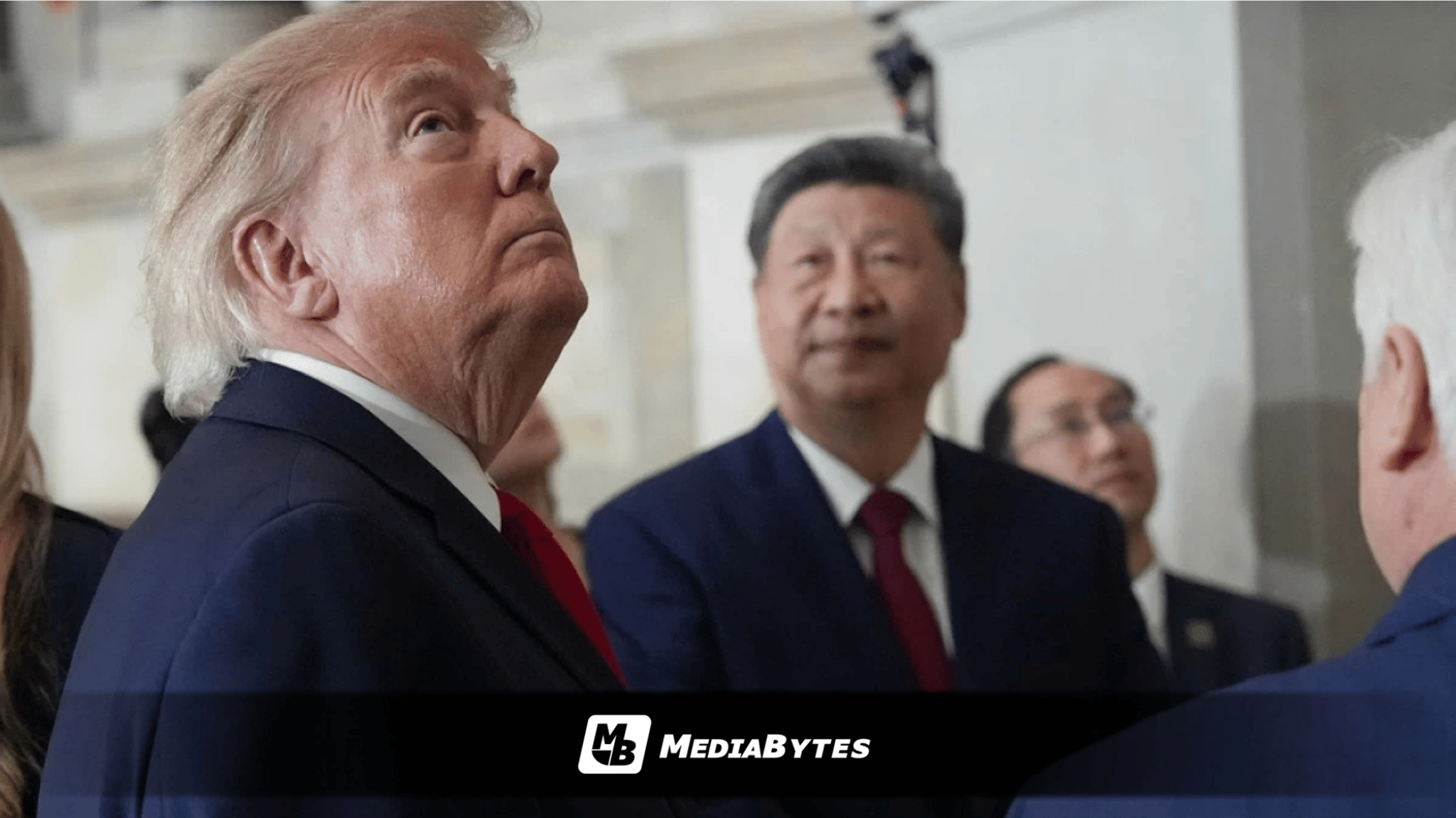
WASHINGTON — The United States and China have agreed to establish a dedicated communication channel for artificial intelligence-related incidents and accelerate efforts to bolster military crisis communications following a three-day summit between President Donald Trump and President Xi Jinping, officials announced Saturday.
While the summit yielded no sweeping breakthroughs, experts highlighted the introduction of new bilateral working groups as an essential step toward mitigating risk and preventing potential conflict. A formal memorandum of understanding aimed at upgrading military crisis management is expected to be signed following discussions, according to China’s Foreign Ministry.
Additionally, both powers established a dialogue mechanism regarding AI safety and scheduled an AI-focused session for November. Despite the agreement to open channels, President Trump indicated that Washington would continue safeguarding its technology and advancing domestic capabilities.
Speaking to reporters outside the White House, Trump asserted:
”United States of America is not going to be putting on brakes. They want to stop our progress because we’re leading China by a lot and we’re going to keep it that way.”
He added:
”I would rather not integrate because we’re leading by a lot. When you’re leading, you don’t open it up to each other. We’re leading by at least a year, maybe a year and a half. Some people say two years. I’m not looking to open it up.”
On economic matters, both nations agreed to prolong their ongoing trade truce by two months and persist with reductions on reciprocal tariffs covering roughly $30 billion in goods, primarily non-sensitive agricultural products and seasonal items.
The White House confirmed that China committed to purchasing 10 million metric tons of U.S. coal annually in 2027 and 2028, while both governments continue discussions to resolve Chinese export restrictions on rare earth minerals.
The two nations also reaffirmed that Iran must abide by its commitment not to develop nuclear weapons and agreed that international waterways—such as the Strait of Hormuz—should remain free of tolls. Washington further praised Beijing for enacting export controls on key precursor chemicals linked to fentanyl manufacturing.
Analyst Wang Zichen, deputy secretary-general of the Beijing-based Center for China and Globalization, remarked on the progress:
”Personal diplomacy between the two leaders is important, but the emphasis on working-level engagement, military-to-military dialogue and crisis-management mechanisms suggests an effort to make that stability more durable and institutionalized.”
Xi returned to Beijing on Saturday, September 26. The two leaders are slated to confer again at the Asia-Pacific Economic Cooperation summit in Shenzhen, China, this November, followed by another meeting at the G20 summit at the Trump National Doral Miami resort in Florida.