


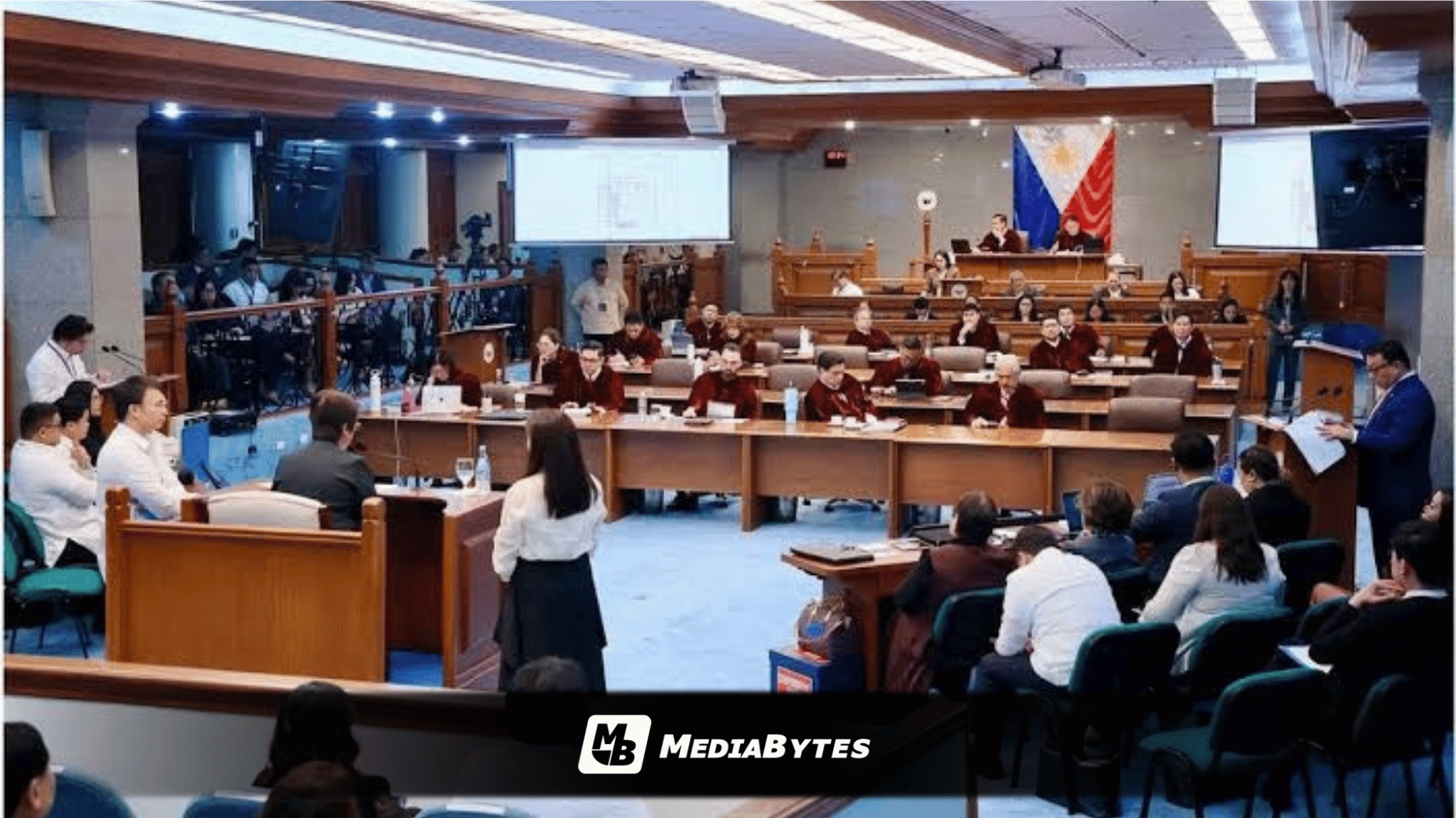
MANILA, Philippines — The House prosecution panel urged the public on Wednesday not to treat the Senate impeachment court’s recent ruling on the conviction threshold as an indicator of how senators will ultimately vote on Vice President Sara Duterte’s trial.
Former Surigao del Norte 2nd District Representative Robert Ace Barbers, who serves as an adviser to the prosecution team, stated that while the panel respects the court’s judgment, it is premature to draw conclusions regarding the final outcome for the four articles of impeachment.
“We believe that it is not an indication of the possible results of the vote that they will make when the four articles have already been presented by the prosecution. So we do not want to preempt kung ano man ’yung kanilang magiging decision,” Barbers said during a post-hearing press conference.
The statement follows a 13-1 vote by the Senate impeachment court to overturn a previous rule requiring a fixed threshold of 16 votes for conviction, lowering the requirement to 14. However, six senator-judges—Senate Minority Leader Alan Peter Cayetano, Senate Deputy Minority Leader Imee Marcos, and Senators Pia Cayetano, Christopher “Bong” Go, Camille Villar, and Robin Padilla—abstained from participating in the decision.
Because the 13 votes fall short of the newly established 14-vote requirement, speculation has arisen regarding the trial’s outcome.
Prosecution panel spokesperson and Lanao del Sur 1st District Representative Zia Alonto Adiong dismissed these assumptions, emphasizing that the non-participation of the six senators should not be automatically interpreted as votes to acquit Duterte.
“I think it will be premature to predict what will happen once the impeachment trial reaches its final conclusion by simply judging the way today’s decision of the court prompted some of the members to not participate in the voting on the application of the two-thirds threshold,” Adiong said. “It will also be unfair on the part of the court to assign numbers na at this early, at this point in time.”
Adiong maintained that only recorded votes can accurately reflect the positions of the senator-judges.
“Now, what guarantees do we have that this no vote can be translated into a no vote or a yes vote? If we automatically assume that these are no votes, then it does not faithfully capture the very vote that they want to render before the court, kasi hindi nga sila nakaboto,” Adiong added.