


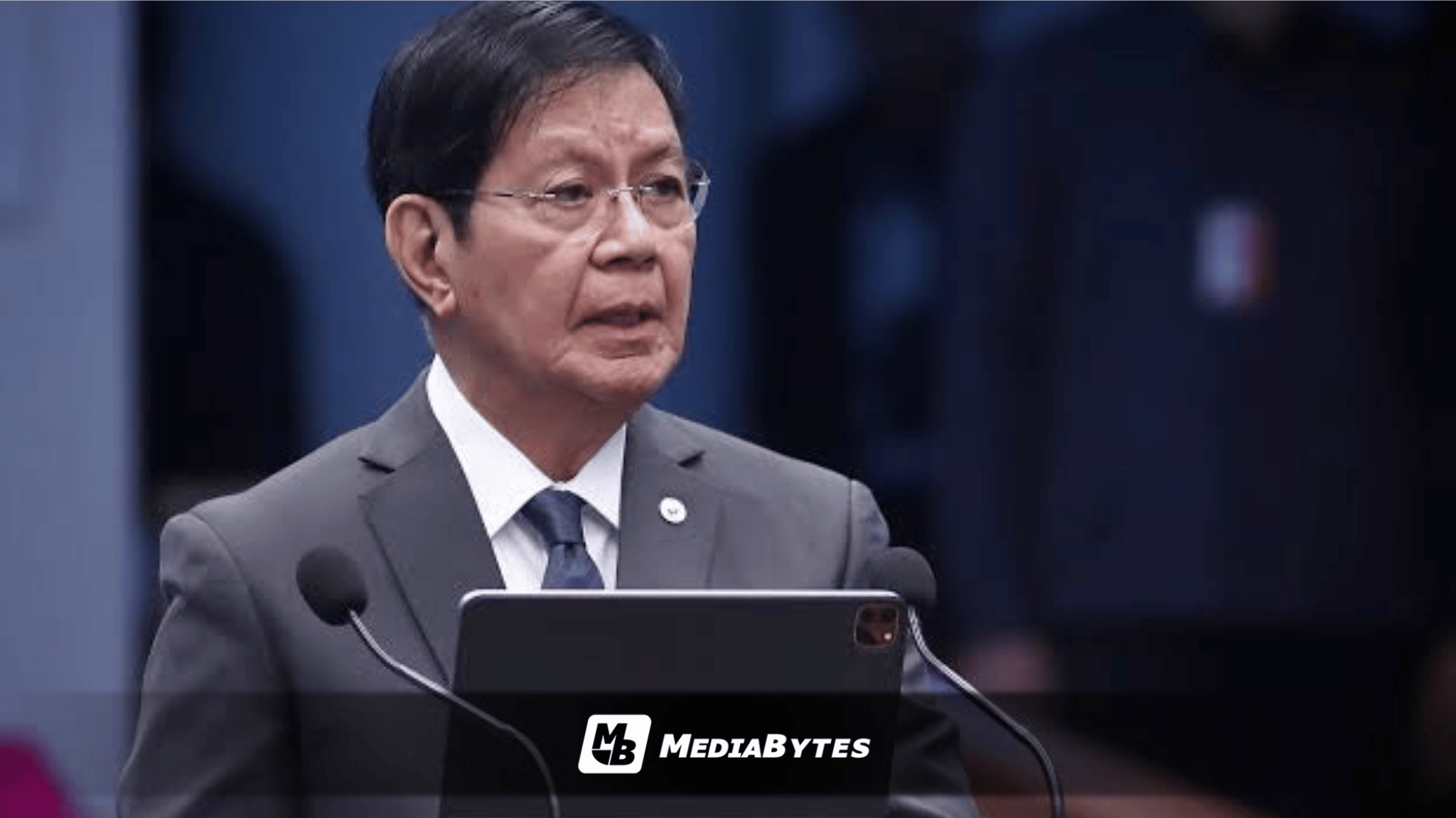
MANILA, Philippines — Senator Panfilo “Ping” Lacson raised concerns over the altered funding composition for foreign-assisted projects (FAPs) in the Senate’s version of the proposed ₱7.2-trillion national budget for 2027, noting that several infrastructure initiatives failed to recover their original allocations from the executive branch.
Speaking during the Senate plenary interpellation of the spending bill on Monday, Lacson pointed out that while the upper chamber restored the total FAP allocation to its original ₱459.16-billion ceiling under the National Expenditure Program (NEP), it significantly shifted the distribution across loan proceeds, government counterpart funds, and unprogrammed appropriations.
“We’re happy you restored the funding for FAPs but the mix is different. Kindly enlighten us. For this project, why was its funding not restored fully to its NEP level?” Lacson asked Senate Senior Majority Leader JV Ejercito, who sponsors the budget bill as chairperson of the Senate Committee on Finance.
“It’s good if it was done in coordination with the economic managers, especially the Finance Department, (but if it was unilateral on the part of the Senate), how do you explain that?” Lacson added.
Under the original NEP submitted by Malacañang, the ₱459.16-billion FAP budget was structured as follows:
- Loan proceeds: ₱271.22 billion
- Government counterpart funds: ₱145.37 billion
- Unprogrammed support: ₱42.55 billion
The House of Representatives previously trimmed the total FAP allocation to ₱328.45 billion, reducing loan proceeds to ₱167.72 billion and government counterpart funds to ₱118.17 billion, while keeping unprogrammed support at ₱42.55 billion.
While the Senate restored the top-line figure to ₱459.16 billion, it adjusted the internal breakdown to ₱223.41 billion in loan proceeds, ₱133.4 billion in government counterpart funds, and a substantially higher ₱102.34 billion in unprogrammed support.
Lacson cited the Laguna Lakeshore Road Network as a prime example of a flagship project left short of its initial funding requirement.
“For instance, the Laguna Lakeshore Road Network, whose ₱35.209-billion allocation in the National Expenditure Program (NEP) was slashed by the House of Representatives to ₱8.209-billion and was only partially restored by the Senate to ₱22.209-billion,” Lacson said.
In response, Ejercito explained that the Departments of Budget and Management and Public Works and Highways informed the committee that the adjusted amounts reflect the actual funds the agencies can realistically utilize in 2027.
However, Lacson warned that reducing programmed allocations for foreign-backed infrastructure leads to costly financial penalties. Following Ejercito’s disclosure that the government paid $1.5 million in commitment fees in 2024 and $8 million in 2025 for unutilized loans, Lacson criticized past congressional realignments.
“(That’s) wasted. Is that good economic sense? Definitely not. And these are long-term, high-impact projects that were not implemented because Congress realigned the budget,” Lacson said.
With the budget deliberations yet to enter the period of amendments, Lacson urged his colleagues to revert the FAP funding structure back to the original NEP levels to prevent additional penalties.
“We still have a chance to save the commitment fees. We have not reached the period of amendments. Definitely there will be commitment fees. Why don’t we just restore to its original level in the NEP?” he pointed out.
He concluded by appealing to lawmakers to set aside competing budget priorities in favor of long-term economic development.
“This is the chance for Congress to sacrifice a little. The ball is in our court. We must do our part… Can we at least do our part for nation building (for) economic growth instead of the usual more of the same misplaced priorities?” Lacson said.